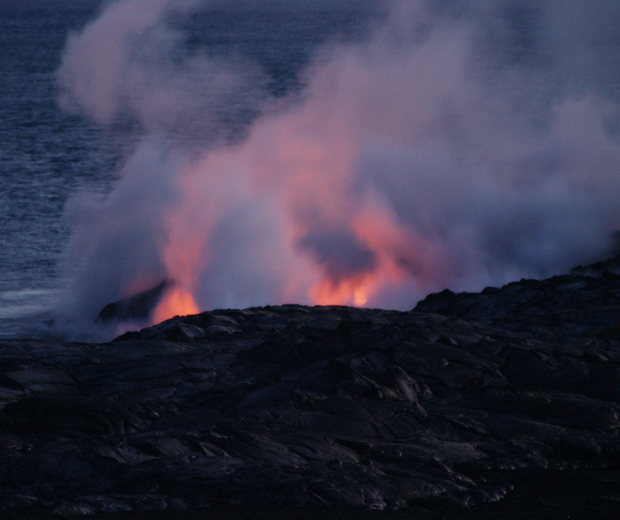
Showing posts with label volcanoes national park. Show all posts

Monday, August 24, 2009

Hawaii's Amazing Lava Fossils

by Donnie MacGowan

With minor local exceptions, the rocks of the Big Island of Hawaii are made up almost entirely of eruptive volcanic effluent—lava and ash, and sediment derived from eroding and weathering lava and ash. As such, it doesn't seem a likely place to hunt fossils. After all, the lava pours from the vents on Hawaii's volcanoes at between 1100° and 1130° C and even the hardened crust on the top of an active flow can be as hot as 600°C. It seems like the advancing lava ought incinerate everything in its path and leave no trace of organic matter behind as fossils.
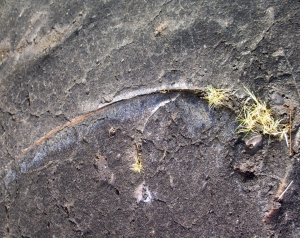
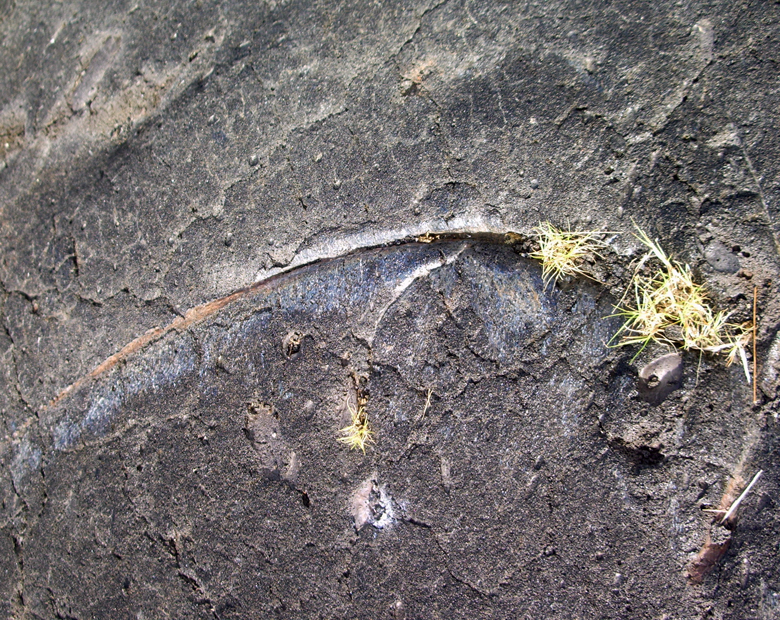
Palm Frond Fossil in Basalt From 30-Year Old Lava Flow, Kalapana, Hawaii: Photo by Donald B. MacGowan

Or would it? Sometimes things in nature don't always act the way we expect them to.
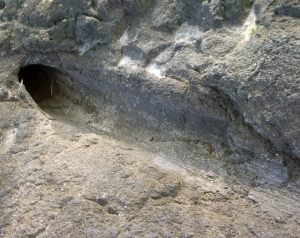
Lava Mold of a Palm Tree in a 2000 Year Old Flow, Honaunau, Hawaii: Photo by Donald B. MacGowan
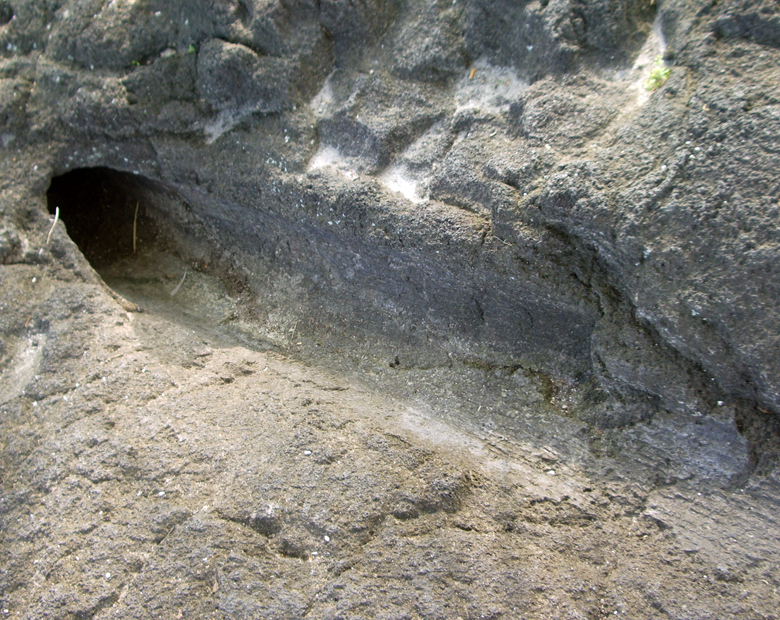

As a child, my mind, when not actually occupied with thoughts of dinosaurs, was chiefly occupied with thoughts of volcanoes or thoughts of fossils. It's scarcely surprising, then, that I grew up to be a geologist, but when I eventually washed-up on the shores of the Big Island, I thought I'd landed in heaven—five volcanoes, three of them active! But as I explored my new home I found more and more examples of where Hawaii's volcanoes had preserved fossils of plant and animal life.

To be sure, owing the the extreme temperatures of the lava, these fossils tend to be molds or casts, but they are abundant and fascinating. More delicate fossils are contained in ash deposits, but so far, these have been only marginally explored.

Let's take a quick tour around the island of Hawaii and look at some of the remarkable, amazing, lava fossils of Hawaii.

Lava Tree State Monument
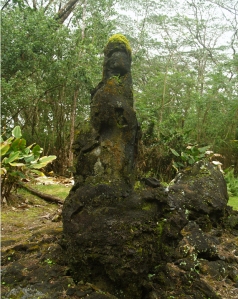
Lava Tree Mold at Lava Trees State Monument, Big Island, Hawaii: Photo by Donald B. MacGowan
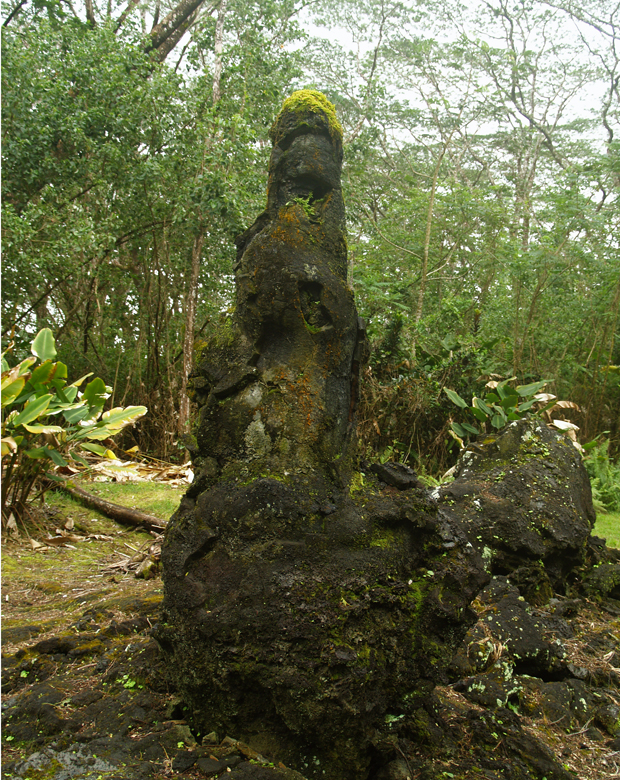

Let's start down in Puna District, just a few miles south of Pahoa Town. At Lava Trees State Monument fingers of lava poke vertically at the sky, remnants of a flow that that passed through a wet ohi'a tree forest in 1790. The flowing lava enveloped the wet ohi'a trees, cooling and congealing around them. As the lava flow drained away down nearby cracks, the fingers of cooling lava were left behind. The remnants of the trees were burned and rotted away, so today these stubby towers are hollow.
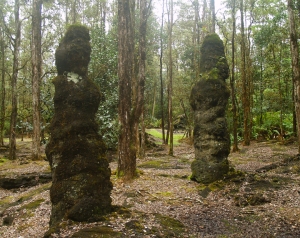
Towers of Lava Tree Molds at Lava Trees State Monument, Big Island, Hawaii: Photo by Donnie MacGowan
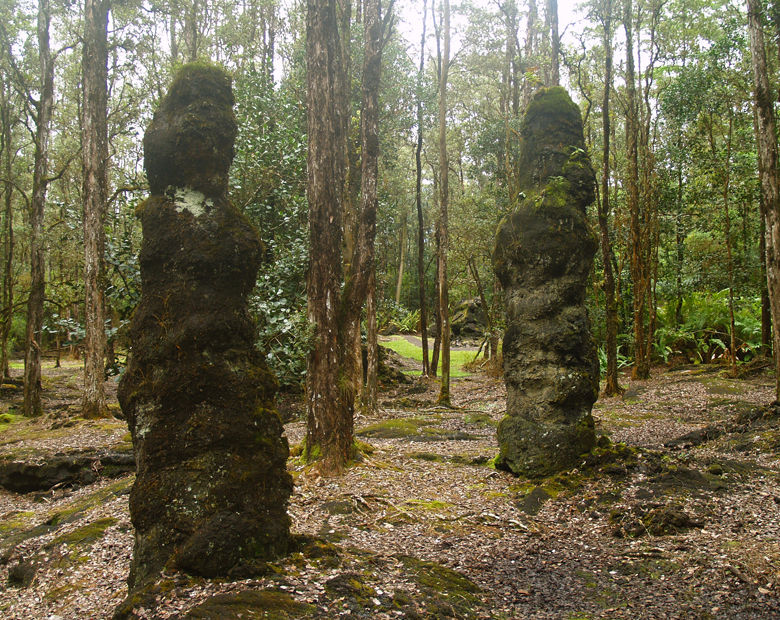

Mauna Loa Tree Molds, Hawaii Volcanoes National Park

But what happens if the lava doesn't drain away and leave the fingers behind, but rather cools in place around the trees? An example of this can be found along the Mauna Loa Road, in the part of Hawaii Volcanoes National Park that is north of Highway 11. Here, large acacia koa trees (the same kind of trees that are currently growing around the parking area) were buried 10-30 feet deep in lava erupted by Kilauea some 700-800 years ago.
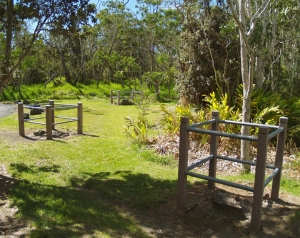
Tree Molds on Mauna Loa in 700-800 Year Old Basalt, Hawaii Volcanoes National Park, Hawaii: Photo by Donnie MacGowan
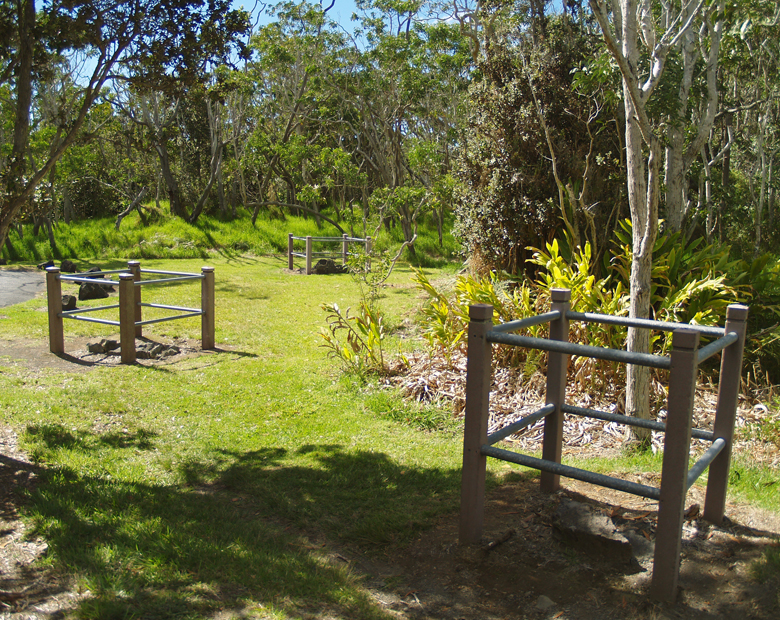

The wet trees chilled and cooled the lava as it surrounded them and thus they were insulated from the intense heat of the surrounding flow. The cooling was rapid enough to preserve the shape, even the texture of the bark, of the trees, though the trees themselves burned away.
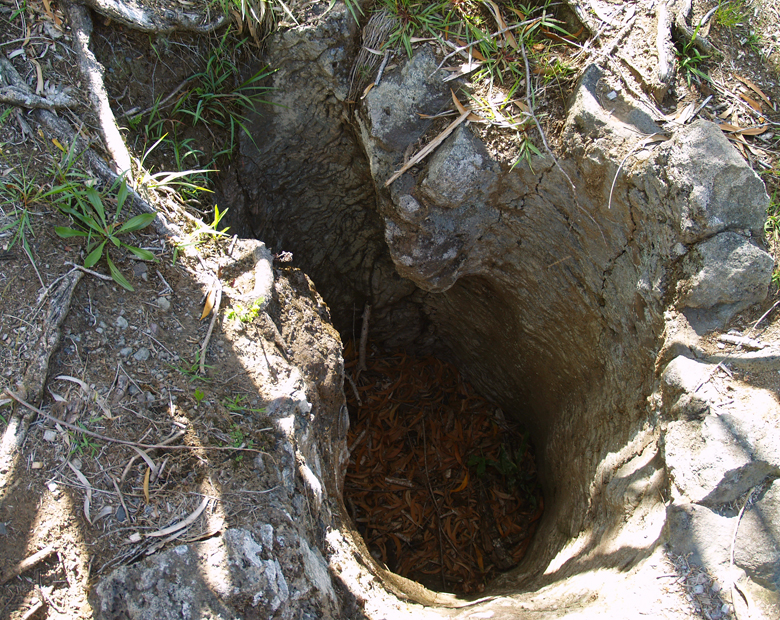
Mauna Loa Tree Molds 2008 small

Tree Molds on Mauna Loa in 700-800 Year Old Basalt, Hawaii Volcanoes National Park, Hawaii: Photo by Donnie MacGowan

Kalapana-Waikupanaha

But tree trunks are not the only casts and molds that are preserved in molten lava. Sometimes even quite small items, such as coconuts and fruits are preserved with incredibly finely-detailed impressions. Down in the Kalapana-Waikupanaha area of Puna, up against the eastern border of Hawaii Volcanoes National Park, the lava surface is between 30 years and 30 minutes old.
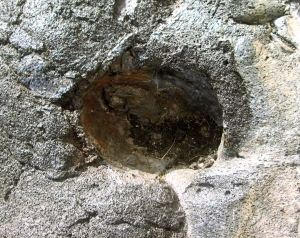
Lava Mold of a Coconut in Basalt from a Very Recent Flow Near Kalapana, Hawaii: Photo by Donald B. MacGowan
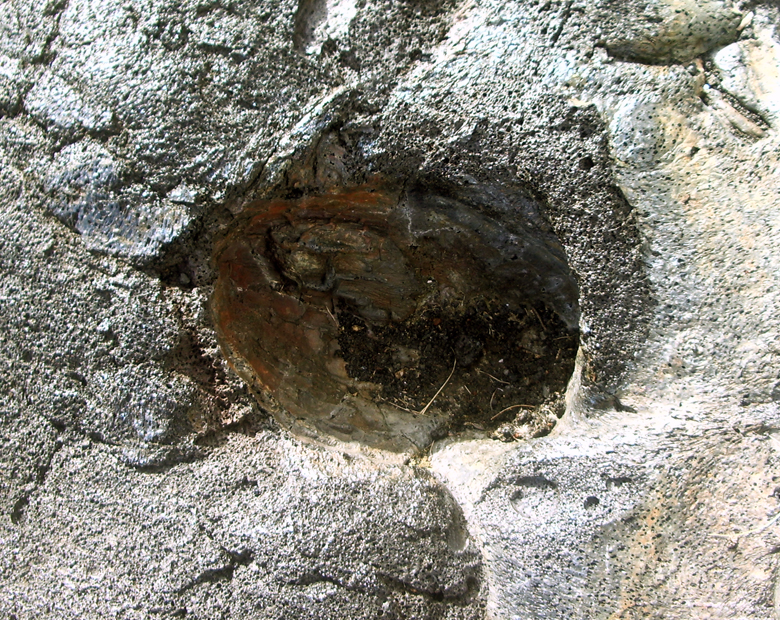

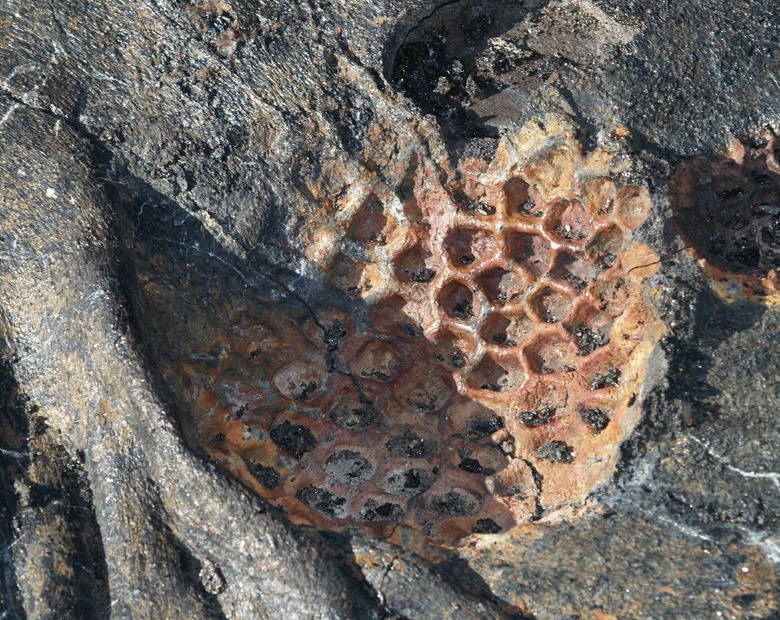
Trails leading out to both Kaimu Black Sand Beach and the Waikupanaha Ocean Entry Lava Viewing Area are literally punctuated with preserved palm fronds, pandanus fruit, coconuts and other vegetation debris. The hiker has only to keep his eyes sharp to find hundreds of examples of where the lava has preserved, sometimes in astonishing detail, the forest it flowed through.

Mold of Pandanus Fruit in Basalt from Flow Less Than 10 Years Old, Waikupanaha, Hawaii: Photo by Donnie MacGowan

Devastation Trail, Hawaii Volcanoes National Park

As I mentioned earlier, however, sometimes other volcanic processes also preserve fossils. Along Devastation Trail in Hawaii Volcanoes National Park are some well-preserved tree molds—some with the dead tree still standing in them—from hot ash and cinder erupted from the Pu'u Pua'i vent on Kilauea Iki in 1959.

Tree Standing in Ashfall from Pu'u Pua'i, Hawaii Volcanoes National Park: Photo by Donnie MacGowan
Dead Tree Standing in Future Tree Mold in Ashfall from Pu'u Pua'i, Hawaii Volcanoes National Park: Photo by Donnie MacGowan
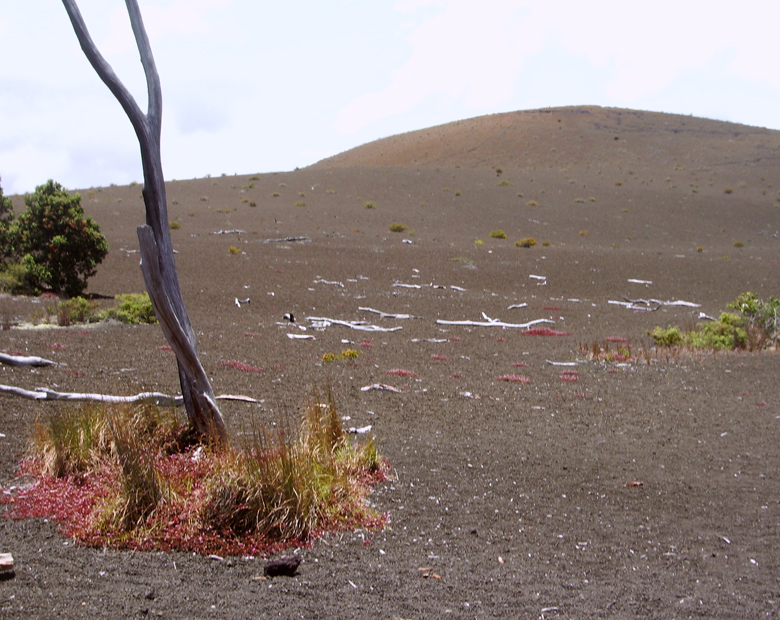
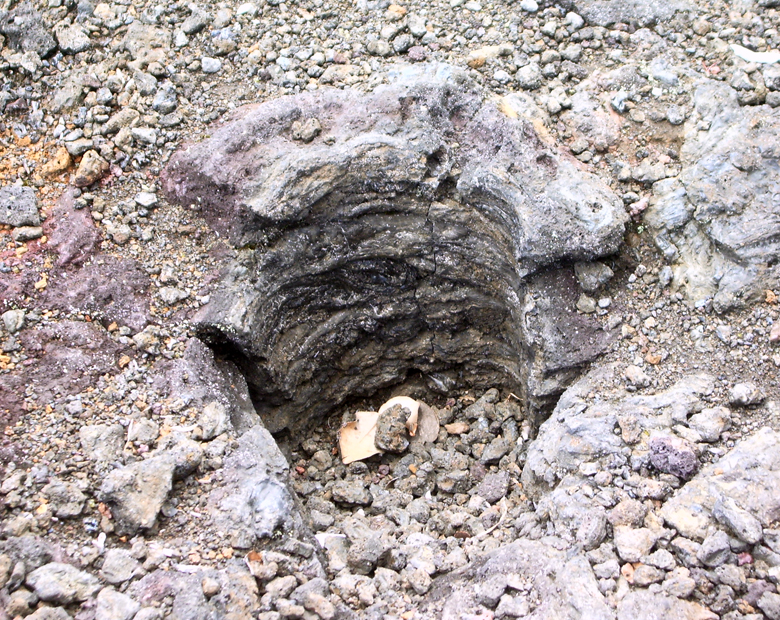
This eruption produced fire-fountains some 1900 feet tall, showering the downwind region with hot ash and cinders. Some of the pieces of volcanic material were so hot they welded together after landing, others were so cool the trees they buried didn't burn. Many trees were completely buried or burned away, but you can still see some, standing above the level of the ground, in what will be tree molds when the trees eventually rot away. There are also numerous examples of already empty tree molds along the trail.
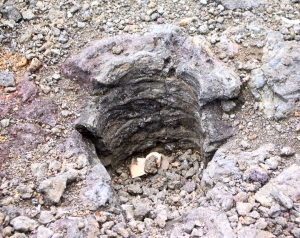
Small Tree Mold Along Devastation Trail, Pu'u Pua'i, Hawaii Volcanoes National Park: Photo by Donald B. MacGowan

Warrior Footprints Trail, Hawaii Volcanoes National Park

Not all the fossils, molds and casts we find in ash and cinder deposits are from plants, either. Although the Hawaiian volcanoes have a reputation as being quiet and well-behaved, rarely violent in their eruptions, such is not always the case. There are quite thick and extensive ash deposits indicating episodes of intensely violent eruption. Called “phreatomagmatic“, these eruptions get their power and violence from ground water entering the magma chamber and flashing to steam, blowing ash high into the atmosphere. Many times the ash produced in these eruptions preserves the material it covers in quite fine detail. One such case can be visited along the Ka'u Desert/Warrior Footprints trail in Hawaii Volcanoes National Park.
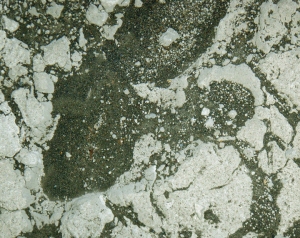
Mold of Human Footprint in Ash from 1790 Phreatic Eruption of Kilauea, Hawaii Volcanoes National Park: Photo by Donnie MacGowan
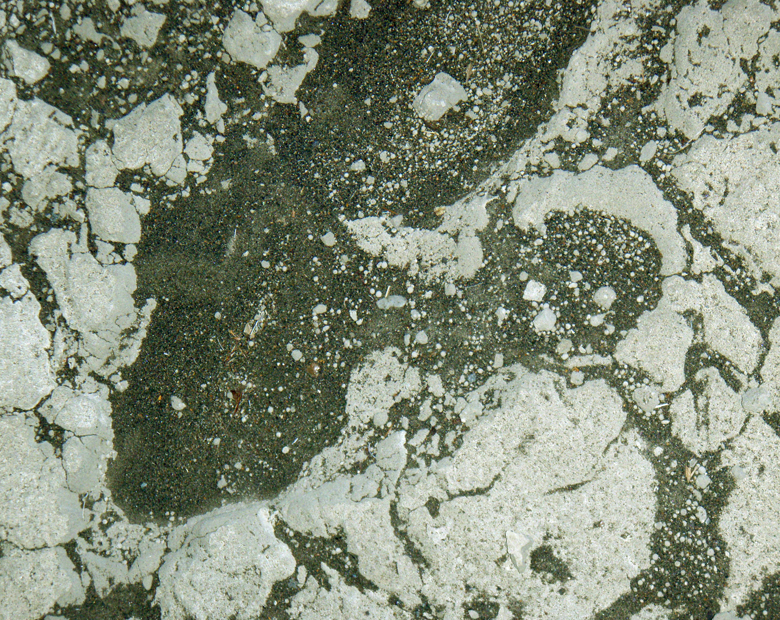

In 1790, a party of warriors was passing by Kilauea on their way to make war on Kamehameha the Great. 400 men, women and children were caught in a giant phreatomagmatic eruption and suffocated where they stood. Another contingent of warriors, coming upon their companions bodies, momentarily thought them merely sleeping until they realized their comrades were all dead. Molds of the footprints left by this second set of warriors are preserved in the ash along the Warrior Footprint Trail; it's an an eerie hike to see them.

Place of Refuge, Pu'u Honua O Hounaunau
Small Bowl Carved into Surface of Basalt, Pu'u Honua O Honaunau National Historic Park, Hawaii: Photo by Donnie MacGowan
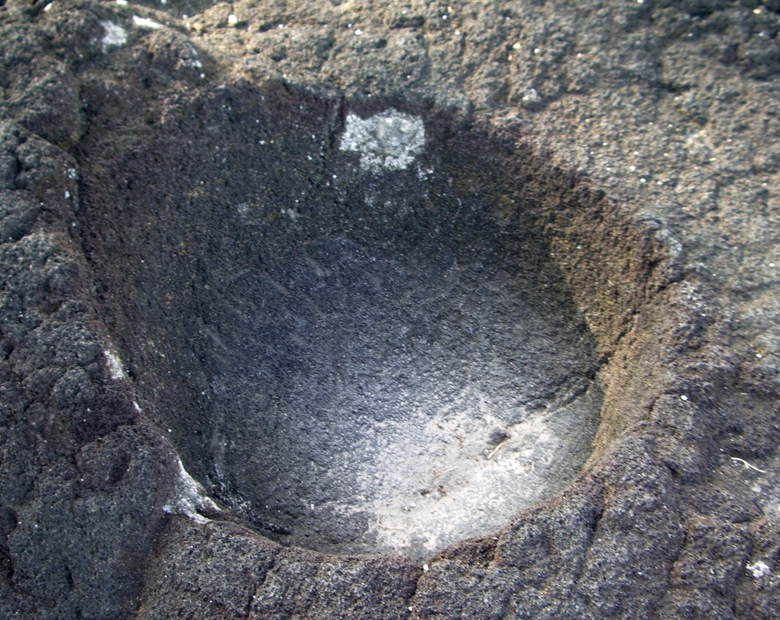

Sometimes we find things on the surface of lava flows which do not look like any kind of natural lava flow structure, but they are also not an obvious mold, cast or fossil. Some of these features are obvious human artifacts and not fossils at all. Hawaiians would spend days carving out bowl-shaped depressions into the surface of the rock—once made, they could be used for generations. In just such manner, salt pans for evaporating sea water to get salt were constructed. Larger carved depressions were for cooking. Hawaiians would build a fire in these larger depressions until the rock was quite hot. Scooping away the fire and ash, they would add water and food to cook, sometimes continuing to add hot pebbles to keep the water boiling. Although these features are ubiquitous on the Big Island, excellent examples of them can be found all the way along the beach fronting the temple complex at Pu'u Honua O Honaunau over to Two Step Beach on Honaunau Bay.
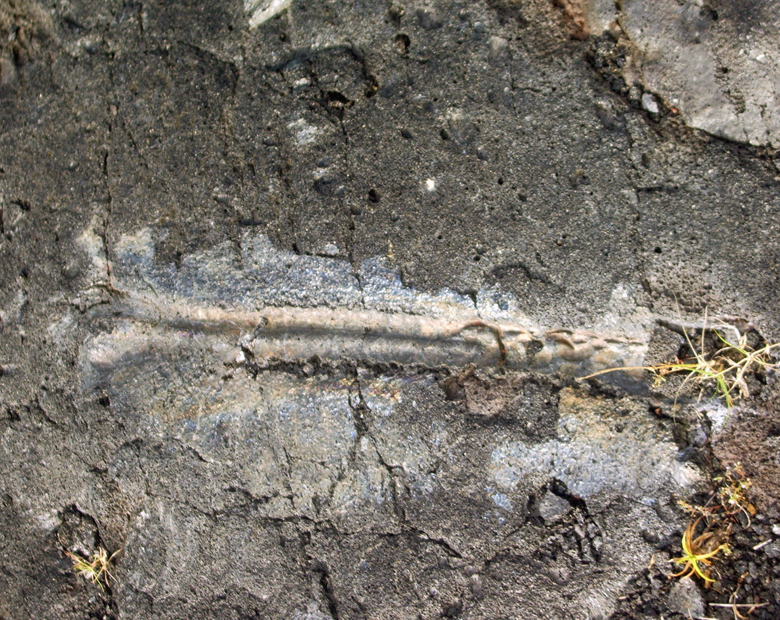
Tree Branch Fossil Preserved in Extremely Recent Lava Flow, Kaimu, Hawaii: Photo by Donald B. MacGowan

For more information on traveling to Hawaii in general and touring the Big Island in particular, please also visit www.tourguidehawaii.com and www.lovingthebigisland.wordpress.com. For information about the author, please go here.

All media copyright 2009 by Donald B. MacGowan; all rights reserved.

Monday, June 29, 2009

The Best Short Hikes on Hawaii Island

A River of Lava Flows Down The Pali Toward The Ocean Entry at Waikupanaha, Hawaii Volcanoes National Park: Photo by Big Island Air

Whether you visit the Big Island for a few days, a couple weeks or a few months, you want to make the most of your time in Paradise. With such a wide variety of natural and commercial attractions, it is natural for the visitor to get a little overwhelmed in the “Option Overload” and not be able to make a balanced and informed decision on what they want to do and how best to spend their time.

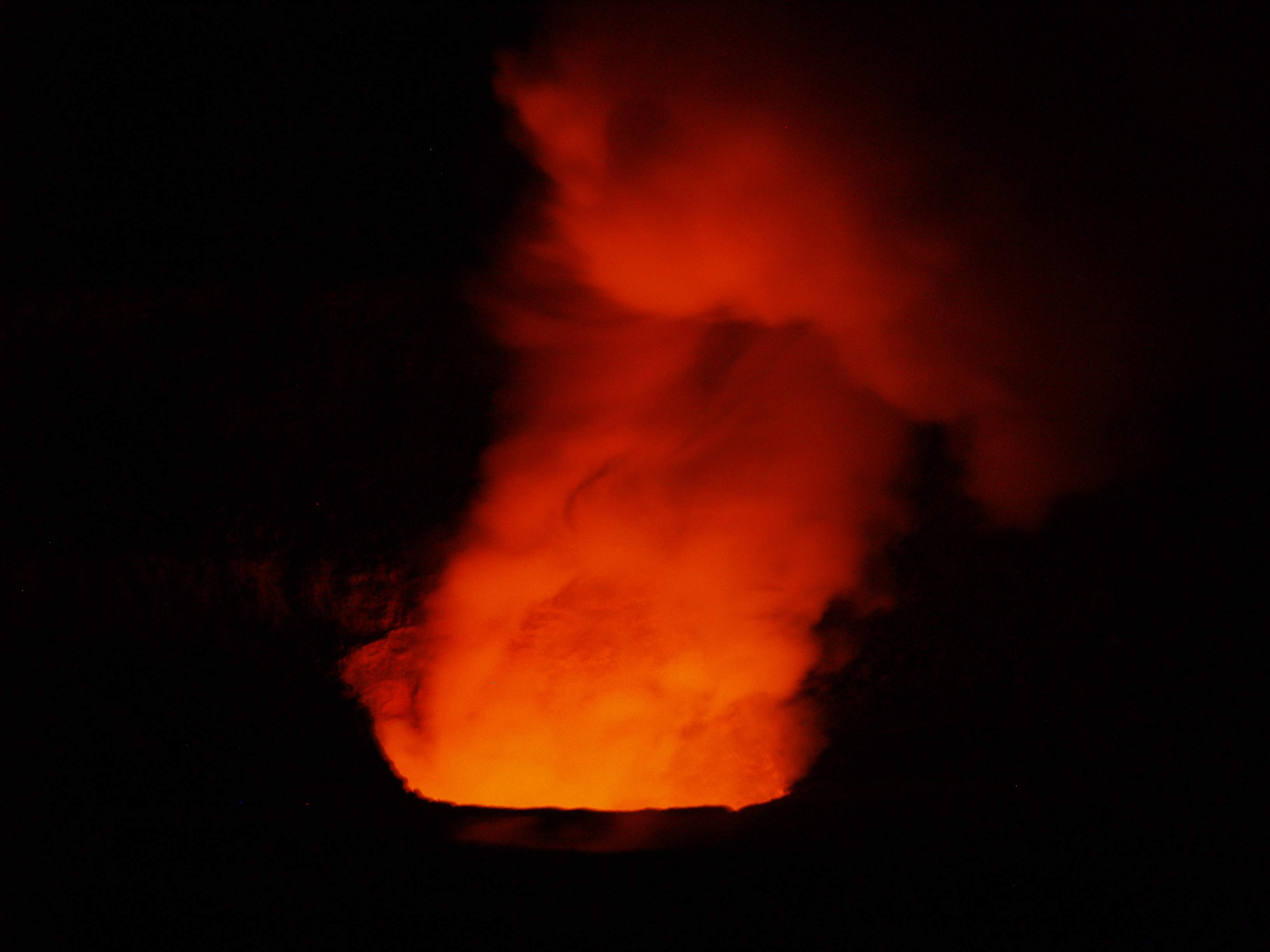
Glow From the Vent in Halema'uma'u, Kilauea Crater, Hawaii Volcanoes National Park: Photo by Donnie MacGowan August 2008

Even choosing what activities you want to participate in…do you want to snorkel, hike, go on a whale watching tour? We highly recommend you go hiking on your visit…but where do you go? Many of the justly famous mountains, canyons and beaches of Hawaii all have superlative hikes, but which are best? Which suit your interests? Are you looking for an experience that is away from crowds, secluded and empty or one that’s exciting, but perhaps a little more tame? Do you want to hike near your resort or find one that’s at the end of a day of delicious wandering? Do you have the hankering to climb Hawaii's highest peak, and the world's highest peak from base to summit? How about a stroll through dryland forest, over ancient lava fields to a wilderness beach? And what about hiking to the Lava...is that really safe? Is it as unimaginably magical as it sounds?

Ranked in order, with the best on top, are our picks of the finest hikes on the Island of Hawaii. We’ve tried to strike a balance in ranking these places since each is a gem in its own right, we’ve had to leave off many that are equally fine in their own right and of course, recommending some means that their popularity will increase and hence, they will become more crowded. This list at least provides an excellent starting point for deciding where you want to spend you trail time. When you arrive we ask that you treat these special places, and the people who live near them, with care, respect and aloha.

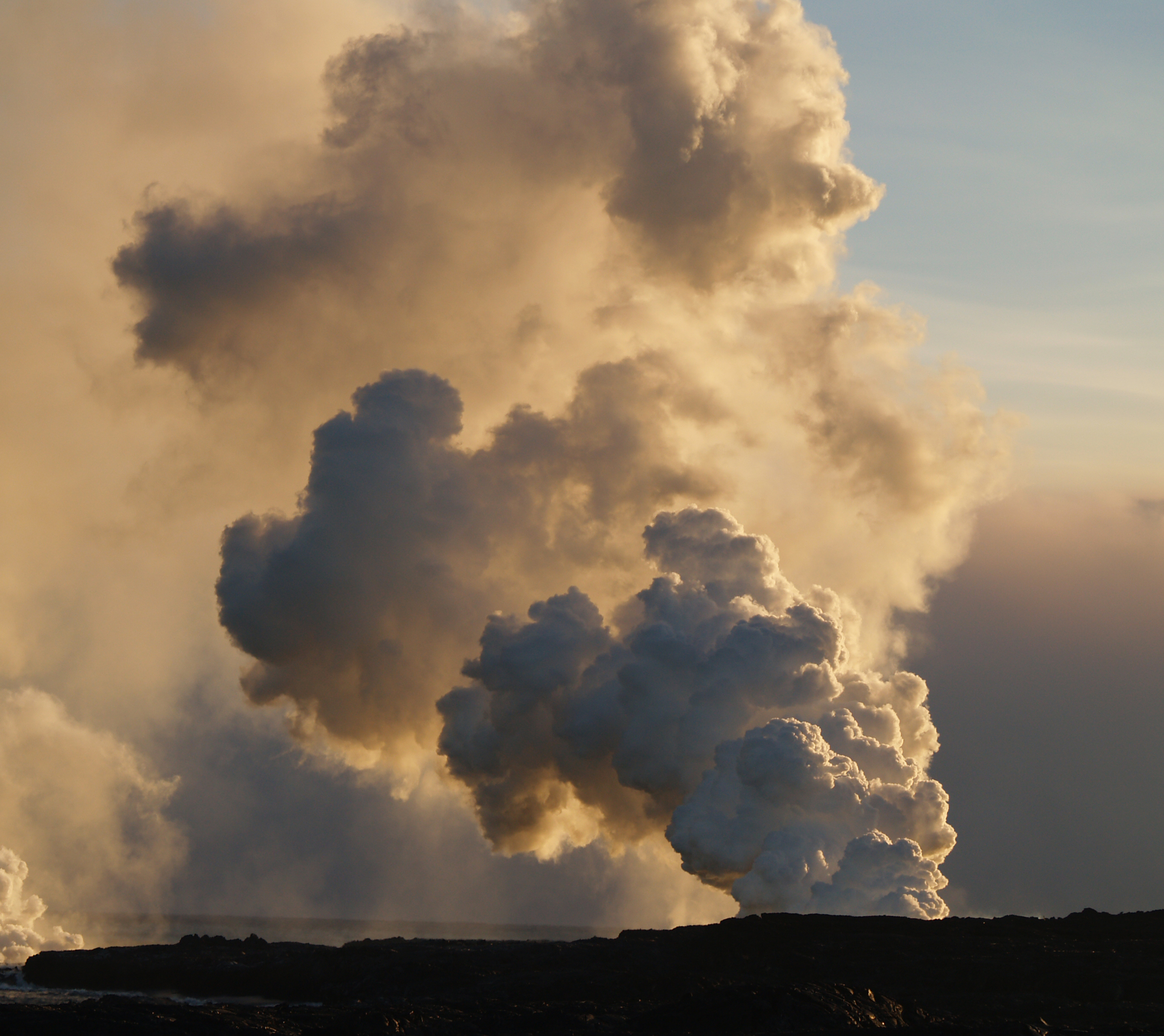
Explosion Cloud of Littoral Explosion at the Waikupanaha Lava Ocean Entry, Big Island, Hawaii:  Photo by Donad B. MacGowan
Explosion Cloud of Littoral Explosion at the Waikupanaha Lava Ocean Entry, Big Island, Hawaii: Photo by Donald B. MacGowan

Lava Viewing at Waikupanaha Ocean Entry: This is truly the one “Must-See” trip for every visitor to Hawaii Island; the unimaginable spectacle and beauty of the earth remaking herself thorough volcanic eruption. Explosions, glowing and flowing lava, waterspouts. lightening and every kind of geological excitement you can imagine, located at the end of an extremely short hike along a trail that is accessible to almost everyone. See a video here.

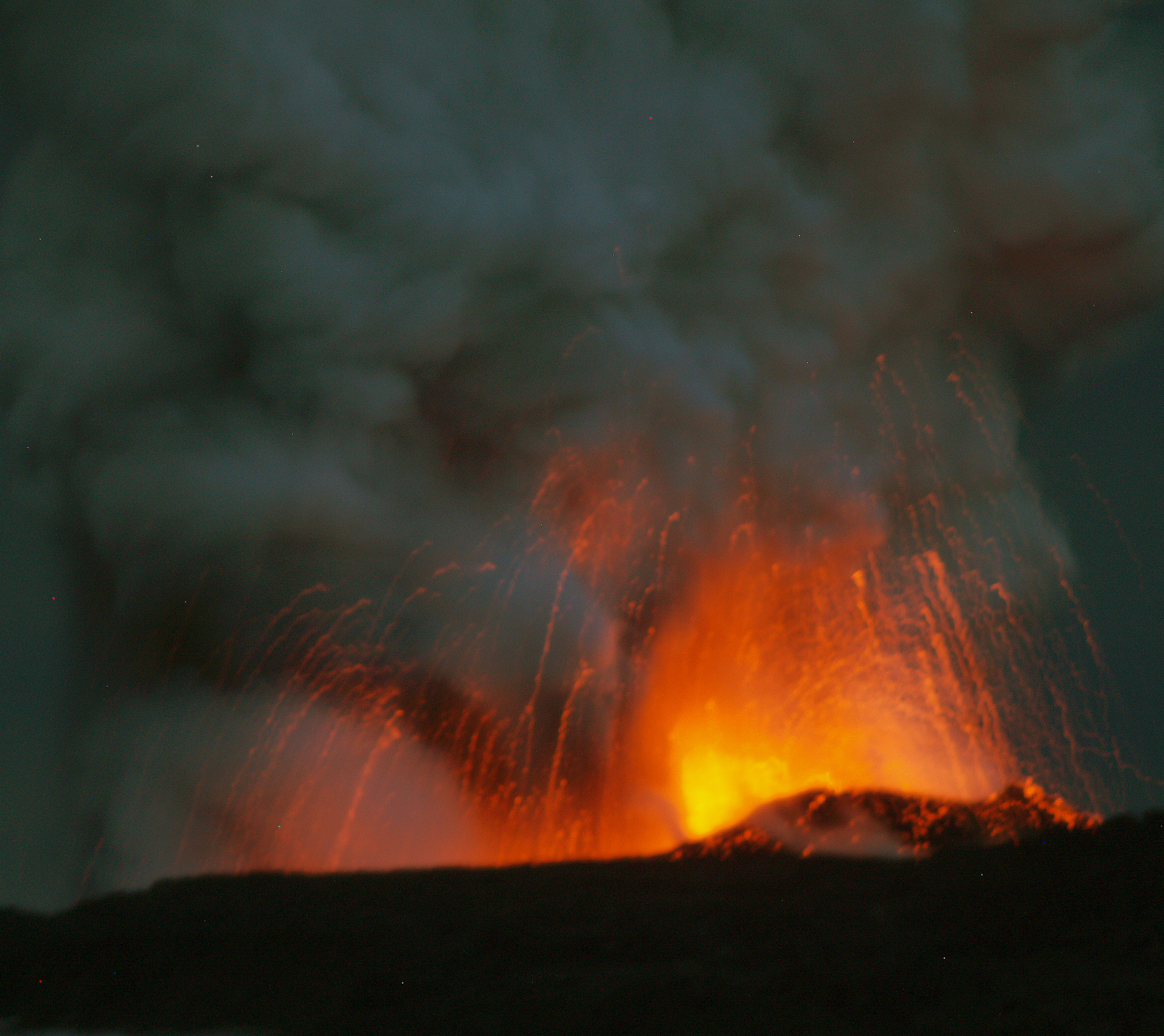
Littoral Explosions as Lava Enters the Ocean Near Royal Gardens: Photo by Donald B. MacGowan

Kilauea Iki Crater in Hawaii Volcanoes National Park: An amazing, wonderful walk through lovely fern and ohi'a forest down the sides and onto the still-steaming floor of an enormous volcanic crater that was, only a few short decades ago, the hellish cauldron of a frothing, liquid lava lake of fire. A fascinating, 4 mile/2 ½ hour loop hike of only moderate difficulty, most people in only fair shape can easily complete it in a couple hours. See a video here.

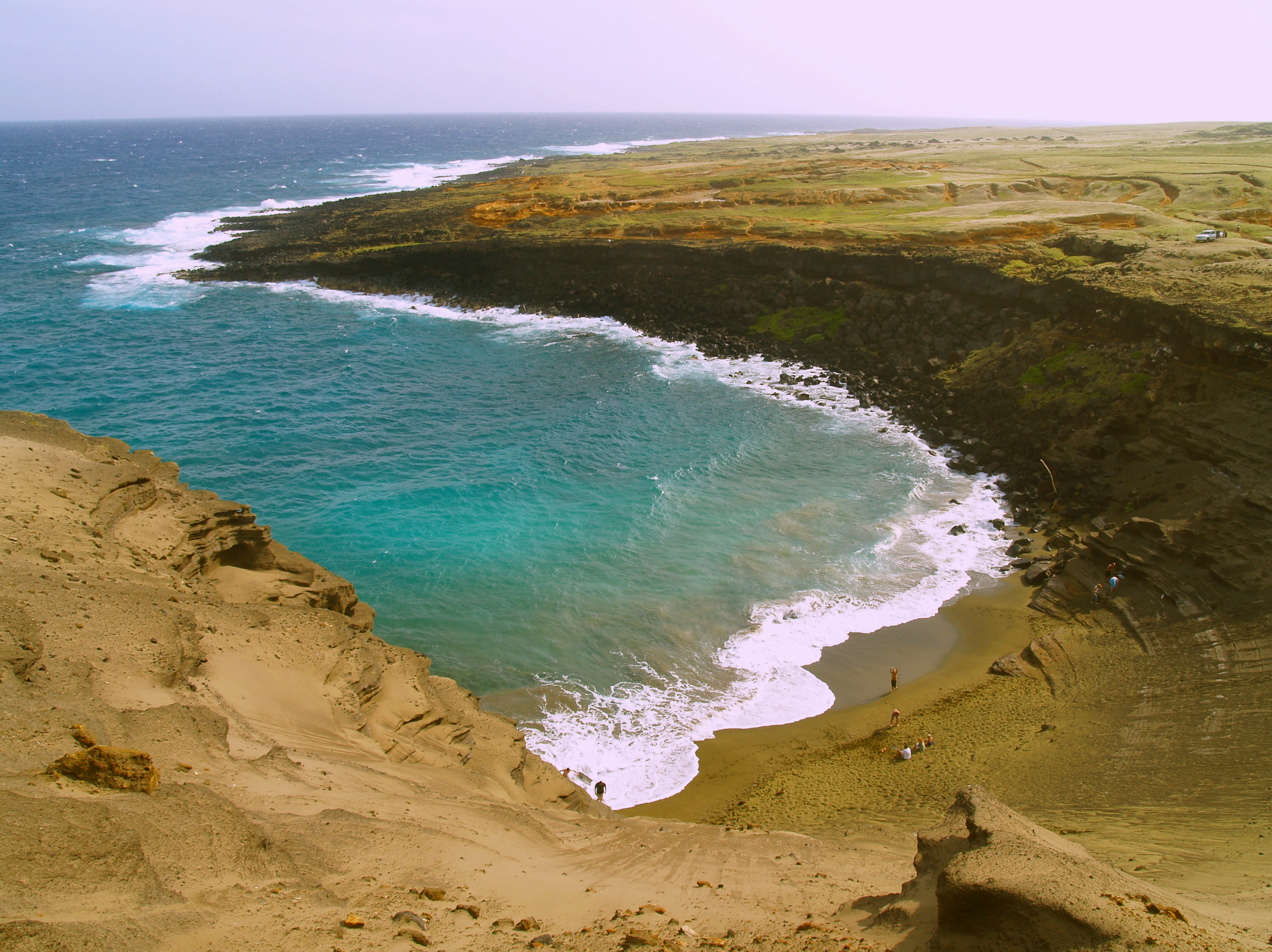
The Beautiful Green Sand Beach at South Point of the Island of Hawaii is Reached by an Easy 2 1/4 Mile Hike: Photo by Donald B. MacGowan

Mahana Green Sand Beach at South Point: One of a handful of true green sand beaches in the world, the Mahana Green Sand Beach near South Point is not to be missed. Beautiful, haunting, intriguing. Although the hike is 2 ¼ miles each way, the trail is relatively flat and easily followed. Swimming and snorkeling in the bay is fabulously weird due to the water color, just be wary of currents out from the mouth of the bay.

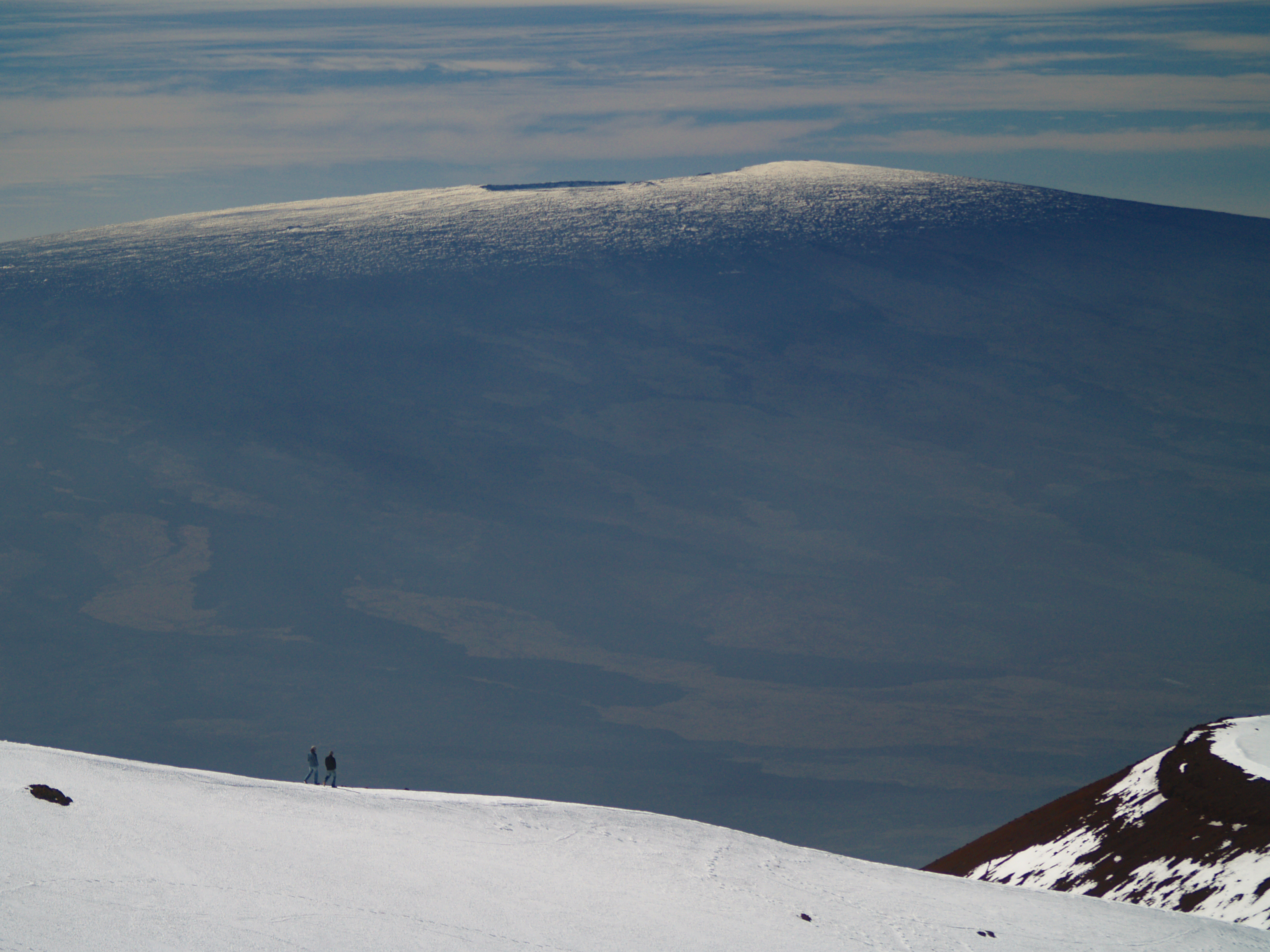
Hikers on Mauna Kea Summit Looking at Mauna Loa Summit: Photo by Donnie MacGowan

Mauna Kea Summit: Whether you struggle up the 6-mile climb from the Visitor's Information Station, or take the 20 minute short hop hike from the end of the road, visiting the summit of Mauna Kea should be on every visitor's wish list of things to do. Simultaneously the highest point in the state of Hawaii and the tallest mountain from base to summit on earth, Mauna Kea is an otherworldly, unique, starkly beautiful place. The hiker is reminded to be wary of changeable weather, severe snow storms that can strand you, altitude sickness, dehydration and sunburn. See a video here.

Makalawena Beach: Perhaps the loveliest beach in Polynesia, Makalawena is the perfect sand crescent, beach backed by palms and iron wood trees with morning-glory-draped sand dunes. A easy mile hike in from Kekaha Kai State Park keeps this beach uncrowded. Snorkeling here is better than perfect, camping here is so wonderful we don't know why it's not mandatory.

Long, Lonely and Wholly Wonderful Makalawena Beach in Kekahai State Park: Photo by Donald MacGowan

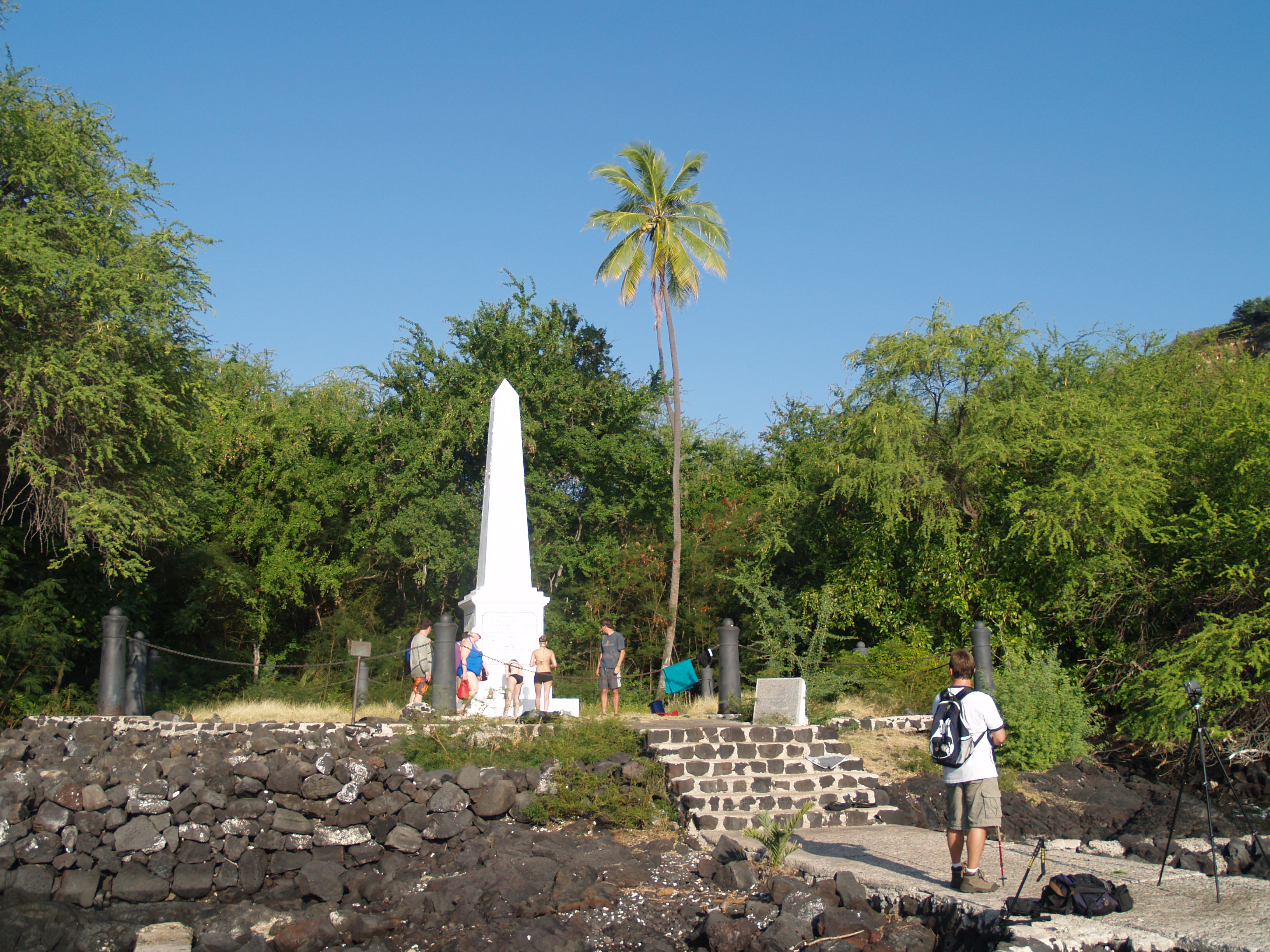
Captain Cook Monument on Kealakekua Bay: Accessed by a steep trail this 2.5-mile hike takes about 1-1 1/2 hours to descend, somewhat more time to come back up. The snorkeling at the monument is second to none and the hike is a fabulous walk back in time, through fruit groves, cattle pastures, lava flows and an abandoned Hawaiian village. Take water, a lot of water, there is none to drink anywhere along the trail or at the bay, once you are there or on the all-uphill hike out. See a video here.

The Captain James Cook Monument at Ka'awaloa Village in Kealakekua: Photo by Donnie MacGowan

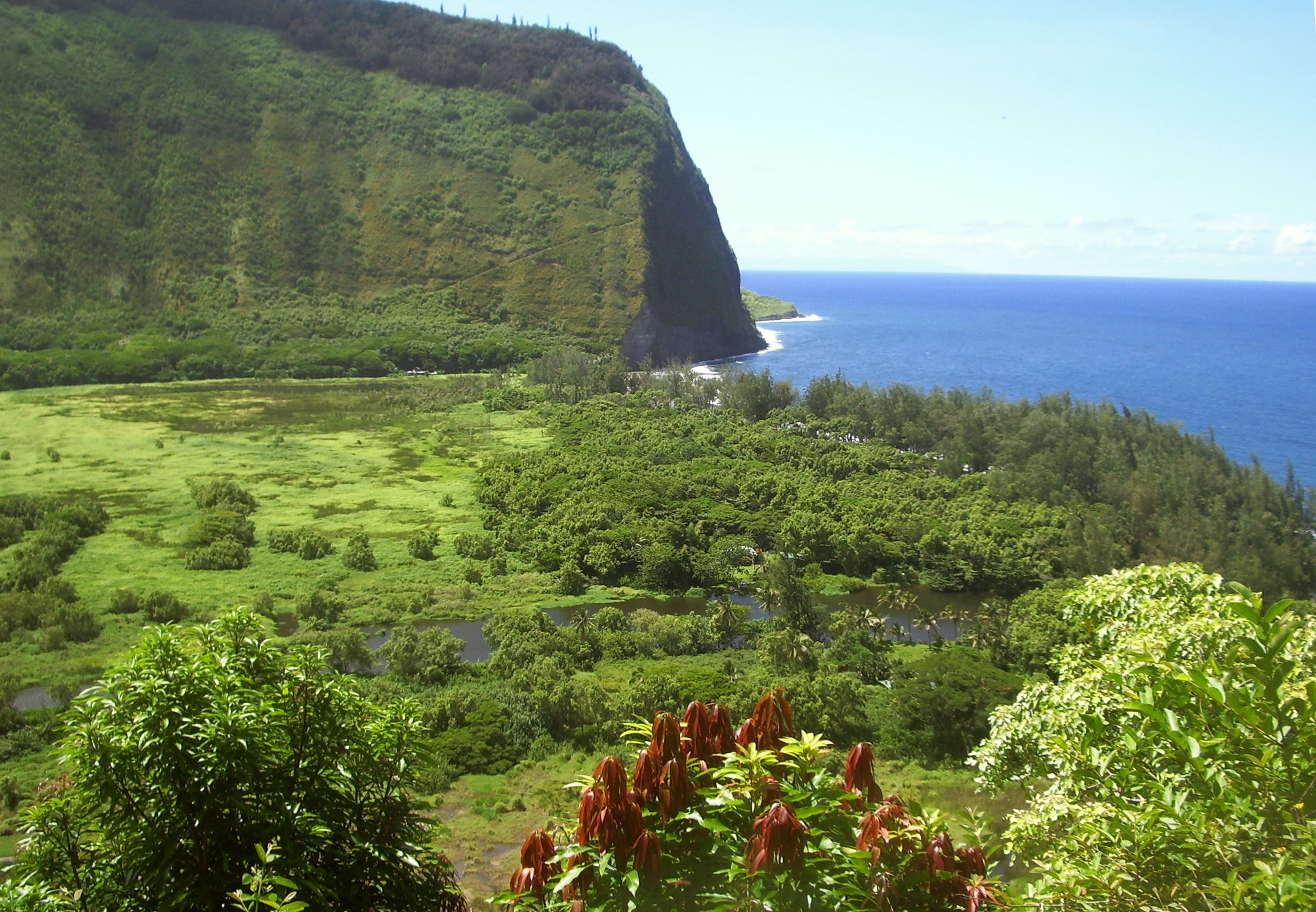
Waipi'o Valley: An amazing hike into the Waipi'o fastness, down a steep narrow road to the largest black sand beach on the island. If vast open spaces, scenery, wild tropical flowers, waterfalls and amazing beaches are your thing, this is your hike. Once on the valley floor, exploring along the beach or farther on to subsequent valleys can take hours, or days, depending on your level of energy and interest.

Waipi'o Valley on the Hamakua Coast of the Big Island: Photo by Donald MacGowan

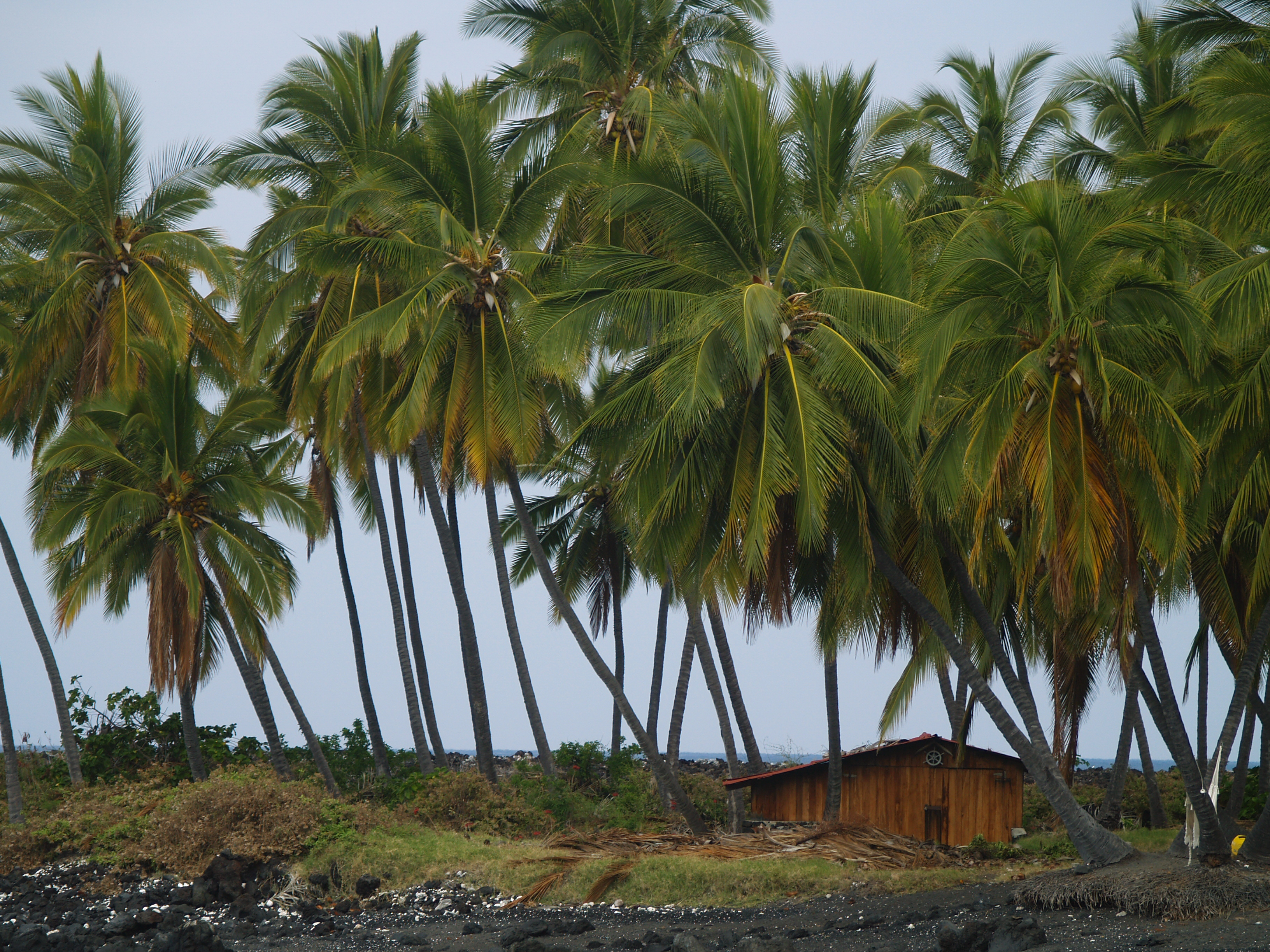
Honomalino Beach: Starting in the Old Hawaiian Fishing Village of Miloli'i, the hike wanders along the coast in and out of the surf line to the wild and untamed Honomalino Bay—a wonderful place to picnic, snorkel or kayak. Exploring on foot in the area of the bay provides many wonders and archeological treasures, from abandoned temples and villages to the largest holua, or sledding track, in Hawaii. Remember to respect the Hawaiian natives, their culture and their sacred sites.

A Small House on Honomalino Beach: Photo by Donnie MacGowan

For more information on traveling to Hawaii in general or exploring the Big Island in particular, please also visit www.tourguidehawaii.com and www.lovingthebigisland.wordpress.com. Information about the author can be found here.

Lava from Kilauea Enters the Sea at Waikupanahu: Photo by Donnie MacGowan

All medial copyright 2009 by Donald B. MacGowan, except where otherwise noted.


Casino Bonus no Deposit