Tuesday, August 11, 2009

Best Beaches in Hawaii Part 5--Best Beaches for Snorkeling

by Donnie MacGowan

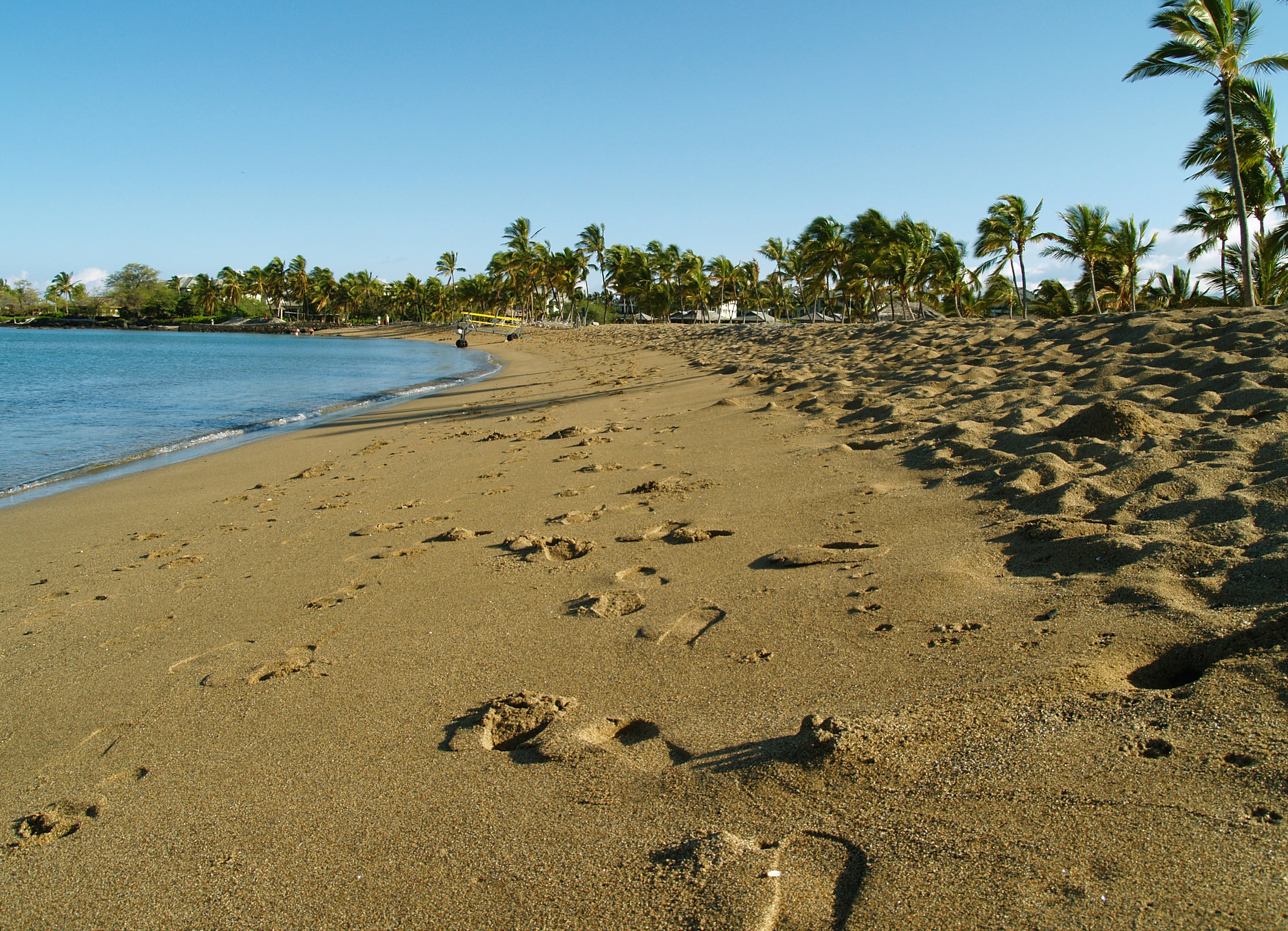
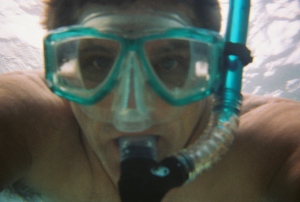
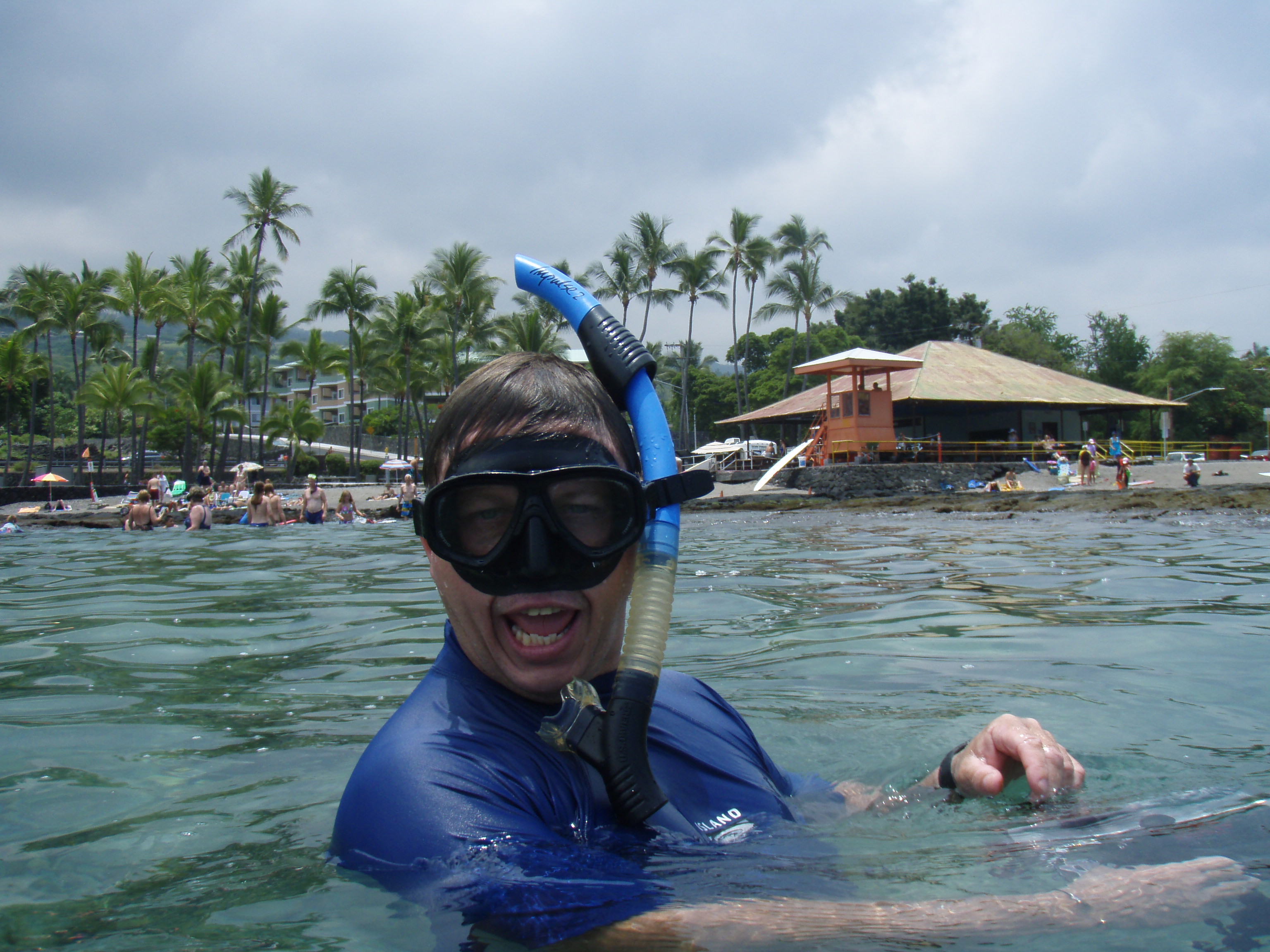
Donnie MacGowan Snorkeling at Kahalu'u Beach on the Big Island of Hawaii: Photo by Donnie MacGowan

Whether you visit the Big Island for a few days, a couple weeks or a few months, you want to make the most of your time in Paradise. With such a wide variety of natural and commercial attractions, it is natural for the visitor to get a little overwhelmed in the “Option Overload” and not be able to make a balanced and informed decision on what they want to do and how best to spend their time.
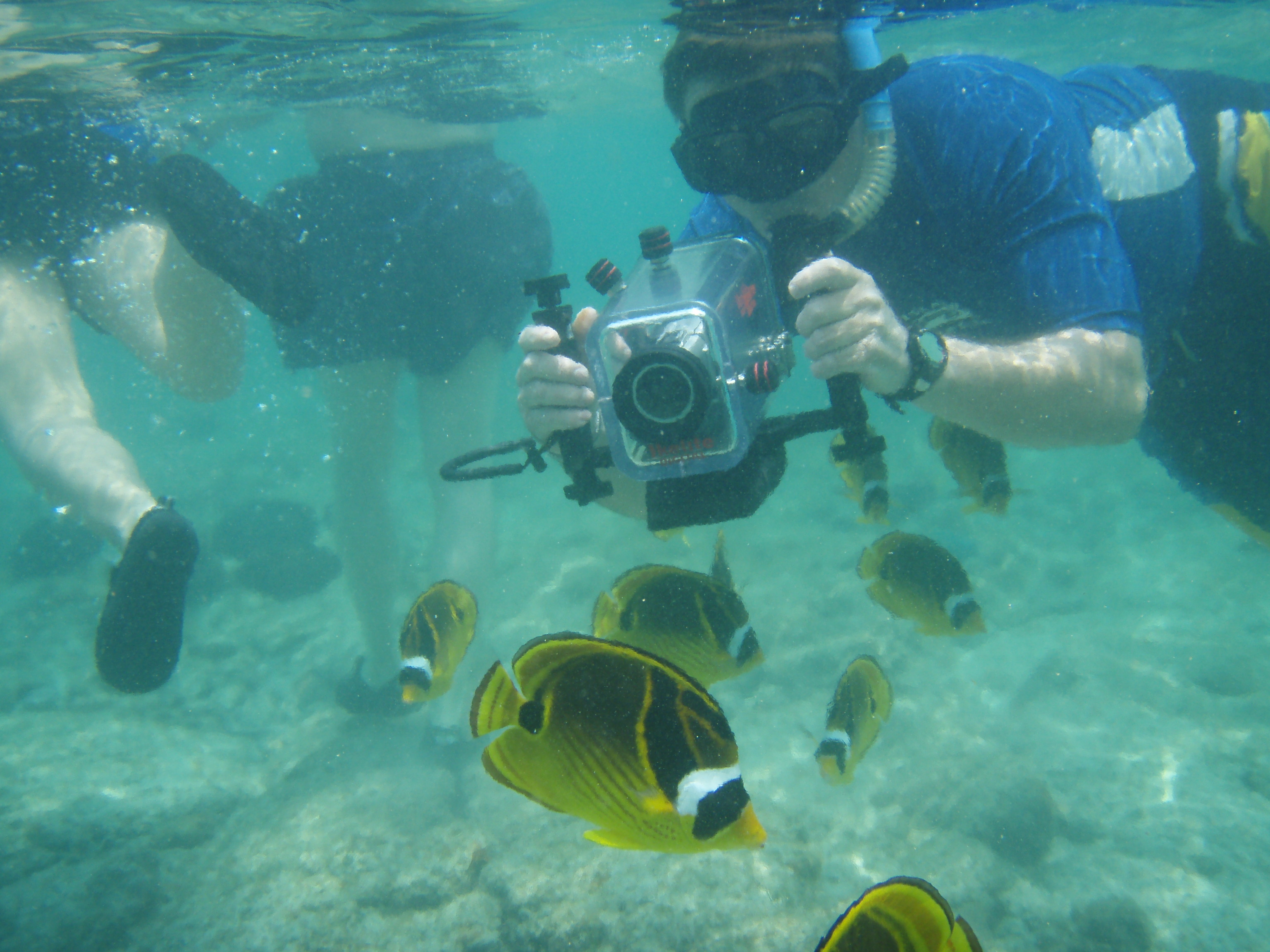
Bart Hunt Filming Fish at Kahalu'u Beach: Photo By Donnie MacGowan

Even choosing activities you want to participate in...do you want to snorkel, hike, go on a whale watching tour? We always recommend people do three basic things when they come to Hawaii: get in the air, go to a luau and get in the water. By getting in the air you get a glimpse of how magnificent our island home is, it is the best way to watch the volcano erupt and it allows you to sort of "scout" the island to see where you might want to spend more time. By going to a luau you get an introduction to Hawaiian culture and cuisine--you get a taste of what it means to live in Hawaii. And by getting in the water you experience the magic wonder of our reefs and colorful fish, the calm and renewal from floating in our warm, turquoise waters and the thrill of exploring something new, different and a little wild. We highly recommend you go snorkeling on your visit...but where do you go? Do you want a snorkel beach for beginners, or a place that's challenging to experience? Are you going simply to get in the water and see the fish or do you want a beach that's also alive with fun people? Are you looking for an experience that away from crowds, secluded and empty or one that's exciting, but perhaps a little more tame? Do you want to snorkel near your resort or one that's at the end of a day of delicious wandering?
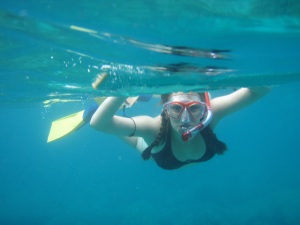
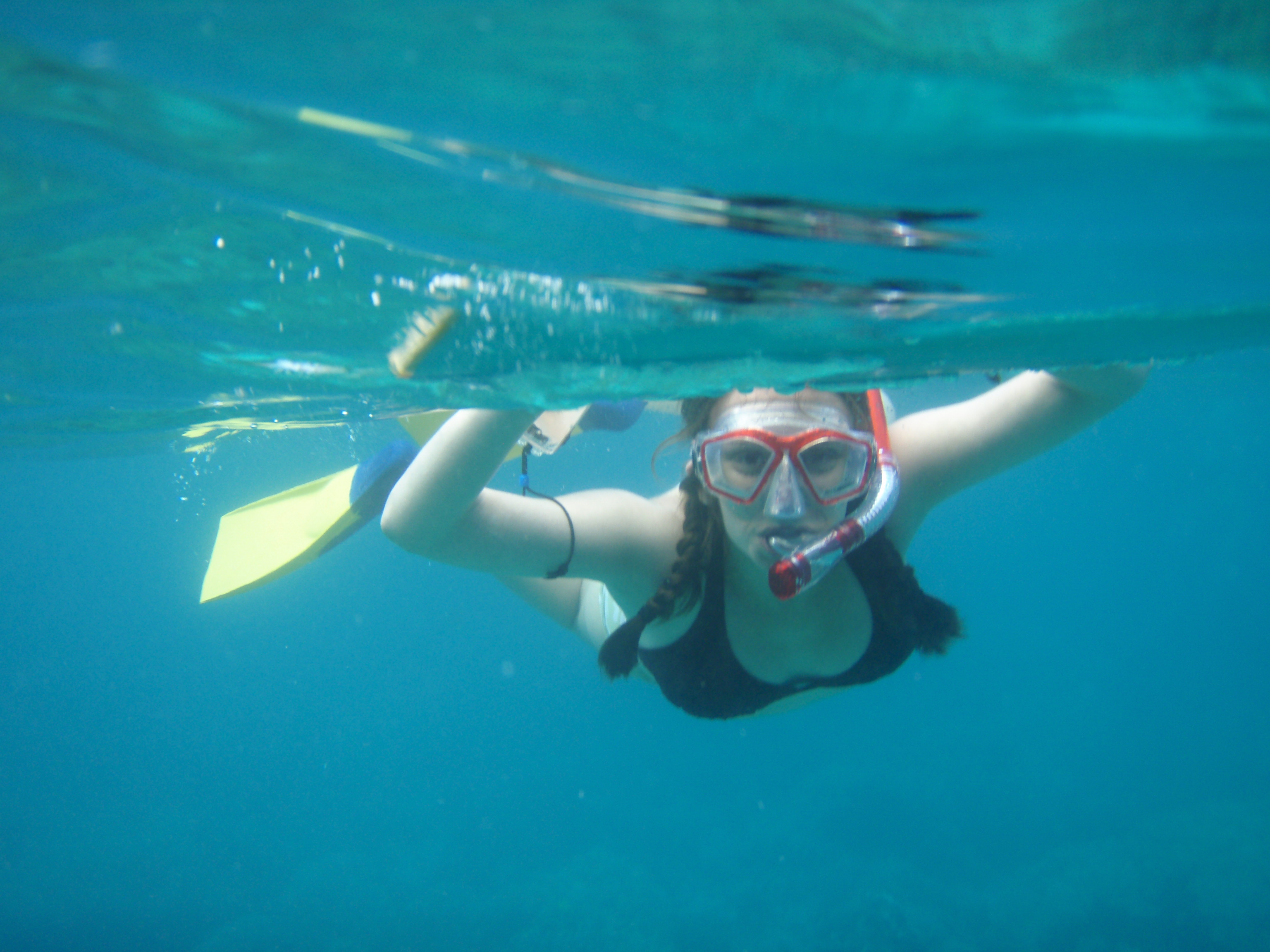
Liz Maus Snorkeling at Hounaunau Bay, Hawaii: Photo by Donnie MacGowan

Ranked in order, with the best on top, are our picks of the best snorkeling spots on the Island of Hawaii. We've tried to strike a balance in ranking these places since each is a gem in its own right, we've had to leave off many that are equally fine for their own reasons and of course, recommending some means that their popularity will increase and hence, they will become more crowded. This list at least provides an excellent starting point for deciding where you want to spend you beach time. When you arrive we ask that you treat these special places, and the people who live near them, with care, respect and aloha.
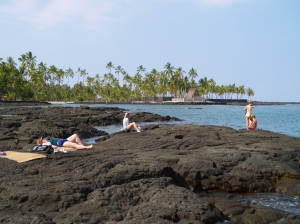
Two-Step Beach at Hounaunau Bay Has Some of the Finest Snorkeling in the World: Photo by Donald B. MacGowan

Two-Step Beach at Hounaunau Bay: Class Triple-A waters, stuffed with a wide variety of brilliant tropical fish, set in a calm and protected bay, and frequently visited by dolphins, this snorkeling area near the grounds of one of the most important Hawai'ian archeological sites is perhaps the most popular and one of the three top places to snorkel on the island. It earns the top spot because of it's easy accessibility.
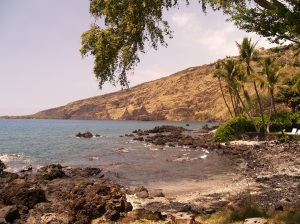
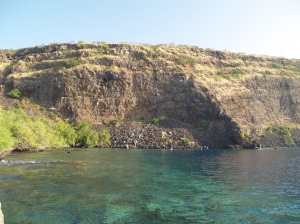
Kealakekua Bay and Captain Cook Monument from Napo'opo'o: Photo by Donnie MacGowan
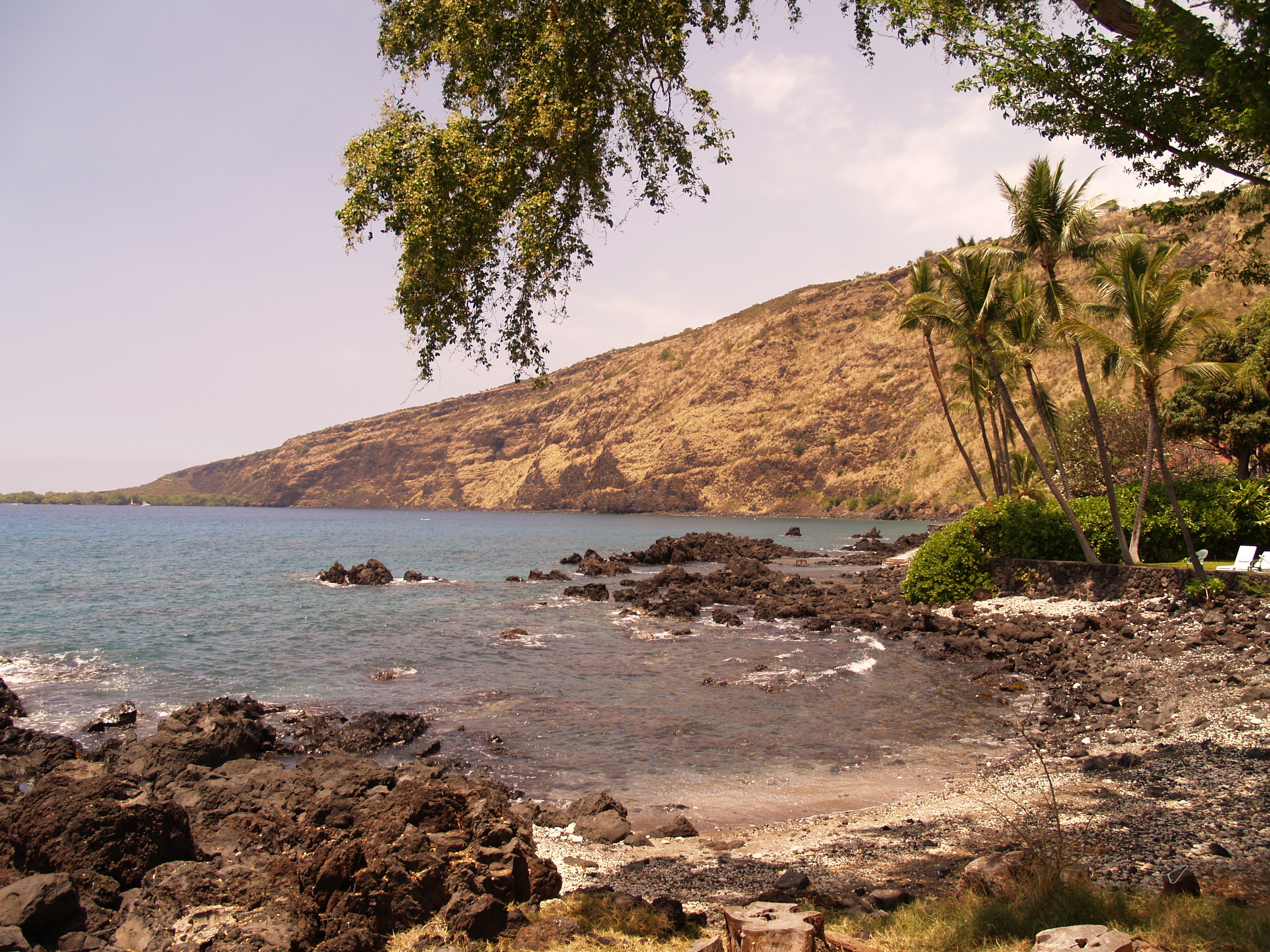

Kealakekua Bay: Whether you hike or boat to Captain Cook Monument, or enter the bay to snorkel at the end of the road in Napo'opo'o, there is no place on earth that has better snorkeling or more fish than Kealakekua Bay. Frequented by both dolphin and whale, protected, Class Triple A waters and a setting unmatched in beauty anywhere, this the premiere place for kayak-to-snorkel adventures on the island. Arguably, this bay and the Hawaiian settlements that surround it, experienced the most momentous and important historical events yet to unfold in the human history of the state of Hawaii.
Kahalu'u Beach, Kona Hawaii: Photo by Donnie MacGowan

Kahalu'u Beach: Referred to by many visitors as “Snorkel Beach” Kahalu'u is centrally located along Ali'i Drive in Kailua Kona. The welcoming waters are protected by a seawall and are amazingly warm, shallow and crystalline turquoise. The safety and ease of conditions here, many resident turtles and abundant colorful fish and the great facilities make this a perfect place to learn to snorkel, or for the tried and true veteran to “get wet and meet the fish”.
Hookena Beach in South Kona Is a Fabulous Beach Plunked Down in the Middle of Real Old Hawaii: Photo by Donald B. MacGowan
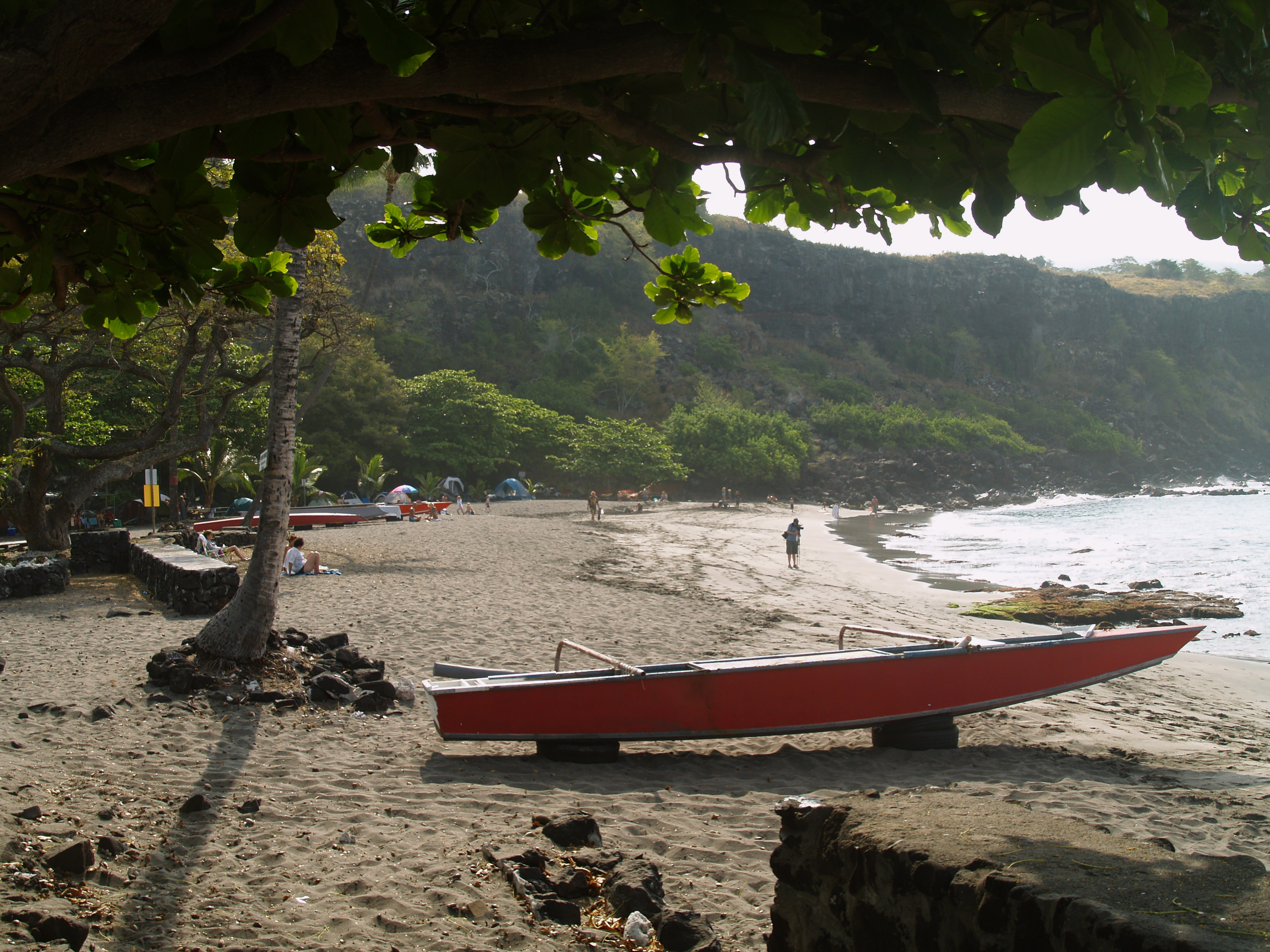
Ho'okena Beach in South Kona Is a Fabulous Beach Plunked Down in the Middle of Real Old Hawaii: Photo by Donald B. MacGowan

Ho'okena Beach: Ho'okena Beach is a fabulously beautiful beach park well off the beaten path, plunked down in the honest-to-gosh old Hawaiian village of Ho'okena. This beach has an amazing array of underwater topography populated by perhaps the greatest variety of reef fish n the island; recently rebuilt, this park has fine facilities including a refreshment stand as well as snorkel and kayak rentals. Ho'okena is a true snorkeler's mecca.
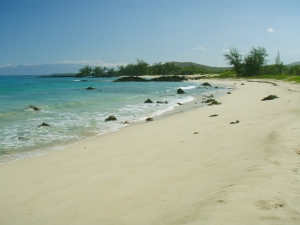
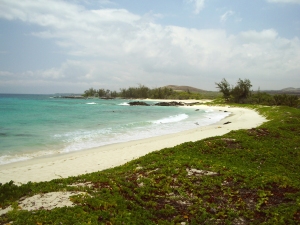
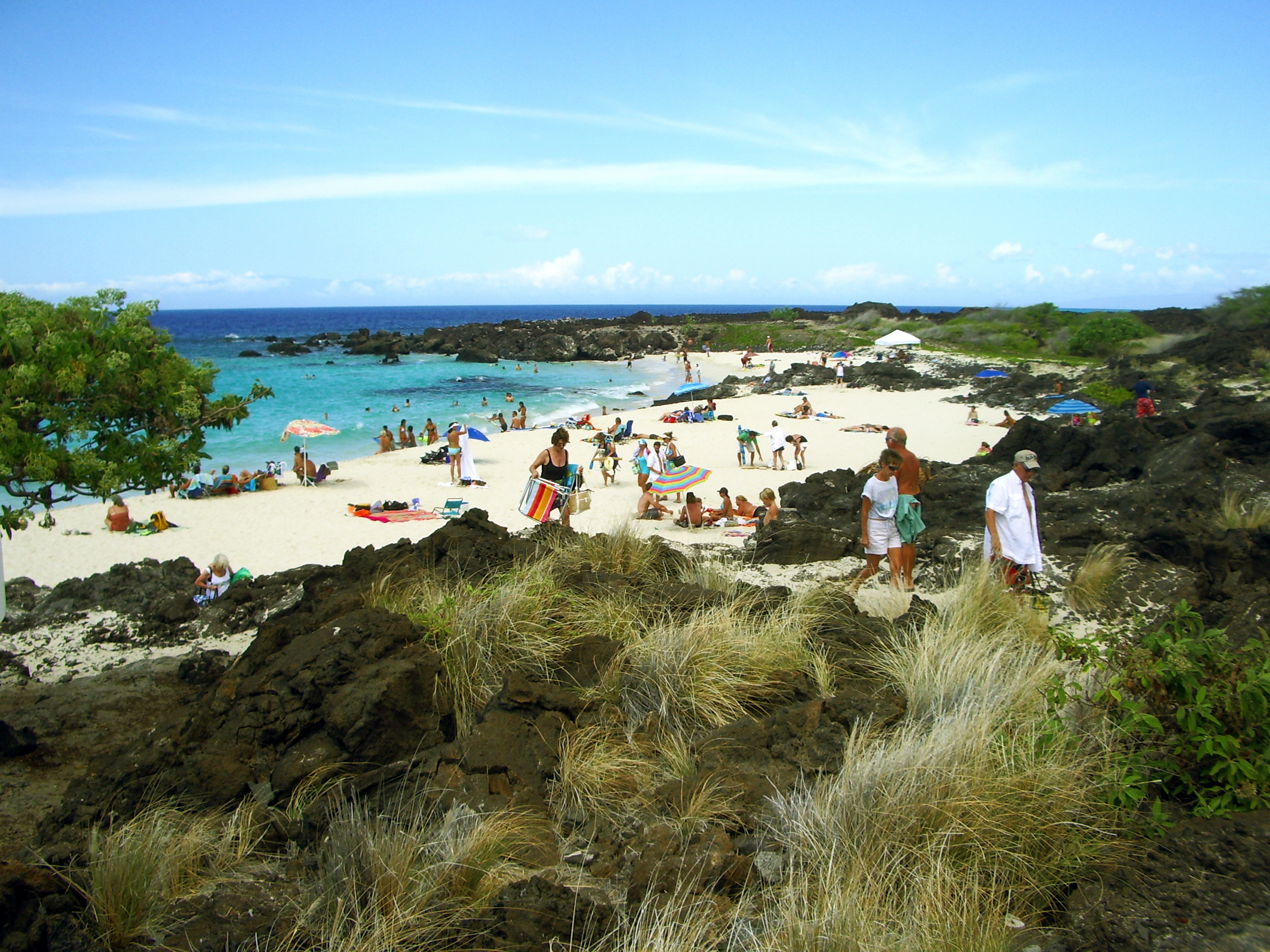
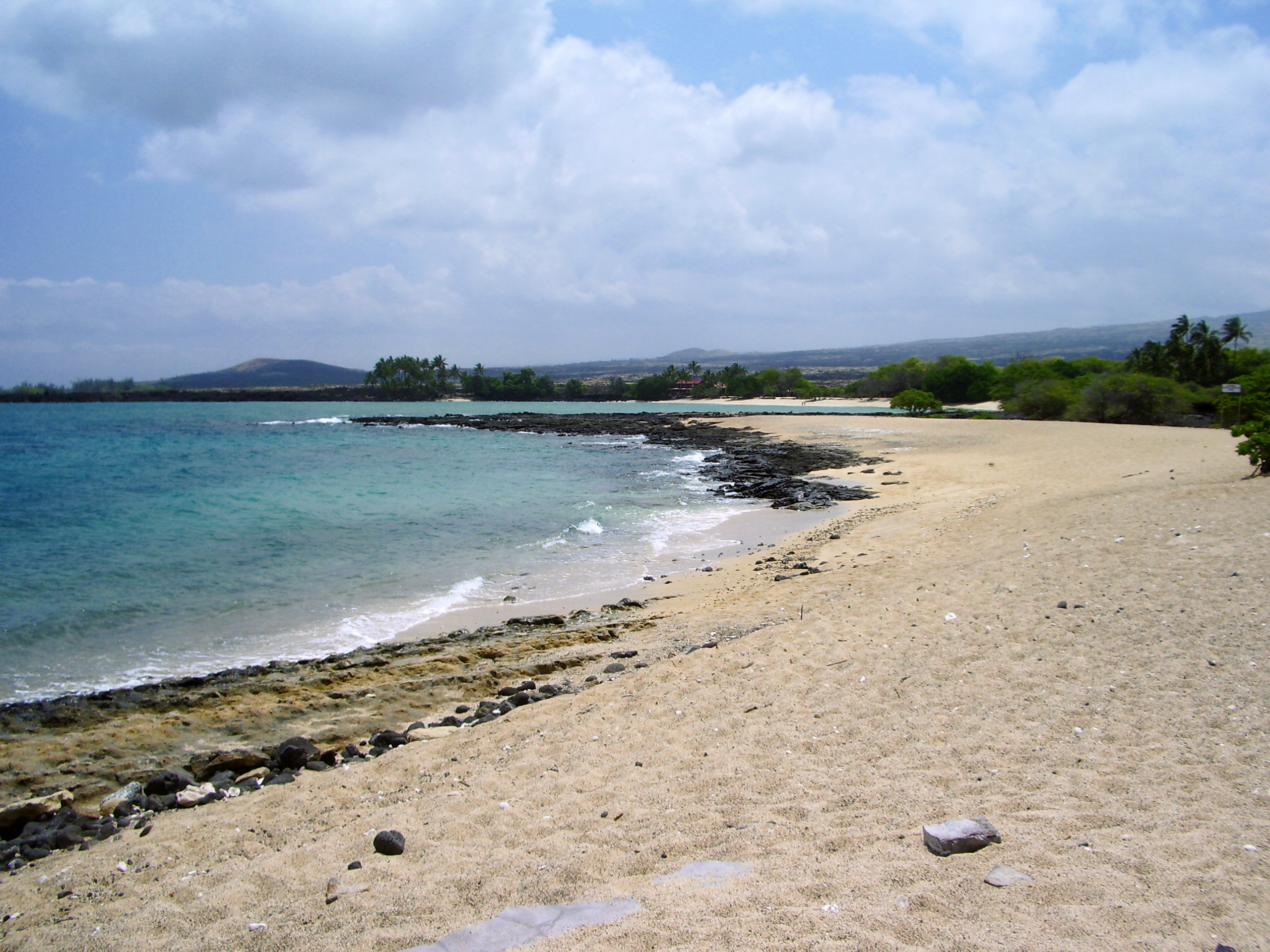
Long, Lonely and Wholly Wonderful Makalawena Beach in Kekahai State Park: Photo by Donald MacGowan

Makalawena Beach: Perhaps the loveliest wilderness beach in Polynesia, Makalawena is the perfect sand crescent, beach backed by palms and iron wood trees with morning-glory-draped sand dunes. A easy mile hike in from Kekaha Kai State Park keeps this beach uncrowded. Snorkeling here is better than perfect. Simply drive to Kekaha Kai State Park and walk the well-marked trail north to the beach.
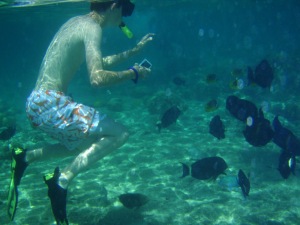
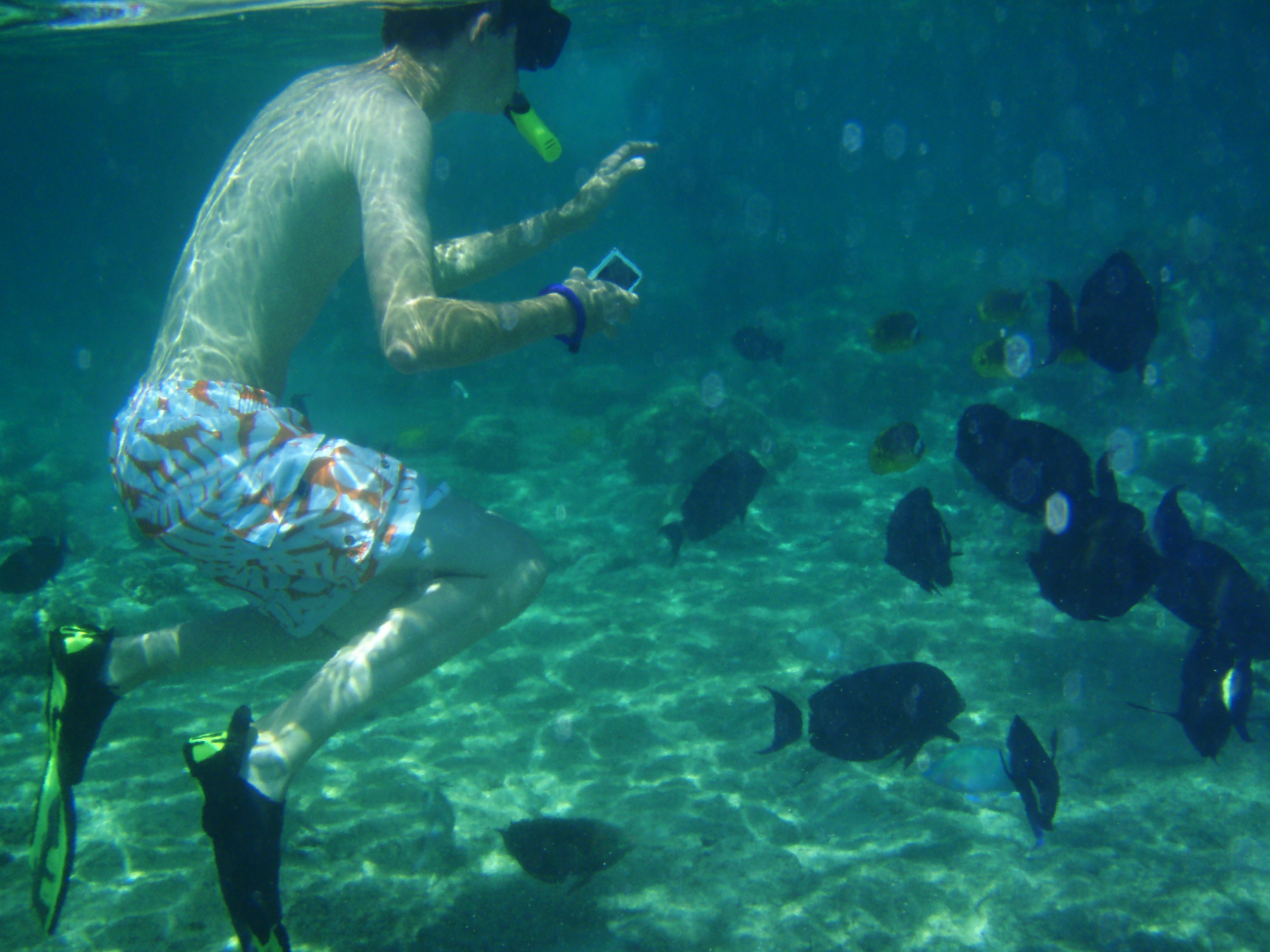
Bradford MacGowan Photographs a school of Humuhumuele'ele at Kahalu'u Beach: Photo by Donald MacGowan

Before we leave the topic of Best Snorkeling Beaches on the Island of Hawaii, we'd like to impress upon you the need to be proactive in keeping these places special and how to make your experience the best it can be. The open ocean is not your resort pool and deserves immense respect from you--the ocean is the strongest natural force on earth. Never snorkel alone, never turn you back on the ocean. Drink lots and lots of water; no, drink even more. Never snorkel after having consumed alcohol. Ask the lifeguard about conditions, chat with people coming out of the water about what they liked best and what conditions are like.

Bradford MacGowan Snorkeling at Pu'u Honua O Hounaunau: Photo by Donald MacGowan
.Gary Burton and his daughter snorkel at Hounaunau Bay: Photo by Donald MacGowan
Gary Burton and his daughter snorkel at Hounaunau Bay: Photo by Donald MacGowan

Please wear a hat and t-shirt to protect yourself from sunburn while in the water--never apply sunscreen just before entering the water,wait until you are done snorkeling and have rinsed off--sun-cream kills the coral and poisons the water. When in the water, do not stand directly upon the coral to rest, do not touch the coral or the fish; never feed the fish or other marine animals. Do not touch, approach, chase or harass the sea turtles, dolphins or whales--it's not only dangerous, it's illegal and will earn you a hefty fine. Always obey posted warnings and the lifeguard; do not swim in windy conditions (dangerous) or murky water (sharks); be aware of currents and rip tides. Jellies ride in with inshore breezes.
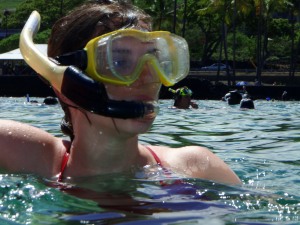
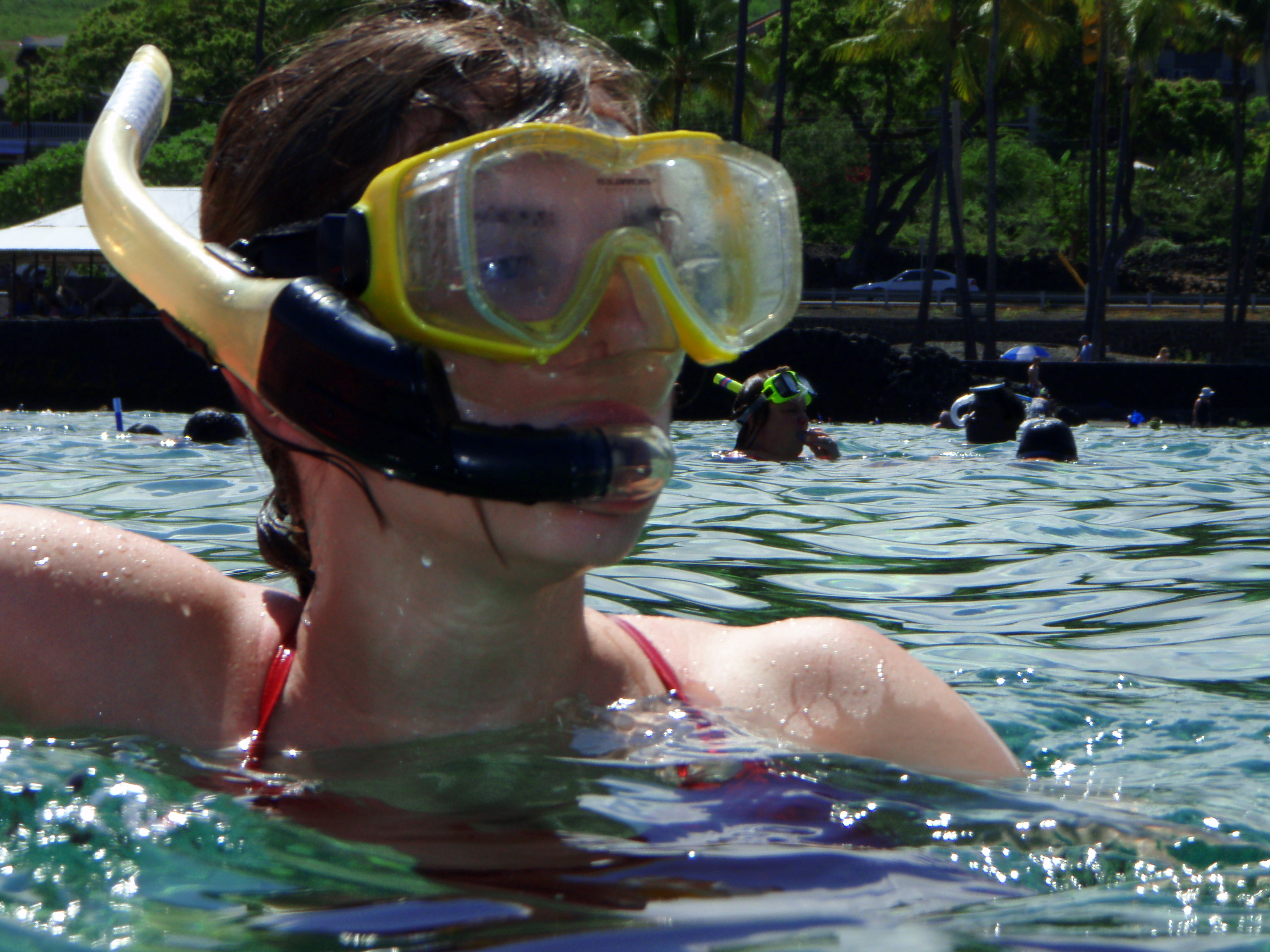
Amanda Maus Snorkeling at Kahalu'u Beach: Photo by Donald MacGowan

Get out before you feel tired, get out before you feel sunburned, get out before you get thirsty; get out before the wind comes up or the sun goes down; get out before you feel ready--you are more tired than you think. Rinse yourself and your gear off after snorkeling and remember to apply sun-cream liberally and often--you are getting more sun than you think. Always pack out everything you brought with you and dispose of your litter (and that stuff the ignorant slob over there left, as well) appropriately. These beaches get an enormous amount of pressure, try to leave Paradise a little nicer than you found it.
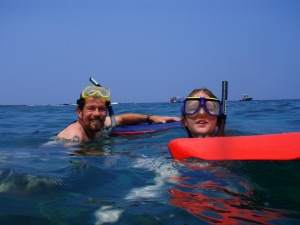
Laurie Maus Using a Boogie Board as a Floatie: Photo by Donnie MacGowan

And for heaven's sake, plunk-down ten bucks for a disposable underwater camera; in fact, buy two. I promise you will kick yourself from now until you return to Hawaii if you don't! You will want to show the folks back home your snorkel adventures, which seem to always be the most memorable of any trip to Paradise. Trust me, any money you spend on disposable underwater cameras will be the best return on investment of any part of your Hawaii vacation.

A video introducing the subject of snorkeling, technique, gear and safety can be found here.
Bart Hunt Snorkeling at Kahalu'u Bay: Photo by Donnie MacGowan

For more information of traveling to Hawaii in general or exploring the Big Island in particular, please also visit www.tourguidehawaii.com and www.lovingthebigisland.wordpress.com. Information about the author can be found here.

Monk seal at Honl's Beach near Kailua Kona: PHoto by Donald B. MacGowan
Monk seal at Honl's Beach near Kailua Kona: Photo by Donald B. MacGowan

All media copyright 2009 by Donald B. MacGowan.

Sunday, August 9, 2009

Best Beaches in Hawaii: Part 4, Wilderness Beaches of the Big Island

by Donnie MacGowan
Waialea Beach in Kohala is the gateway to many small, secluded secret beaches on the Big Island...but why go any farther than this?  It's perfect! Photo by Donnie MacGowan
Waialea Beach in Kohala is the gateway to many small, secluded secret beaches on the Big Island...but why go any farther than this? It's perfect! Photo by Donnie MacGowan

Of all the Hawaiian Islands, because it is the youngest, the Big Island has the fewest and smallest beaches…this leads to crowding during the height of tourist season at some beaches. Because Hawaii is still rural, there are still some wilderness (hike-to-only) beaches; a few of them are among the best on the island.

Many wild beaches may be camped upon but you must apply for a permit from the appropriate land owner or agency. Overnight camping on Hawaii beaches in general is simplified because of the mild climate--preferring a more intimate camping experience that is facilitated by Hawaii's generally warm, calm weather, usually I just take a few quarts of water, a couple sandwiches, my camera, dry clothes for post-snorkeling comfort, a fleece blanket (a dry beach towel will suffice--generally there is no need for a sleeping bag) and rice mat to sleep on and a small tarp on the off-chance it rains. You may wish to bring a few extra quarts of water to rinse the salt off after bathing--many people find it difficult to sleep with salty skin.

The Trail to Makalawena Climbs Over the Final Sand Berm to the Beach: Photo by Donnie MacGowan

However, in truth, you are usually so close to the parking lot, and most trails are short and easy (exceptions: Green Sand Beach and Waipi'o), that you can bring just about anything you can carry in--just be sure to take back out everything you brought. On these delicate and beautiful beaches it is imperative to practice good backcountry skills and leave no trace. Fires are illegal on these beaches as is hacking down the few trees and bushes to make shelter; even if it wasn't illegal, it would be immoral in the extreme to wreak such havoc and destruction on the last of Polynesia's superb, wilderness beaches.

There are wild goats that inhabit the areas around backcountry beaches and use the local springs for watering. Usually they evince little curiosity about, or fear of, visiting humans. However, they are wild and they are big and they are ornery--you are best to keep your distance, do not harass or try to feed them. This includes your garbage management, as garbage will attract them, too. Mongooses can also be a problem, raiding your garbage and food supply. Like all desert animals, the goats and mongooses are hungry for salt and have been known to steal and eat sweaty hiking shoes, t-shirts and socks. Keep a clean campsite, keep your garbage tightly bagged and you should have no problem. Remember La'amaomao, God of the Winds…keep things tidy. Remember to treat all water by boiling, filtering or chemical disinfection: leptospirosis, giardia and liver flukes infect many bodies of fresh water here.

Two things to bear in mind—although is sometimes doesn’t seem it, Hawaii DOES have tides…camp well back of the beach area. Secondly, beach fires are not only illegal, they are hugely dangerous on most beaches on the west side.

Golden Fresh Water Pond at Makalwena Beach: Photo by Donnie MacGowan
Golden Fresh Water Pond at Makalwena Beach. On Hawaii, All Fresh Water Sources Should Be Treated As Suspect...Giardia, Leptospirosis and Liver Flukes Infect Many Of The Springs, Creeks and Lakes: Photo by Donnie MacGowan

Some beaches require fees or permits to camp, others may not, but all are subject to change. Be sure to check with the Hawaii State Department of Land and Natural Resources as you plan your trip.

Pololu Valley Beach

Looking Across the Black Sand Beach at Polulu Valley Towards Pololu Overlook At The End Of Highway 19: Photo by Donald B. MacGowan

Violent, lush, wild; the north end of Hawai’i Island is as varied and exciting as it is unexpected. At the end of Highway 19 are the Pololu Valley Overlook and the trail leading down to Pololu Beach. This is one of the most untamed, beautiful spots in the tropical Pacific and should not be missed. The trail down to the beach drops 400 feet in 20 minutes of hiking—be warned, the hike up is difficult for those not in good physical shape and the hike down should not be attempted if you have doubts about being able to hike back up.

The beach is not usually swimmable due to the violent surf and ocean currents, but makes a wonderful place to picnic and contemplate the awesome power and violence of nature.

For the adventurous, the hike down to Pololu Valley may not be enough—for them may we suggest further hiking in this lightly-traveled area. Pololu is the starting point for over 40 miles of interconnecting tails, as well as the Kohala Ditch. There are also trails to spectacular waterfalls at the back of Pololu. Valley. Trails in this area are steep, unmaintained, crumbling and frequently quite slick, so caution is advised, particularly on hillslopes and in the rain, when trails may turn into streambeds and hillsides into waterfalls.

The valley itself is private land, so stay close to the beach. The best place to cross the stream is usually about 80-120 feet inland and during either slack or high tide; spend a few minutes to find the stone ford for an easier crossing.

Bring good insect repellent and wear hiking boots, with tabis in your pack for stream fording and beach walking. Stream water in the valleys is infected with leptospirosis bacteria, so ring plenty of water (at least two liters per person) in your pack. A camera is a must.

Donnie MacGowan At The Golden Ponds Near Ke-awa-iki Beach: Photo by Bart Hunt

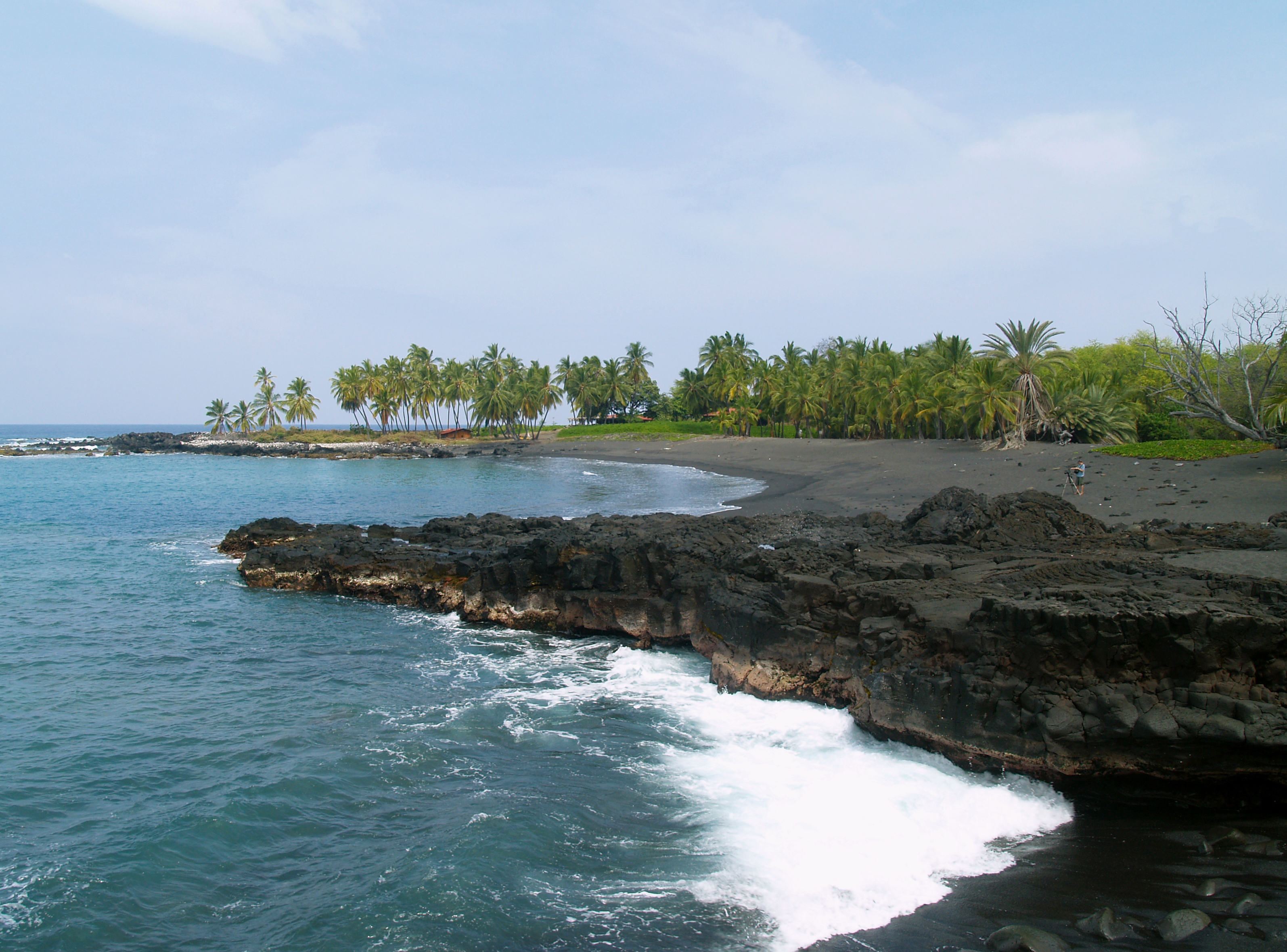
Ke-awa-iki Beach (park off Highway 19 just north of Mile 79; walk along gravel road towards the ocean to a fence and foot trail; about 15 minutes to beach): A little walking over a lava road and a’a rewards you with a beautiful beach many locals don’t know about. This tiny black-sand beach has good snorkeling on the south side, where there is still a pocket of white sand. This unique black and white sand beach was created after the 1859 eruption of Mauna Loa, when lava reached the north end of the beach, where the black sand is today. Further south along the beach, the recent black sand has not had time to thoroughly mix with the pre-existing white sand.

If one continues south there are numerous tide pools to explore.

Hiking north, one comes to Pueo Bay, where freshwater springs make the snorkeling interesting but weird, with large temperature and salinity gradients. If one takes the trail heading inland towards a conspicuous growth of hala trees, one comes to a pair of lovely golden pools. A golden algae gives these pools their distinctive color, but be sure not to damage the growth by walking on it. Finish the trek by hiking back across the a’a…approximately 4 miles, round trip.

Photo by Donald MacGowan
Makalawena Beach on the Big Island is the epitome of Hawaiian white sand beaches...and it's always uncrowded: Photo by Donald MacGowan

Makalawena Beach (turn off Highway 19 south of Mile 90 at Kekahakai State Park; at the end of the road, take obvious trail north over lava field; the trail traverses rough lava and keawe breaks, so shoes are required): Makalawena is the finest swimming and snorkeling beach on the island and the most beautiful beach setting. This beach sports a series of coves, refreshing shade, big sand dunes and a nice freshwater pond to rinse-off in. A great backpacking getaway, a one-way through hike along the Ala Ali'i trail from Kekahakai State Park, past Makalawena to Kual Bay is a fabulous trip. Do not forget your camera; this hike will be a major highlight of your trip to the Big Island.

The land fronting the beach is owned by Bishop Estate and is slated to be turned into a development of condos and resorts; vigilance and protest on the part of locals and visitors is the only way we can keep this last, wild Kona beach wild.

Looking Back Toward The Beach at Pawai Bay: Photo by Donnie MacGowan

Pawai Bay (in Kailua Kona, drive to the end of the Old Airport County Beach Park; hike along the ocean to the first, obvious, sandy bay): Spectacular, secluded, secret; Pawai Bay is perhaps the most interesting snorkeling spot on the island. Walk along the sea cliffs and coves about 15-20 minutes north, to the Queen Liliuokalani Children’s Camp at Pawai Bay. Remember, non-Hawaiians are restricted to travel along the tidal zone and only the edge of the shoreline…to venture even a few feet inland is trespassing. The ever-watchful security guards will remind you of this. Repeatedly.

Pawai Bay hosts a choice sandy beach with a small channel leading to open ocean and exciting snorkeling. Many charter snorkel tours bring clients here, but you can visit free by making the short hike in. Submerged caverns, arches and caves are filled with fish and coral and pristine water. From the shore, this is not a snorkel adventure for rank beginners.

Swim through the sandy bay to the channel and out to the cliffs. Be wary of surginess and don’t go in when the surf is big. Once in the larger bay, look back toward shore where numerous small channels lead shoreward but dead-end in cliffs; your passage back is the only channel through which you can see sand at the end. Remember this when trying to get back into the little bay.

The bay itself lies on Queen Liliuokalani Trust lands. Non-native Hawai’ians are not allowed on the land or to use the facilities. State beach access laws allow you to visit as long as you stay immediately along the shoreline; the beach is patrolled 24/7.

Kealakekua Bay from the Captain Cook Monument. Simply the finest snorkeling.  Ever.  Photo by Donald MacGowan
Kealakekua Bay from the Captain Cook Monument. Simply the finest snorkeling. Ever. Photo by Donald MacGowan

Captain Cook Monument (The trail leaves the Napo’opo’o Road right at telephone pole number 4, just 500 feet below where it drops off Highway 11; parking is tight, but safe): This hike is a fine walk through tall grass, open lava fields and dryland forest, opening onto one of the most pristine ocean beaches in the world. Hiking down to the Monument is great fun—the return is hot, thirsty and strenuous but rewards you with panoramic views of the coast. The 2.5-mile hike takes about an hour down, somewhat more to return. The trail runs straight down the left side of a rock wall toward the sea. As the pitch straightens out, keep to the left at the fork and proceed to the beach through the abandoned village. You strike shore several hundred feet northwest of the monument—remember to bear right at the trail junction when returning, or you face a long and unpleasant time wandering the a’a fields.

Snorkeling at the monument is wild and scenic, from shallow tidepools north of the wharf to the steep drop-off under the cliffs. There is a concrete marker in the tidal zone denoting the exact spot Cook fell somewhat north of the actual monument.

Honomalino Beach (turn off Highway 11 just south of mile marker 89, drive through Miloli’i; start hiking between the county park and a yellow church. Keep along the right at forks in the trail, in and out of the surf line, to avoid private property): A true gem of West Hawai’i and rarely crowded, Honomalino Bay is reached by a 20 minute hike from the south end of Miloli’i Beach County Park. Snorkeling is very interesting on the north side in the rocks, when the surf is low. The water, though very clear, is sometimes quite cold due to spring discharge in the sand on the beach.

Photo by Donnie MacGowan
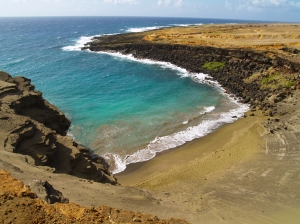
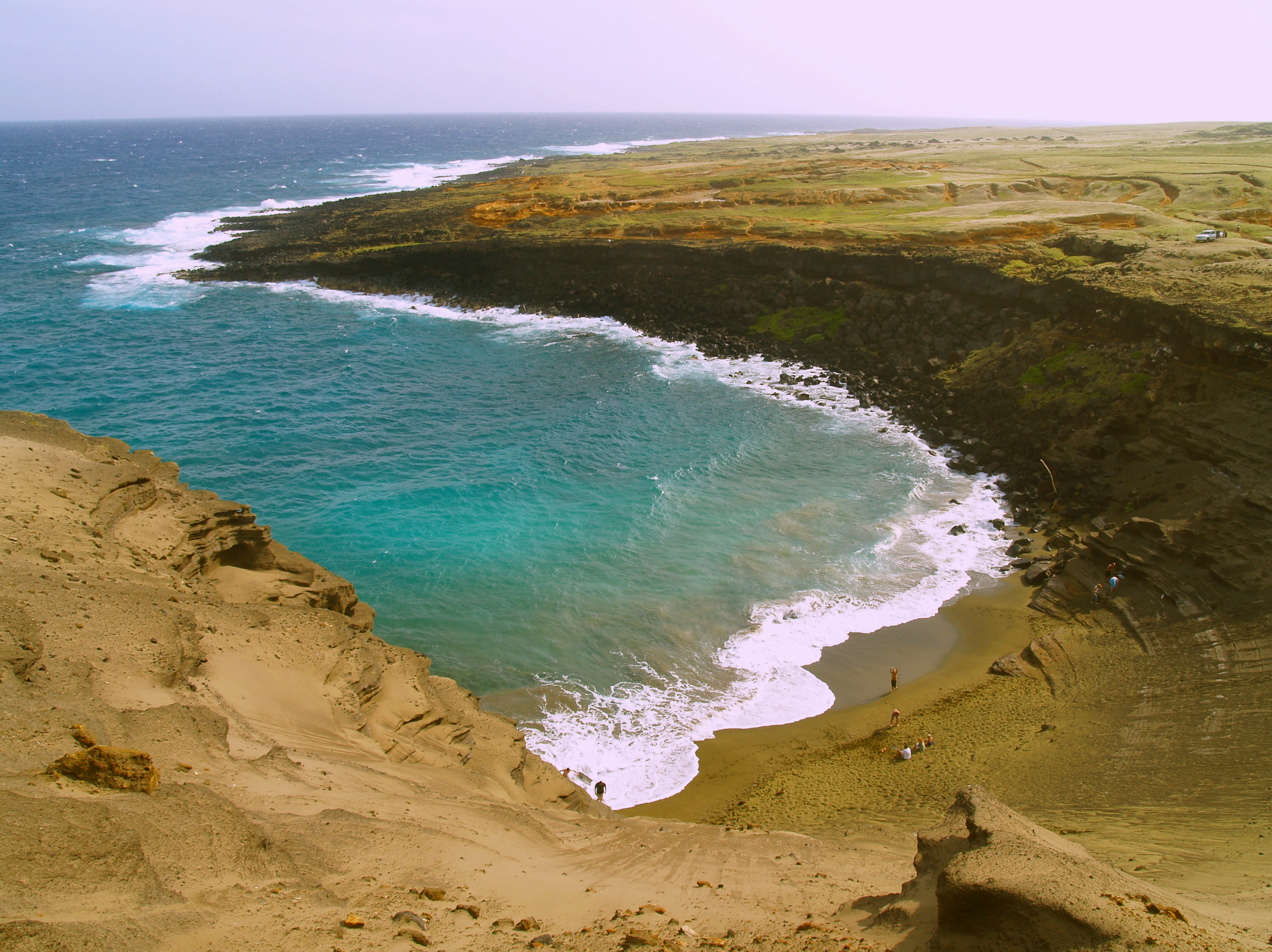
Mahana Green Sand Beach at South point on the Big Island: Photo by Donnie MacGowan

Mahana Green Sand Beach (Turn off Highway 11 to South Point, follow signs to Mahana Boat Launch. Park just above the boat ramp for the 2 1/4 mile hike to the Green Sand Beach): Absolutely unique to Hawai’i, beautiful and strange, are the green sand. The green sand beach at South Point is the best known, largest and most accessible of these. The sand grains here are olivine crystals, washed out of a cinder cone that has been partially breached by the sea.

When you reach the end of the trail, you are a hundred or so feet above the beach on the rim of the remnant of the crater. At the start, there is a tricky spot edging over a 3-foot ledge, but below this the trail is wide and clear One can also easily scramble down middle of the cone, but this can be slippery. Although tricky to spot on the way down, from the beach looking up the way back to the crater rim is easy to follow.

The beach lies in the interior of the cone, and the protected cove makes for a wonderful swimming/snorkeling spot but be wary of currents. Do not go out far, nor in at all in high surf or strong winds. The bizarre color of the water shrieks for color photographs, particularly underwater photographs taken while snorkeling.

Waipio Valley Beach

Waipi’o Valley is arguably the most magical place on the Big Island. Hawai’ian myths hold that the fastness of Waipi’o Valley is guarded by Night Marchers, legendary ghosts of Kamehameha’ long-dead armies, and that the impossibly steep, incredibly beautiful valley was excavated by a bragging warrior using his club to demonstrate his strength.

The steep canyon walls and verdant fields of the valley floor, the mile long black sand beach and numerous immense waterfalls that line the valley walls all call out to the visitor for exploration, but this can prove challenging.

There is a four-wheel drive jeep road down into the valley but you really (and I mean REALLY) do not want to drive it, even in a four-wheel drive vehicle. Perhaps the most satisfying way to see Waipi’o Valley, however, is the way the ancient Hawai’ians did, by walking forthrightly down into it and then creeping, wheezily, back out. However, if you attempt this hike, don’t be deceived by the numbers. The hike may entail less than a thousand foot elevation loss (and subsequent gain to climb out) and fewer than 2 miles actual walking, but it feels much longer; it is hard, hot, dry, steep and, oh yes, did we mention hard? The hike down into the valley takes about ½ an hour. Allow twice that again for exploration of the valley floor and beach and at least an hour to walk back up.

If you do go down into the valley, no fresh drinking water is available, so take lots. When you hit the valley floor, the road to your right (toward the ocean) goes to the beach and a spectacular 300 foot waterfall. Here, you may wander through tamarisk and fir copses along the black sand beach, bathe in the waterfall or hike across the ridge into the next valley. Be forewarned, swimming and surfing here are for experts only, due to the strong currents and big waves. Do not attempt to hike past the headland cliffs into adjacent valleys—it may seem passable, even tempting, but it is in fact impossible and extremely dangerous.

At the intersection at the foot of the valley, the road through the jungle tunnel to your left crosses private property; you should have permission to drive or walk here. Down this road, toward the back of the canyon are numerous, enormous, crazy waterfalls and scenery like you will see no where else on earth. Waipi’o Valley is truly a magical place.

Camping here is by permission of the Bishop Estate/Kamehameha Schools Land Asset Division (808.534.3935).

Hikers Pause at the Stream Along the Beach, near the Mouth of Waipi'o Valley: Photo by Donald B. MacGowan

A video covering snorkeling topics is available here.

For more information about visiting and touring Hawaii in general, and exploring the fabulous snorkeling on the Big Island in particular, please visit www.tourguidehawaii.com and www.lovingthebigisland.wordpress.com. For information about the author, go here.

All media copyright 2009 by Donald B. MacGowan

Friday, August 7, 2009

Best Beaches in Hawaii: Part 3, Unusual, Uncrowded and Untamed Beaches of South Hawaii

by Donald B. MacGowan

Sometimes lost in the shuffle between visiting the mile-long sugar-sand beaches of Kohala and the spectacular snorkeling at the Kona-side beaches, the southern beaches of Hawaii Island are by no means second class, poor cousins. Beautiful and alluring in their own right, many are highly unique, offering unusual conditions and rare scenery, all are well worth visiting and none are more than a couple hours drive from Kona or Hilo. Here is a smattering of the best of the Southern Beaches of Hawaii Island. All these beaches are a bit off the beaten track and, with the exception of Punalu'u, aren't on any standard tour of the island. Many of these are remote, none are crowded.

We always advise visitors to be careful with their possessions and leave no valuable in the cars. The locals are friendly and open, so let your smile be your passport and talk story with them; open yourself to an adventure that only begins with getting to know the people of Hawai'i and visiting their beaches.

Mahana Green Sand Beach (see video)

The Beautiful Green Sand Beach at South Point of the Island of Hawaii is Reached by an Easy 2 1/4 Mile Hike: Photo by Donald B. MacGowan

Absolutely unique to the island of Hawai’i, beautiful and strange, are the handful of green sand beaches composed of crystals of the semi-precious mineral olivine (also known as peridot). The green sand beach at South Point is the best known, largest and most accessible of these. The sand grains on this beach are formed from olivine crystals weathering out of the lava and cinders from the cone over an eruptive vent that has been partially breached by the sea. The beach lies in the interior of the cone, and the somewhat protected cove formed by the remnant of the cone makes for a wonderful swimming/snorkeling spot. Be very wary of currents and do not go out far nor in at all if the surf is high or there are strong winds. The bizarre color of the water shrieks for color photographs, particularly underwater photographs taken while snorkeling.

To get here take the South Point Exit from the Hawaii Belt Road between Ocean View and Na'alehu; drive to South Point and, where the road splits, take the Mahana Boat Ramp (left) branch of the road. This road is dirt and broken pavement, but is quite good until the last couple hundred yards above the boat ramp. Park in the obvious flat spot just above the boat ramp and be sure to leave no valuables in your car. The 2 1/4 mile hike is along a terrible dirt road to the Green Sand Beach; the gate at the start of the road may or may be locked...just walk around it. Road conditions along the road to the beach vary dramatically from week to week and the road becomes impassable with even a gentle rain; therefore we do not suggest driving it at all but enjoy the short, pleasant hike. The beach lies in the center of a cinder cone breached by the sea. Once you reach the edge of the cone the obvious trail goes over the side and along the interior wall, angling toward the beach, Alternately, one can hike to the top pf the cone and pick your way down the steep cliff and sand slope (there are a set of stairs at the very top--then it gets tricky); this is very direct, but can be slippery and treacherous. Be wary of rip tides and currents, do not swim beyond the protected reach of the bay. Aren't you glad you read this article before you came here? Now that you are here you understand why I insisted you buy a disposable underwater camera and bring it...look at the color of that water! There are no services or facilities here. At all. None. And a goodly long way to drive to get to any…plan and act accordingly.

Punalu’u Black Sand Beach Park (see video)

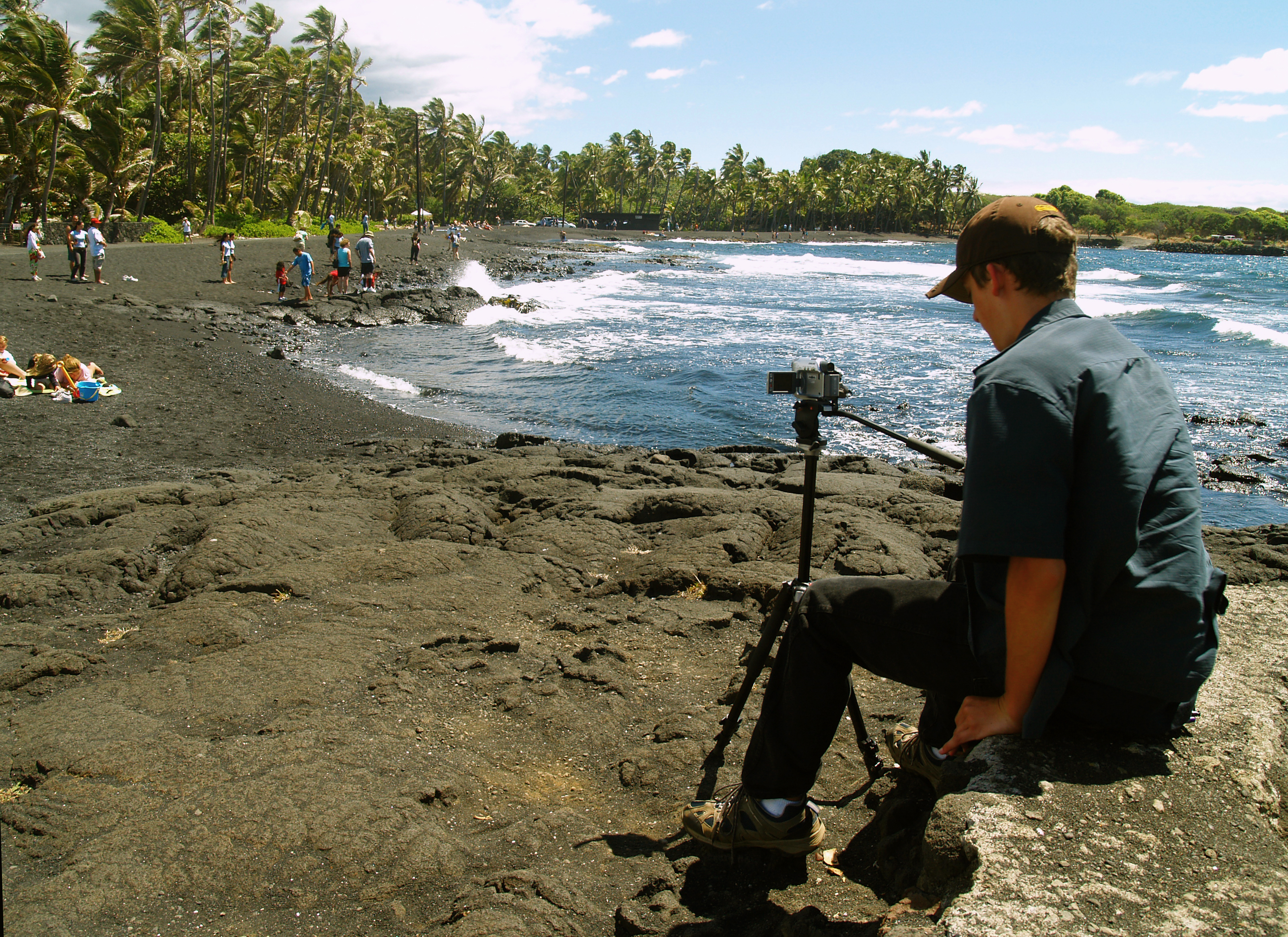
Bradford MacGowan Filming at Punalu'u Beach: Photo By Donnie MacGowan

A truly remarkable place of great peace, beauty and spiritual healing, Punalu’u’s black sand-lined coves and beaches are world-renowned. Dozens of endangered Hawai’ian Green Sea Turtles swim the waters of Kuhua Bay, Ninole Cove and Punalu’u Harbor and frequently bask on Kaimu Beach here. The wildness of the ocean and the serenity of the freshwater fishpond and coconut palm-shaded beaches make this an ideal place to spend some soul-recharge time. Snorkeling, picnicking and camping, or just relaxing on the beach, are major destination pass-times here.

Punalu’u means “springs you swim to”; it is the abundance of these fresh water springs just offshore that makes swimming at Punalu’u so cold and this settlement site so important to the ancient Hawai’ians. In pre-contact times, due to the scarcity of fresh water along the Ka’u coast, Hawaiians would swim out into Kuhua Bay with stoppered gourds, dive down on top the springs, unstopper the gourds and, by upending them underwater, fill them with the fresh spring water emanating from the floor of the bay. These springs are one of the very few sources of fresh water on this entire end of the island.

Available services include water, picnic tables, restrooms, electrical outlets, and pavilions, parking; camping is by permit only. During peak tourist time, there is a souvenir stand with some packaged food items and canned drinks for sale. Due to chilly waters, off-shore winds, strong currents and a fearsome rip, swimmers and snorkelers should use caution when swimming at Punalu’u, but it’s hard to resist getting in and swimming with all those turtles.

Kaimu Black Sand Beach

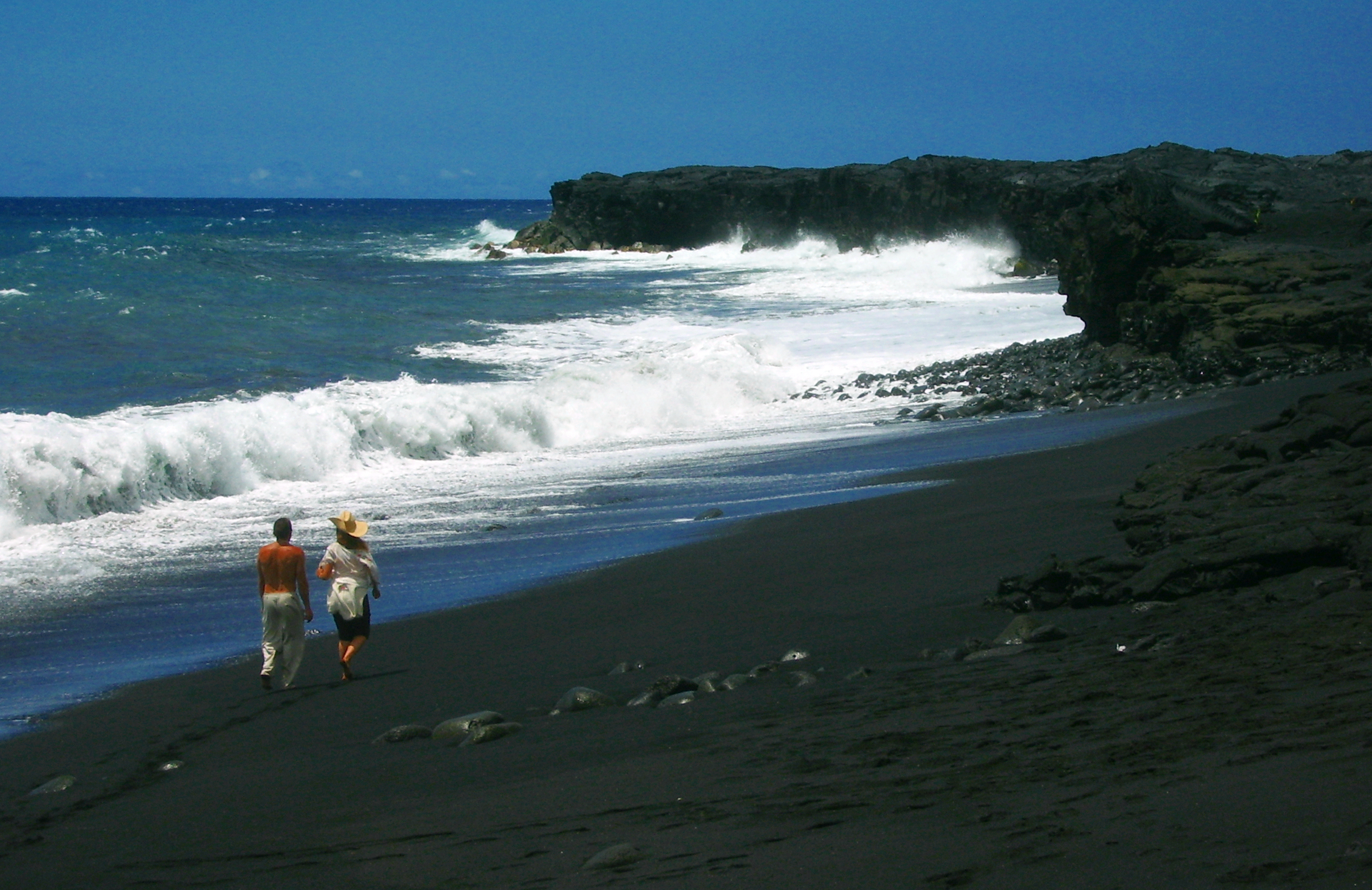
Kaimu Black Sand Beach near the Village of Kalapana: Photo by Donald B. MacGowan

The state’s newest black sand beach, Kaimu Beach, is a barren crescent of sand fronting an unforgiving expanse of lava from the 1990 flows. The old beach and the fishing village of Kalapana that stood along it are long gone, buried under 50-75 feet of lava. The palm trees growing along this trail are the result of one woman’s commitment not to allow her community, her beach, her culture to die under the lava. Planting thousands of palm sprouts, she encouraged her community, school children state wide and hundreds of others to plant the young trees. Today, the realization of her vision of rebirth is in the growing palm groves out on the barren lava plain. The trail to the new black sand beach is marked with these young palms.

Near the parking area along the path are exposed fossils, lava casts of palm trees and other plants…keep a sharp eye out, they are everywhere. Swimming is hazardous at the new beach, so is surfing, the ocean currents being strong and treacherous. But take some time to relax, wade, feel the sand beneath your feet and contemplate the drive of one dying woman to rebuild a world she loved from a devastation few of us can imagine. From the lava hillocks along the trail are nice views of the eruption plume at Pu’u O’o, on the flank of Kilauea as well as the steam clouds where the lave enters the sea at Waikupanaha. This is one of the few places where both can be seen easily and at the same time.

Kehena Beach

Kehena in Puna is a Gorgeous Gem of a Beach; Frequently Clothing Optional, There Is a Sense of Both Community and Welcome Here: Photo by Donnie MacGowan

When the eruption of 1955 created this beautiful black sand beach, the County was swift to capitalize on it and, creating a wonderful beach park, built stone steps down the cliff to the beach. When the beach dropped a full 3 feet during an earthquake in 1975 the stairs were shattered. Like so much else around this island, these stairs were never rebuilt and today terminate about ten feet above the current level of the beach—if you want to get down to the beach, therefore, you must take the dirt path that goes out of the left side of the parking lot.

Once on the beach the first thing that may strike you is that many of the locals who frequent this park have forgotten to put on proper beach attire…or any other attire whatsoever, for that matter. The second thing that will strike you is what a lovely, wonderful spot this is. In the shade of palms and ironwood trees this primeval and idyllic beach is generally sunny even when the rest of Puna is rainy. Swimming here is great, but ocean currents are strong and dangerous not far from shore. The locals are friendly but frisky, so don’t leave valuables in your car.

Pohoiki Beach at Isaac Hale Beach Park

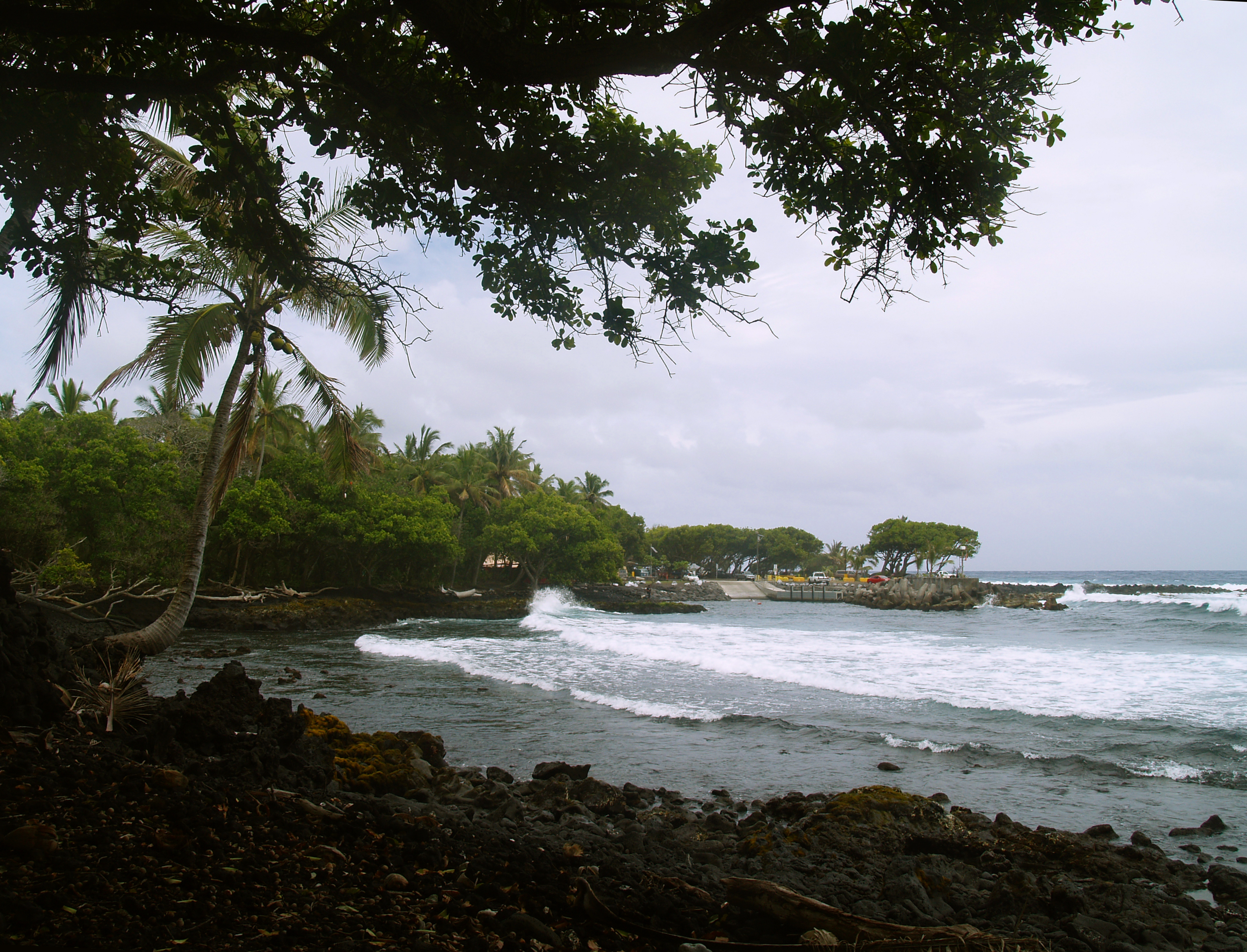
Looking Across Pohoiki Beach to Isaac Hale County Beach Park: Photo by Donald B. MacGowan

A lovely black sand beach with an expert surf break, Pohoiki Beach is one of the very few real beaches and boat ramps in Puna District; as such this park sees a lot of traffic. It is also the site of the best surfing and some of the wildest snorkeling and scuba diving in Puna. If you do get in the ocean here, go in left of the boat ramp—be alert to bodacious boat traffic (they won’t be alert for you) and for fairly dangerous ocean currents. Understandably, given the crowded nature of this small place, some locals are less than welcoming of visitors. Graciously share this ocean treasure with the residents, but and leave no valuables in your car.

A short path along the shoreline leads from the parking lot, past a house with abundant “No Trespassing” signs, just a few minutes stroll then turns about 20 yards into the jungle to a secluded, perfectly lovely natural hot spring that is wonderful for soaking. Locals usually don’t bother with swimwear here, you shouldn’t feel required to, either.

The facilities at Isaac Hale Park Beach Park have been recently rebuilt, refurbished, upgraded and expanded considerably—this once run-down park is now a quite well-appointed. The facilities include of expanded parking, soccer fields, picnic tables, showers and port-a-potties. Camping is allowed with a Hawaii County permit.

Kapoho Tide Pools

The Kapoho Tide Pools Offer a Unique, Fascinating Snorkeling Experience: Photo by Donnie MacGowan

Stuffed with abundant sea life, this sprawling basin of lava tidal pools is a remarkable treasure for snorkelers of all abilities from the starkly frightened to the seasoned veteran. Moorish idols, yellow tangs, various wrasses and eels, sea urchins and sea cucumbers abound and there are even some nice corals in the deeper pools. The largest pool is called “Wai Opae”, which means “fresh water shrimp”. Keeping to the left of the main channel keeps one away from most of the ocean currents, which can be surprisingly strong, even in small reaches, where ponds empty into the ocean.

An amazing place to spend the day, Kapoho Tide Pools has wonderful snorkeling for people of all levels as well as other general beach activities, including just plain beach exploring, shell collecting, swimming and fishing. No real facilities exist here beyond the parking lot, so come prepared.

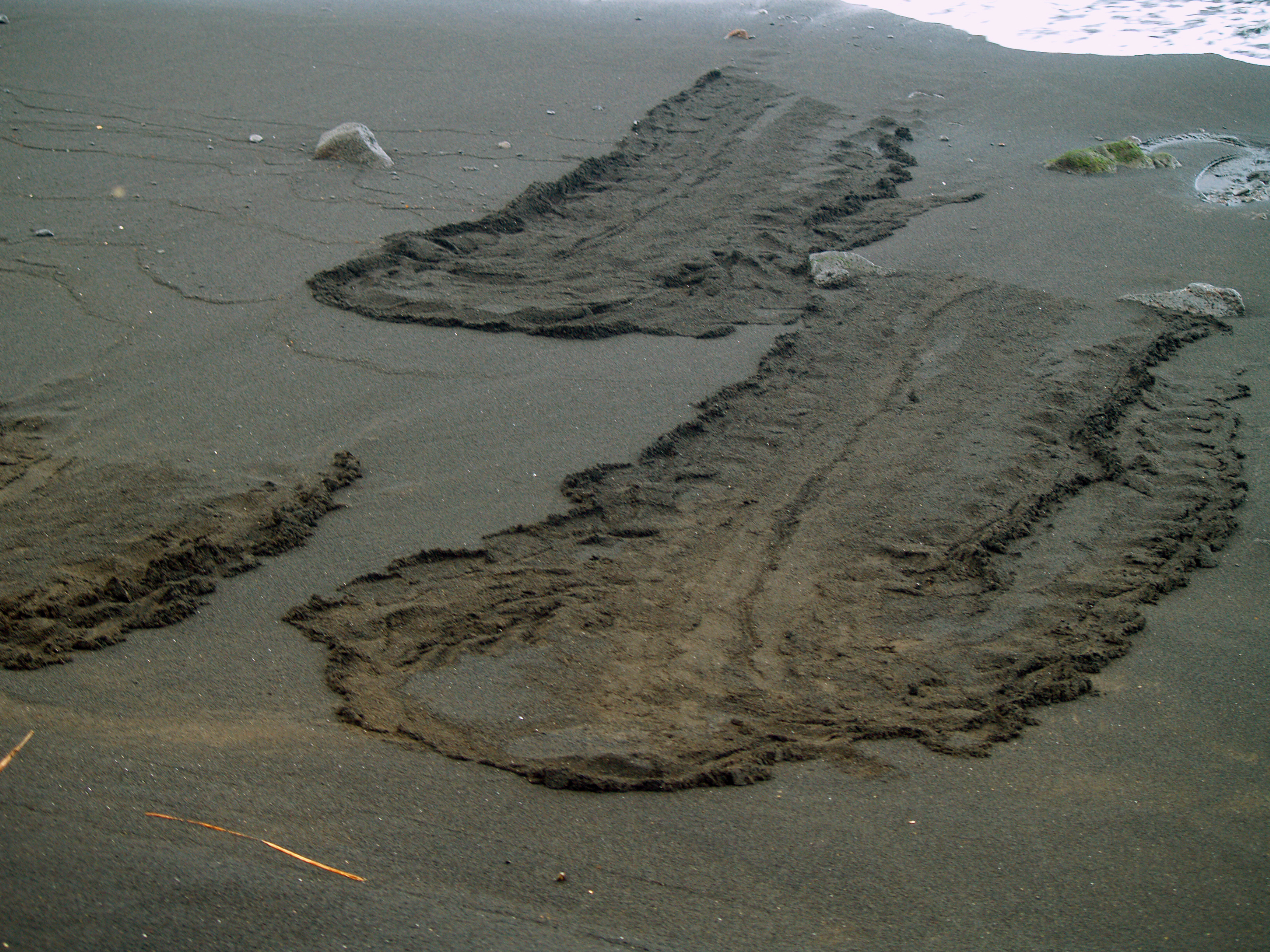
Hawaii's Beaches Offer Much More Than Just Sunbathing and Snorkeling--Many Are Associated With Cultural or Historical Sights and Have Intersting Tidepools and Wildlife.  Here, Endangered Green Sea Turtles Leave Enigmatic Tracks In The Sand At Punalu'u Beach: Photo by Donnie MacGowan
Hawaii's Beaches Offer Much More Than Just Sunbathing and Snorkeling--Many Are Associated With Cultural or Historical Sights and Have Interesting Tidepools and Wildlife. Here, Endangered Green Sea Turtles Leave Enigmatic Tracks In The Sand At Punalu'u Beach: Photo by Donnie MacGowan

For more information about traveling to Hawaii in general and exploring the Big Island in particular, please also www.tourguidehawaii.com and www.lovingthebigisland.wordpress.com. Information about the author can be found here.

All media copyright 2009 by Donald B. MacGowan

Wednesday, August 5, 2009

The Best Beaches in Hawaii: Part 2, The Kona and South Kohala Coasts

by Donnie MacGowan

Imagine yourself in your home; it rains, sleets and snows through the long winter. Now imagine you are lying under cerulean blue skies bathed in healing sunlight on a warm golden sand beach, playing in bath-temperature water, and snorkeling among the brightly colored tropical fish and placid, but amazing sea turtles. Sound too good to be true? In West Hawaii, this soothing daydream is our day-to-day reality

Beaches of South Kohala and the Kona Coast

Kua Bay

Kua Bay on the Southern Kohala Coast is a Gem of a Little Beach: Photo by Donnie MacGowan

The site of West Hawaii’s newest beach park, this is a lovely white sand beach. Although there is little shade, the swimming and boogie boarding in the crystalline waters is primo. Strong currents and large waves call for respect, here; if the surf is up, don’t go in. Also, sometimes winter storm surf removes the sand to offshore, leaving a rocky shelf that is less fun than the sandy beach. A strong onshore wind can cause strong rip tides and influx of jellies.

Behind the beach on the north end is a small, inviting fresh-water pool. Don’t be seduced—it is bottomed by foul-smelling quicksand and is extremely nasty. There are sacred, native Hawaiian sites and ruins to the north of the beach. Please do not disturb them.

Park facilities include parking, picnic tables, restrooms, and water. Wild goats are frequently seen in this area.

Makalawena Beach

Long, Lonely and Wholly Wonderful Makawena Beach in Kehakai State Park: Photo by Donald MacGowan
Long, Lonely and Wholly Wonderful Makalawena Beach in Kekaha Kai State Park: Photo by Donald MacGowan

One of the last, large, wilderness beaches in Polynesia, frankly, Makalawena is the finest beach on the island and the most beautiful beach setting to boot. This is the amazing beach you flew over just before you landed at Kona International Airport. This beach sports a series of coves, refreshing shade, big sand dunes, and a nice freshwater pond to rinse off in.

This beach is reached either by traveling the (extremely) 4WD road from the highway between mile markers 88 and 89, or by hiking about 15 to 20 minutes along an easy trail from Kekaha Kai State Park. The trail goes over rough pahoehoe and a’a flows and through keawe breaks, so shoes are required.

The land fronting the beach is owned by Bishop Estate/Kamehameha Schools and is slated to be turned into a development of condos and resorts; vigilance and protest on the part of locals and visitors is the only way we can keep this last, wild Kona beach wild.

Kekaha Kai State Park

Kekaha Kai State Park Contains a Series of Brilliant, Huge Sandy Beaches, Yet Because of the Bumpy 2 Mile Drive In, Remains Almost Unknown To Visitors: Photo by Donald B. MacGowan

A superbly wonderful set of beaches and one of Hawaii Island’s gem parks. The northernmost and loveliest beach is Mahai’ula and the smaller, less fine one is Ka’elehuluhulu Beach. The water is fine for swimming and boogie boarding but may be a little murky for ideal snorkeling. There are numerous small springs making the near-shore water a little cold.

The mansion of the original owners, the Magoons, can still be seen on the northern edge of the beach. Tours of the mansion have become scarce to sporadic in recent years; if you are interested, contact the Kona Historical Society.

Turn makai at the State Park sign, between mile markers 90 and 91; the road seems nasty to impassable but in fact, most passenger cars can manage it. Facilities include public restrooms and picnic tables, but no drinking water.

Honl’s Beach

Honl's Beach on the Edge of Old Kailua Town: Photo by Donald B. MacGowan

This small beach on the outskirts of Old Kailua Town is a favorite spot for surfers and boogie boarders, but also has very nice snorkeling and is an excellent place to view the sunset and picnic. Remember when going into the water here, there is a fairly strong current to the north, so stay in the shallow reef area close to the beach. Parking is on both sides of Ali’i, but can be tight here during good surf; crossing Ali’i drive can be harrowing at certain times of the day. A new bathroom with running water has recently been constructed on the mauka (mountain) side of the road.

Kahalu’u Beach

Kahalu'u Beach is Kona's Premiere Snorkeling Spot But Is Also A Fabulous Place To Watch Dolphins, Whales and Sunset: Photo by Donnie MacGowan

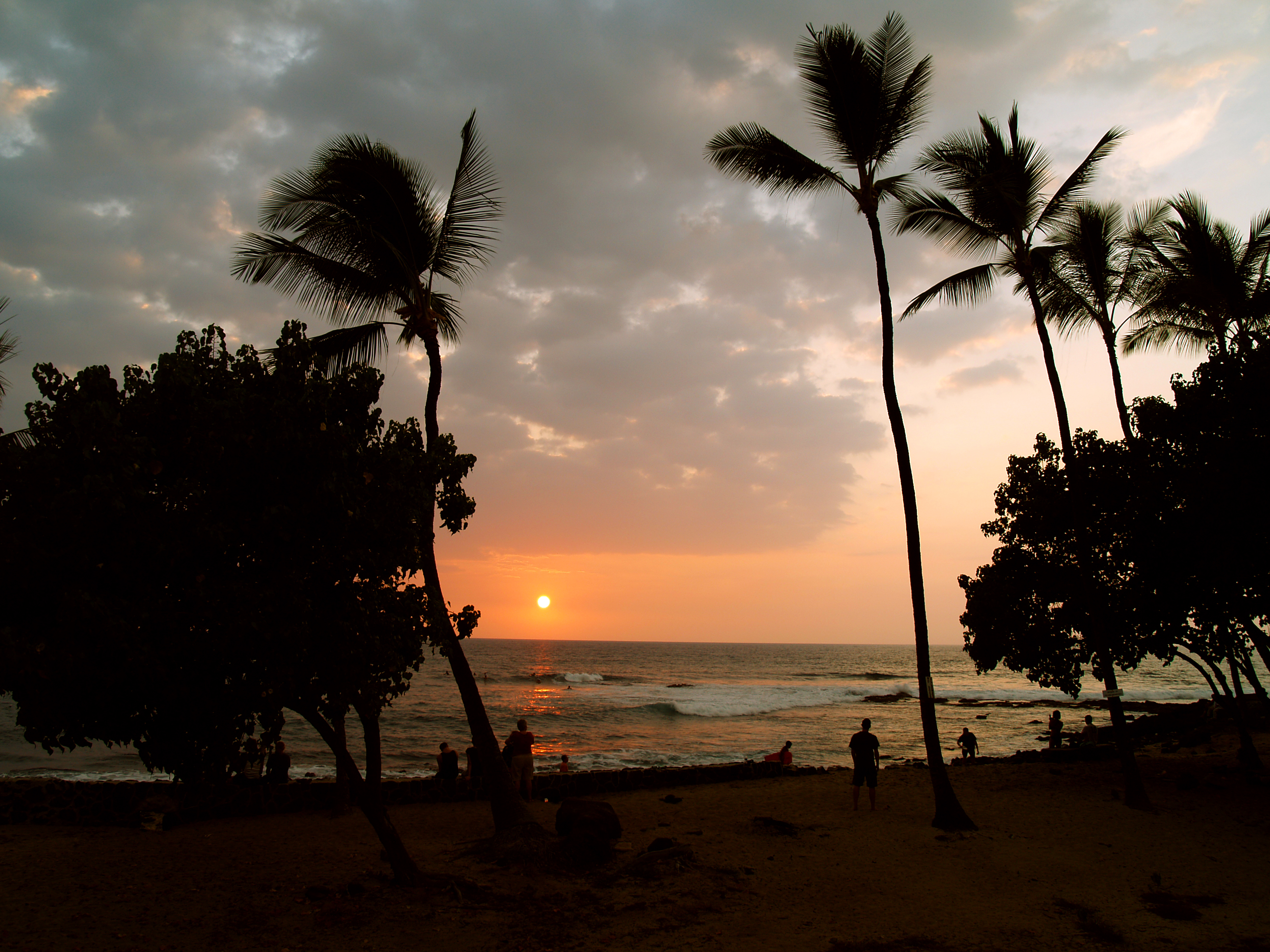
Loll in sand and sun under swaying palms, watch humpback whales dance in an exotic Kona sunset, snorkel among rainbow-colored fish on a protected reef or ride surf where the Kings of Hawaii defined the sport a thousand years ago! Kahalu’u is the choice destination of Kona Coast County Beach Parks.

Kahalu’u is the most popular snorkeling beach on the Island of Hawaii with good reason; protected from the open ocean by a seawall, the reef is also protected against commercial aquarium fishing. The snorkeling is in calm, shallow water and there is an abundance of fish—perhaps the best display on the island. Dozens of Hawaiian Green Sea Turtles call this bay home, thrilling the snorkelers. Numerous freshwater springs and shallow water bathers make the near-shore snorkeling unpleasantly cloudy, but about 100 feet offshore the water turns crystal clear and the display of coral is nothing short of amazing.

Outside the seawall is an excellent surf break that is for intermediate or better surfers and boogie boarders. There is a fair current north out of the bay and along the coast—swimmers caught in this current should relax and swim with the current, angling towards land.

Most days there is a food wagon selling sandwiches, burgers, shaved ice, and cold drinks at reasonable prices and a vendor renting snorkeling gear and boogie boards.

Two-Step Beach/Honaunau Bay

Two-Step Beach at Hounaunau Bay Has Some of the Finest Snorkeling in the World: Photo by Donald B. MacGowan

Some superb protected snorkeling and shore-diving is located at Two-Step Beach, adjacent to the Place of Refuge National Historic Park. A wonderland of turtles, coral, and fish, with frequent morning visits by dolphins, this snorkeling experience shouldn’t be missed. No swimming is allowed within the Park, as a measure of respect of the sacredness of the Refuge site; however, Two-Step Beach offers a convenient place to enter Honaunau Bay.

One can enter the bay either by walking down the boat ramp, or by stepping off the short cliff into the water. Two-Step beach gets its name from this short hop. Near the center edge of the lava beach there are two ledges serving as steps to the ocean. At low tide, it’s a simple matter of stepping down: “1, 2, OCEAN!” At high tide, one just steps off the edge and in. Getting out, one simply approaches the steps, puts hands palms down and waits for an incoming wave to float you up and onto the bottom step—the process is easier than it sounds. Resist the temptation to put fingers into small holes and pockets in the rocks to haul yourself out—they are filled with spiny sea urchins. Always lay hands on rocks palms down; don’t use fingers.

The best snorkeling is along the cliff edges and the shallows. Remember that you cannot get out of the water within the confines of the Park. Remember dolphin and sea turtles are federally protected species.

Ho’okena Beach County Park

Hookena Beach in South Kona IS a Fabulous Beach Plunked Down in the Middle of Real Old Hawaii: Photo by Donald B. MacGowan

Brilliant snorkeling, decent boogie boarding, passable shell collecting, and wonderful camping—it’s a wonder Ho’okena Beach is not more popular with visitors. Nestled alongside the ruins of Ho’okena Village, this beach is a wonderful place to spend a morning or a weekend.

Frequented by dolphin, stuffed full of pelagic and reef fish and turtles, and boasting crystal clear, warm and calm waters, Ho’okena is a must-see beach for avid snorkelers and divers as well as sea kayakers. Hiking south over the hills and through cow fields brings one to numerous small, sandy beaches where ocean current conditions make shell collecting possible. Hiking north from the park, one finds the remnants of once-thriving Ho’okena Village, in past times the main rival to Kailua for steamer traffic, but now all but lost to the ravages of tsunami, earthquake, and the passing of time. During the winter months, female Humpback whales and their babies frequent the waters off this bay.

Wonderful beach camping, new showers and restrooms, picnic tables, and abundant fresh water make this county park a gem. Camping is by permit only on a first come-first served basis.

Honomalino Bay

Honomalino Beach is a Short Hike From the Old Hawaiian Fishing Village of Miloli'i: Photo by Donald B. MacGowan
Honomalino Beach is a Short Hike From the Old Hawaiian Fishing Village of Miloli

A true gem of West Hawaii and rarely crowded, Honomalino Bay is reached by a 20-minute hike from the south end of Miloli’i Beach County Park. The hiking trail starts between the bathrooms and a yellow church and the path to Honomalino is always along the right fork of the trail, in and out of the surf line, to avoid private property.

Snorkeling is very interesting on the north side in the rocks, when the surf is low. The water, though very clear, is sometimes quite cold due to spring discharge in the sand on the beach.

So now that you are armed with all this information and you’ve had the best-ever, mid-winter, beach daydream you’ve had in years, I just have to ask ... what are you doing sitting there in your cold, wet, winter misery for? C’mon over to West Hawaii and soak up your fair share of the rays!

Monk seal at Honl's Beach near Kailua Kona: Photo by Donald B. MacGowan

For more information on traveling to Hawaii in general and touring the beaches of the Big Island in particular, please also visit www.tourguidehawaii.com and www.lovingthebigisland.wordpress.com. Information about the author can be found here.

All Media Copyright 2009 by Donald B. MacGowan.

Monday, August 3, 2009

The Best Beaches in Hawaii: Part 1, The Main Kohala Coast

Imagine, as it rains, sleets, and snows on you through the long winter, that you are lying under cerulean blue skies, bathed in healing sunlight on a warm golden sand beach, playing in bath-temperature water, and snorkeling among the brightly colored tropical fish and placid, but amazing sea turtles. Sound too good to be true? In West Hawaii, this soothing daydream is our day-to-day reality.

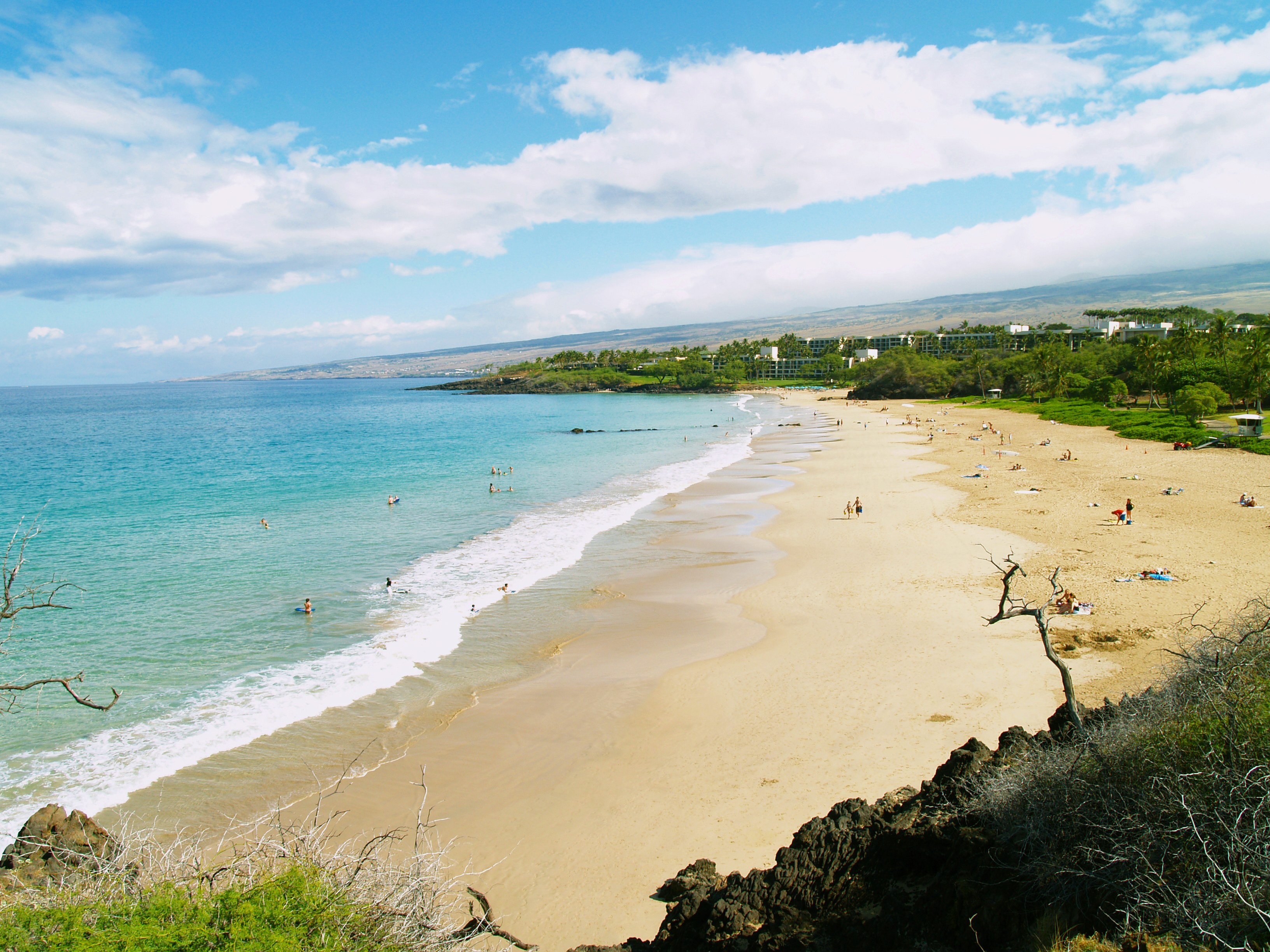
Hapuna Beach, One Of Hawaii's Most Popular, Is Frequently Quite Empty: Photo by Donnie MacGowan

Lying in the rain shadow of two enormous volcanoes reaching from sea level to almost 14,000 feet in the sky, the weather year-round on the west coasts of the Big Island is universally gorgeous, reliably warm, and indescribably delicious.

Our beaches range from wide, mile-long golden swaths of sands bounded by turquoise waters on one side and stands of palms and mangroves on the other to the tiny patches of white sand plunked down in the middle of town where everybody gathers to cool off in the afternoon and gaze at West Hawaii’s unbelievable sunsets. Let’s take a quick tour of just a sampling of the unbelievably fabulous, romantic, relaxing, beautiful beaches of West Hawaii. Our trip starts on the north end of the Kohala Coast and proceeds south towards the Kona Coast.

Hapuna Beach

At Hapuna It's a 7 Minute Walk From The Car To The Beach...Be Sure To Bring Everything You Need: Photo by Donnie MacGowan

Always rated in the top ten of American beaches, Hapuna Beach is the premiere beach destination on the Island of Hawaii. Long, wide, and phenomenally sandy, it has everything one dreams of in a Hawaiian beach: abundant sun, surf, clean, clear and quiet snorkeling water, shade, and well-maintained facilities.

There are lifeguards, several pavilions, barbecues, picnic tables, restrooms, showers, and a small café. The center of the beach is for wave play and boogie boarding; the north and south coves are quieter, for snorkeling or gentle floating.

Waialea Beach (Beach 69)

69 West Side Beaches 1_edited-1
Waialea Beach (Beach 69) Is An Ideal Family Beach and Is Almost Always Uncrowded: Photo by Donnie MacGowan

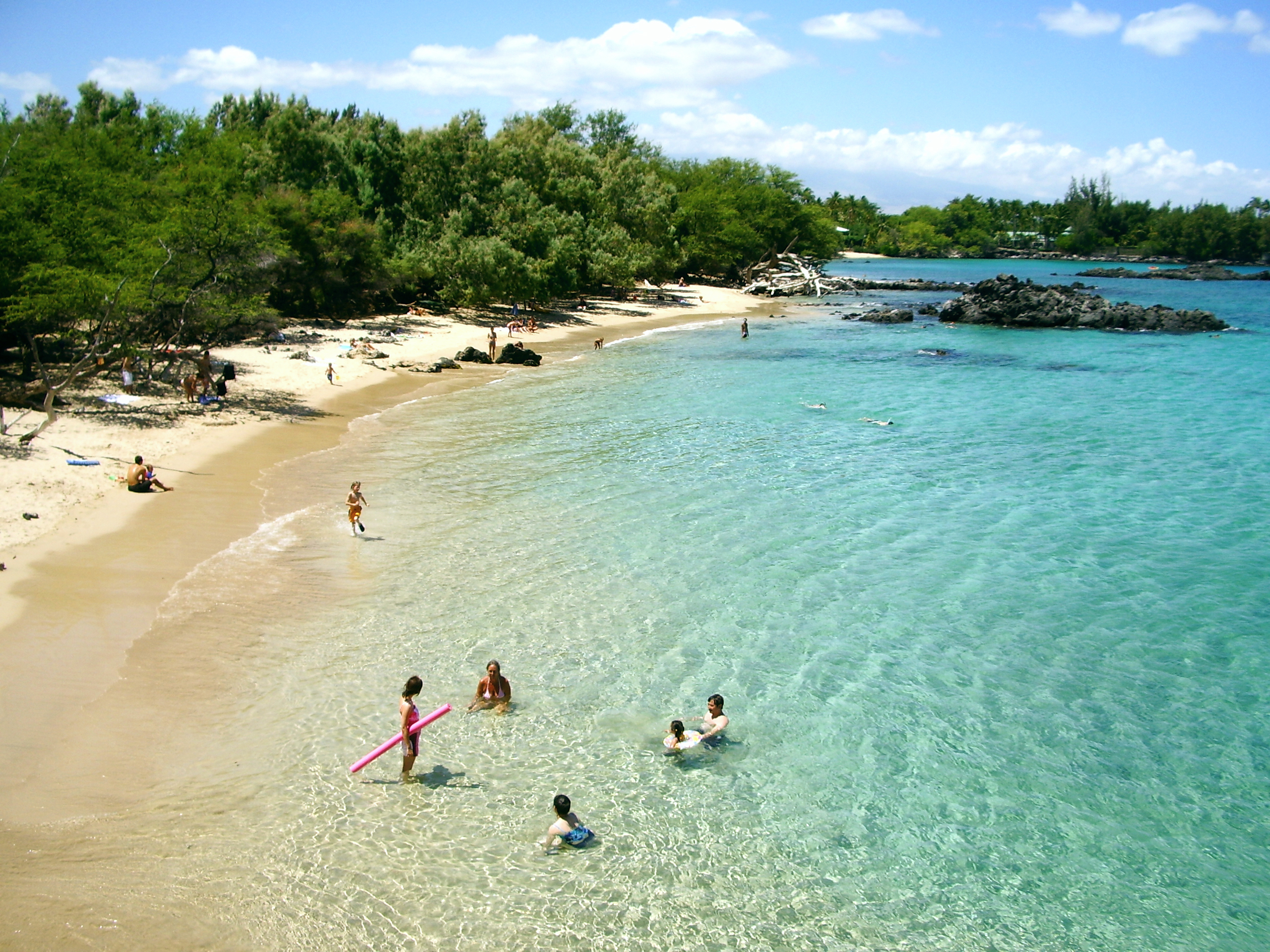
A perfect crescent of golden sand backed by abundant shade at the edge of the beach makes this an ideal, though little known, family beach. After about 10 in the morning and on windy days, the water in the bay is a tad murkier than ideal for snorkeling, but most of the visitors to this beach don’t seem to mind. A chain of tiny islands and pinnacles leads northward to crystalline water and a long coral reef for some of the most outrageous snorkeling and shore diving anywhere in the state.

A trail over the north headland leads to a secluded (often clothing optional) cove and then onward to Hapuna Beach. Although most of the shore is relatively free of currents, only experienced snorkelers who are strong swimmers will want to snorkel around the north end of Waialea, past the cove and the reef, past the sea arch, and on to Hapuna—a long, but rewarding swim with some of the most incredible underwater vistas available to the snorkeler in the world.

Take the Puako Road exit from the highway and turn north toward Hapuna. Near Pole 71, an obvious, newly paved road and parking lot indicate the start of the short trail to the beach. Restrooms, picnic tables, water, and showers round out the facilities.

Anaeho’omalu Bay
The most photographed sunset view on the Island of Hawaii, Anaeho’omalu Bay is the icon of what most visitors envision Hawaii to be like before they get here—swaying palm trees, a clean beach fronting warm, safe, swimmable ocean, and hordes of eager beach boys bearing large, tropical drinks with comical names like “Malahini Wahine Wahoo.” Here at the bay, one can rent snorkel or surfing gear, sign-up for sailing trips, snorkel tours, windsurfing lessons or scuba dives, order food and drinks, or just lounge pleasantly in the niumalu (shade of the coconut palms).

The Justly Famous Anaeho'omalu Beach is a Long Crescent of Gorgeous Sand: Photo by Donnie MacGowan

Named for the ancient fishponds behind the beach, from the words anae (“mullet”) and ho’malu (“to protect”), Anaeho’omalu Bay is known as “A-Bay” to locals. In addition to swimming, snorkeling, diving, windsurfing, and just plain hanging out, the area around A-Bay is also rich with archaeological sites, including section of the Ala Ali’i (King’s Trail), fish ponds, heiau (temples), and petroglyphs.

Walking the trail south from A-Bay to Kapalaoa Beach will take one along not only vistas of incomparable beauty and wildness, but also reveal numerous rarely visited petroglyphs. There is good snorkeling along the farthest south pocket of sand on Kapalaoa Beach. One can follow this tail several miles all the way south to Pueo Bay and Ke-awa-iki Beach along lava flows and shoreline, but it is a long, hot hike with no water for drinking available.

Walking north along the trail (shoes required) over sand, lava, and coral, to the Hilton Waikoloa Resort is an unforgettable sunset stroll, and a good introduction to the wild beauty of the Kohala Coast. There are numerous tidepools, a couple with resident Honu, Hawaiian Green Sea Turtles.

Follow the Mauna Lani Resort road to the left turn clearly marked Anaeho’omalu Bay, turn and proceed to the end of the road. Facilities and services are available at A-Bay and on the Resort Grounds.

Kiholo Bay Area
Snorkeling, country music, history, ancient fish ponds, and medical science … what more could anyone ask for?

This remarkable, beautiful, and sadly popular area is accessed in two ways: first, by a gravel road going ocean-ward from the highway immediately south of the Overlook pullout at mile 82. This road is only open from 8 a.m. until 6 p.m., but accesses the south end of the bay, a pebbly beach terminated in austere a’a flows to the south. The round house on the beach was built by country and western singer Loretta Lynn, but was condemned and taken by the State when it created the beach park. Swimming and boogie boarding here are excellent in low to moderate surf, but beware of current and surginess; if the surf is high, do not go in. A trail south below the big mansion on the headland leads about three quarters of a mile to a tiny black sand beach with an amazing coral garden. This little beach is my favorite snorkeling secret on the island.

A Hawaiian Green Sea Turtle Suns Herself on the Long, Sinuous Kiholo Beach Which Alternates equal Portions of Bedrock, Pebble and Black Sand: Photo by Donald B. MacGowan

A 4WD road/trail continues north along the black pebble beach and cliffs to Kiholo Bay proper. This part of the Kiholo Area can also be accessed via a newly rebuilt dirt road that leaves the parking lot immediately south of mile marker 81.

Along the beach, on the mauka side, is a freshwater spring and pond in a lava tube (Keanalele Waterhole), a great place to rinse off after swimming or hiking along the beach. Please rinse off excess sunscreen in the ocean before enjoying this refreshing pool. Also along this portion of the beach are a number of mansions, most notably the Bali House (oh, you’ll know it when you see it) and the home of Earl Bakken, the billionaire inventor of the pacemaker. Believe the no trespassing signs you see here.

Full of turtles, beautiful to swim, and a wonderful place to learn to surf, Kiholo Bay proper has it all. In addition, the sweat required to reach it has the added bonus of weeding out the undesirables. Just north of Kiholo Bay is a beautiful, turquoise brackish lagoon, all that remains of a 2-mile long fishpond erected by Kamehameha the Great around 1810, which was destroyed by the Mauna Kea lava flow of 1859.

At Kiholo, as with other beaches on the Island of Hawaii, it is quite usual to see several sea turtles basking on the sand. If, however, you see dozens and dozens of turtles out of the water on the beach, you may properly suspect something big enough and with strong enough jaws to eat a 6-foot diameter turtle is cruising the nearby waters—a good clue that perhaps this is not a day for casual swimming.

eHappy Bathers_edited-1
Here at Waialea Beach, The Near Perfect Year Round Weather, Turquiose-Bath-Temperature-Waters And Relative Lack of Crowds Illustrate Why the Kohala Coast Beaches of Hawaii Island Are Among the World's Favorites: Photo By Donnie MacGowan

For more information on touring Hawaii in general and exploring the Big Island's beaches in particular, please also visit www.tourguidehawaii.com and www.lovingthebigisland.wordpress.com.

All media copyright 2009 by Donald B. MacGowan

Saturday, August 1, 2009

Weekly Volcano Watch: A laser's look into the lua reveals how pit craters grow

Reprinted from here.

Light detection and ranging (LiDAR) image of the southeast wall and currently active pit crater of Halema`uma`u.  Image courtesy of Todd Erickson, Pacific GPS Facility SOEST University of Hawaii, Manoa.
Light detection and ranging (LiDAR) image of the southeast wall and currently active pit crater of Halema`uma`u. Image courtesy of Todd Erickson, Pacific GPS Facility SOEST University of Hawaii, Manoa.

This month, researchers from the University of Hawai`i teamed up with the Hawaiian Volcano Observatory staff to use laser-based technology to peer into the depths of a new pit in Halema`uma`u. What they saw was startling. The look revealed that the vent has a cavernous interior that dwarfs the size of the opening that we see at the surface. The cavern is approximately 200 m (650 ft) below the floor of Halema`uma`u, making it a dizzying 285 m (935 ft) below the now-closed Halema`uma`u overlook area.

To obtain the image, the UH researchers were using a technology called Light Detection and Ranging, or LiDAR, for short. By bouncing pulses of lasers off objects, LiDAR can determine the distance to out-of-reach objects. Readers may be familiar with similar technology used in the laser range finders employed by golfers, hunters, and builders. Simple laser range finders measure a single distance to an object. In contrast, scientist using LiDAR data can produce entire images, or models, of distant surfaces based on thousands of individual laser bounces.

The remarkable part of the image is that it reveals a very deep pit crater with dramatic overhanging walls near the surface. This is different from the steep and vertical walls of the larger Halema`uma`u and Kilauea caldera.

What the image actually reveals is a snapshot in the evolution of a Hawaiian pit crater. "Pit crater" is a general term used to describe the steep-sided, semi-circular, and flat-bottomed craters that are characteristic of the summit and rift zone areas of Kilauea and Mauna Loa volcanoes. Interchangeable terms for these features include, "collapse crater", and of course the eloquent Hawaiian name for a pit, "lua". But how are these craters created?

Looking into this deep hole created by a volcano may lead one to think that all the material was blasted out. But if this were the case, we would be able to see a vast amount of excavated material deposited around the rim of the pit. In fact, the amount of ejected material, or ejecta, surrounding Hawaiian pit craters is relatively small -- far less than the amount of material required to fill the hole back up. And, some Hawaiian pit craters do not have any ejecta surrounding them.

The answer to how pit craters form is being witnessed right now as the new vent evolves. Hawaiian pit craters form primarily through the evacuation, or loss, of magma somewhere beneath the vent. As magma evacuates from the plumbing system below, the conduits collapse and the vent floor sinks away. The walls may become overhung, since the interior of the pit expands as it drops. Eventually, the overhung portions of the rim collapse into the pit, and the characteristic near-vertical sides of the pit crater are formed.

Our observations of lava within the vent, data from instrumentation, and measurements of magma flux at the east rift zone near Kalapana, suggest that the amount of magma within the plumbing system of Kilauea has been reduced. This ebbing has caused the drop in the lava level and the growth of the cavern we now see. The recent pulses of ash-laden plumes issuing from Halema`uma`u have been caused by collapses of the pit's overhanging rim.

Of course, the drop in the vent floor, and ebb in the flow of magma within the system, does not necessarily mean the eruption is winding down. A characteristic behavior of Hawaiian pit craters is that the floor may refill with a lava lake, only to drain and collapse again and again. So the laser's look into the lua is certainly only a snapshot of the on-going evolution of Halema`uma`u.

Kīlauea Activity Update

Surface flows have been active on the pali within Royal Gardens subdivision throughout the past week, burning forest and one unoccupied structure. At the coast, the Waikupanaha and Kupapa`u ocean entries remain active and continue to produce steam plumes and small littoral explosions.

The vent at Kīlauea's summit was dark and quiet all week, producing only a very small quantity of rock dust from small collapses of the vent walls. The plume has been thin and wispy, and volcanic gas emissions have been relatively low. They are, however, still elevated above background levels, resulting in high concentrations of sulfur dioxide downwind.

One earthquake beneath Hawai`i Island was reported felt this past week. A magnitude-2.8 earthquake occurred at 10:38 p.m., H.s.t. on Thursday, July 9, 2009, and was located 3 km (2 miles) south of Holualoa at a depth of 36 km (22 miles).

Visit our Web site (http://hvo.wr.usgs.gov) for detailed Kīlauea and Mauna Loa activity updates, recent volcano photos, recent earthquakes, and more; call (808) 967-8862 for a Kīlauea activity summary; email questions to askHVO@usgs.gov.

For more information on visiting Hawaii in general and touring Hawaii Volcanoes National Park in particular, please also visit www.lovingthebigisland.wordpress.com and www.tourguidehawaii.com.


Casino Bonus no Deposit