Showing posts with label day trip. Show all posts

Tuesday, June 16, 2009

Frank's Big Island Travel Hints #13


Hawaii Volcanoes National Park: Chain of Craters Road

Hawaii Volcanoes National Park is one of the great natural wonders, as well the most studied volcanoes, on earth. Few places can the visitor get as many diverse climates, flora, fauna and geologic dreamlands as inside the park’s boundaries.

Continuing down the Chain of Craters Road, there are numerous turnouts with panoramas that stretch the imagination. Tour Guide adds to the excitement with all the information about what is being seen. Take a quick stop at Alanui Kahiko. The words in Hawaiian mean old road. Here you will see portions of the old Chain of Craters Road, some 12 miles worth above and below this lookout, buried under 300 feet of lava by the 1972 eruptions. This spectacle alone is testament to the awesome destructive powers of Madam Pele, the volcano’s Fire Goddess.

A few miles further down the mountain is the Pu’u Loa Petroglyph field. It can be found along the side of the Ka’u-Puna Trail, a trail used by ancient Hawaiians. This is believed to be the largest petroglyph field in Polynesia, containing more that 15,000 carvings. The path to the petroglyphs is marked from the parking lot by cairns. Tour Guide will show you where to park and explain some of the carving’s meanings at this phenomenal spot.

At about the 19 mile marker is the current End of the Road, the location where the lava cut off the road in 1983. A year ago, you could park here and trek across the barren fields to where the lava was entering the ocean. Now, however, the lava has changed course and is sometimes entering from the Puna side of the park. There is still a ranger’s station here and many placards telling about the flows and safety precautions for hiking in the desolate area. Restrooms are available.

Walking down to the ocean at the End of the Road are some beautiful formations, most notably, the Holei Sea Arch. Tour Guide will tell you how arches and stacks are formed when the waves pound against the sea cliffs and chisel into the various lava densities. The cliff around this arch is some ninety feet, so use caution as you photograph this amazing sight.

Looking back up the mountain gives one the perspective of the destruction, yet the immaculate life giving beauty, of the fire goddess Pele who is in constant battle her sister, the ocean. Each takes life, and gives it. We as humans can stand in awe at the majesty and wonder of these two great forces, respecting each on its own terms.

As you travel back up the Chain of Craters Road, don’t forget to stop at some of the vista points and take photos and videos of the landscape, the memories and the people that are like nowhere else on earth, the Island of Hawaii.

For more information on touring Hawaii in general and the Big Island in particular, please also visit www.tourguidehawaii.com and www.tourguidehawaii.blogspot.com.

Copyright 2009 bu Frank Burgess; video copyright 2009 by Donald B. MacGowan.

Sunday, June 14, 2009

Kona Heritage Corridor Scenic Drive: An Exceptional Day Trip Exploration of Historical, Lovely, Up-Country Kona!

Historical Kona Heritage Corridor

Up-Country Kona is A Charming Amalgamation of True Old Hawaii and Counter Culture Weirdness--All With Stunning Views of the Ocean: Photo by Donnie MacGowan

Up-Country Kona is A Charming Amalgamation of True Old Hawaii and Whimsical Counter Culture Weirdness--All With Stunning Views of the Ocean: Photo by Donnie MacGowan

When the Kona Coast becomes too hot and humid upon a torrid afternoon, or post-littoral torpor sets in from sunbathing overindulgence at the beach, visitor's to the Big Island Kona side should take a cue from locals and head up-country for the fresh, cool afternoon air. The Old Road, a 12 mile long remnant of the Mamalahoa Highway, runs through a beautiful slice of Old Hawai'i; coffee farms, fruit orchards, historical buildings, small towns and an old sugar mill grace the sunny slopes of Hualalai Volcano here.

Mauka, or Up-Country, Kona as this area is called, was once the beating financial heart of Hawai'i Island-along this road were built the first newspaper press, bottling company and telephone exchange on Hawai'i. Today, the road runs through the artist enclave of Holualoa, famed for its art galleries and coffeehouses. Sweeping views of the Kona coastline, the upper slopes of Hualalai Volcano and even Maui on vog-free days, make this road a trip a not to be missed treat. Let's take a quick tour of the section of the Kona Heritage Corridor that runs along Highway 180 from it's intersection with Highway 190 north through Holualoa, past the intersection with Highway 19 and into the town of Kainaliu.

Kona Mauka Offers Stunning Views Along The Coast and Of Sunsets: Photo by Donald B. MacGowan

M. Onizuka Store

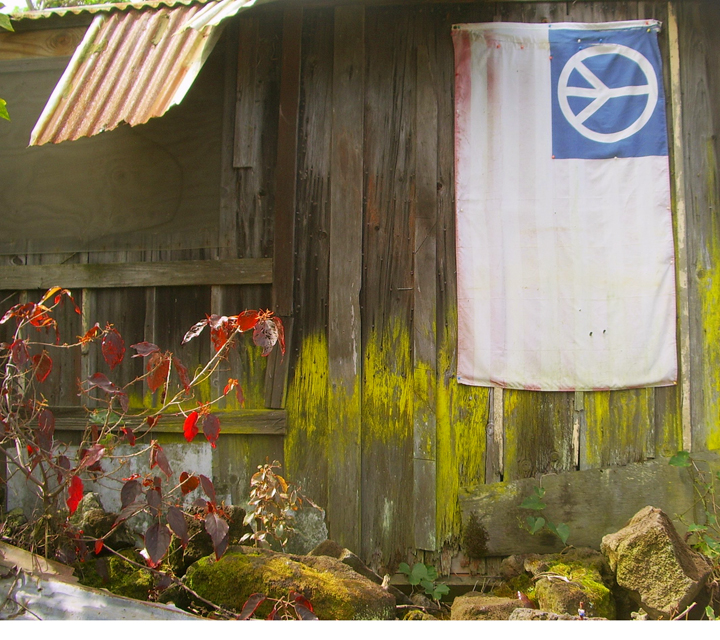
Starting at the intersection of the Mamalahoa Highway (Hwy 180) and Highway 190 (Palani Road) and heading approximately South on the Mamalahoa Highway, one passes through tropical to temperate rainforest and comes to the verge of the cloud forest that softens the upper slopes of Hualalai Volcano. At about the 7 mile maker one passes the old M. Onizuka Store, the boyhood home of Astronaut Elisson Onizuka, who died in the Challenger space shuttle disaster. The M. Onizuka Store was founded in 1933 by Masamitsu Onizuka in 1933 who provided the residents of his community with general merchandise and means of transporting their purchases through the store's one-man taxi service. Following her husband's death, Mitsue Nagata Onizuka continued to run the store until the day she died in 1990. "May Peace On Earth Prevail" proclaims the post outside the residence where Elisson Onizuka, who had the honor of being the first astronaut of Japanese-American descent, grew up. History buffs are invited to explore Hawai'i's rich involvement in man's exploration of space at the Onizuka Space Museum at Kona International Airport.

Kona Mauka Was Once the Beating Financial Center of Hawaii Island:Photo by Donnie MacGowan

K. Komo Store

Boasting but a few necessary concessions to the march of time, the charming comfort of the family store of yesteryear lives on in the form of the K. Komo Store. Gasoline, sundries and good conversation are always available at this for real slice of "Old Hawai'i". Serving the people of Keopu since the early 1900's, and operated by the third generation of Komo family, K. Komo Store still grows, roasts, brews and sells their own brand of coffee. The store is registered on the National Register of Historic Places.

Holualoa Town

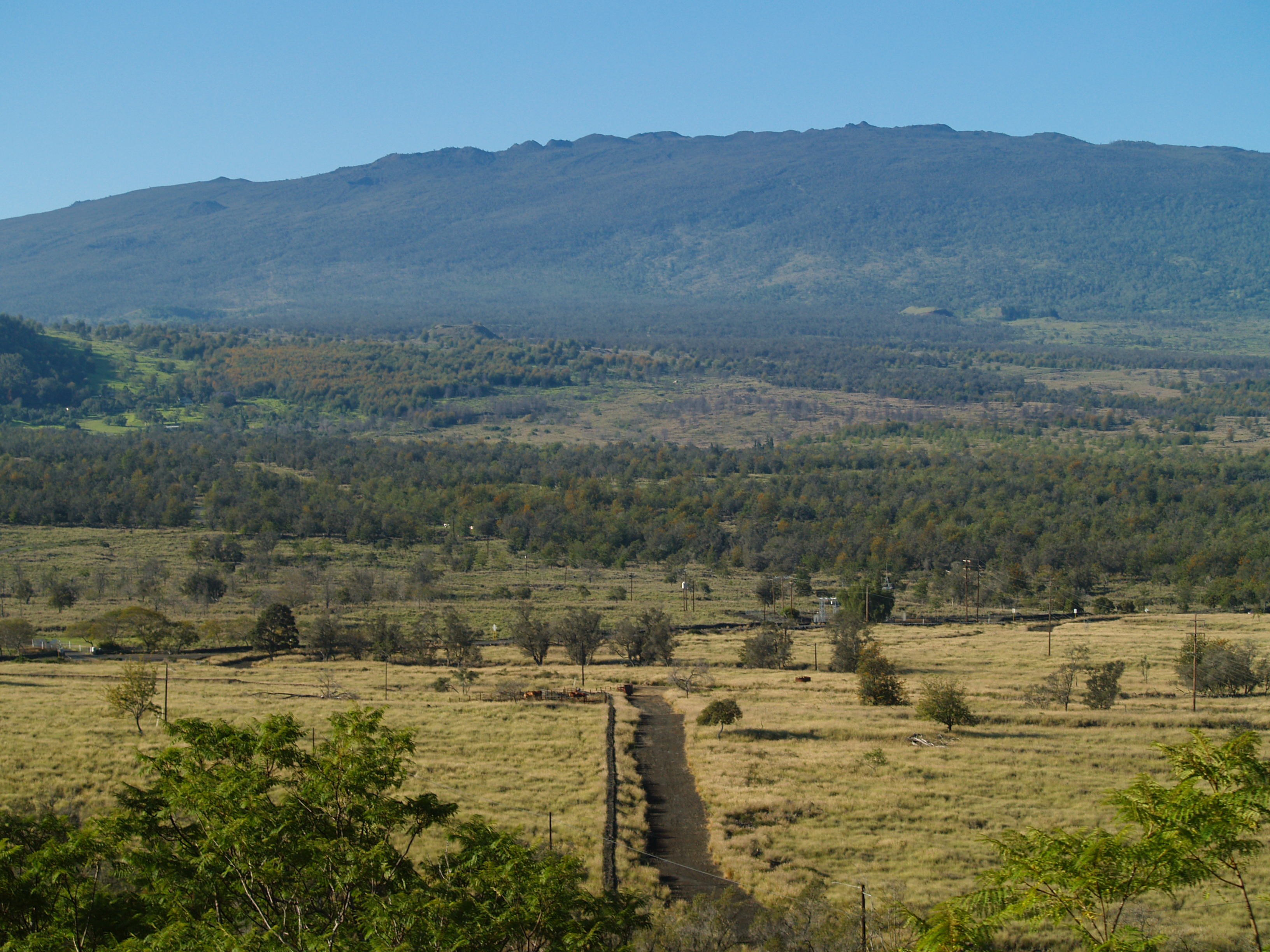
When the Dryland Forest on the Slopes of Hualalai Volcano Open Up Near Holualoa Town, There Are Amazing Views of the Kona Coast
When the Dryland Forest on the Slopes of Hualalai Volcano Open Up Near Holualoa Town, There Are Amazing Views of the Kona Coast: Photo by Donald MacGowan

With a name that means "the long sled track", its position at the apex of Kona coffee country and its modern day eclectic profusion of art galleries, schools and studios, it's easy to see that Holualoa, once the bustling center of North Kona commerce, has been through some changes in the past 200 years. Initially, Hawai'ians grew taro and sweet potato in small family farm plots called "kuleana" around Holualoa. It is interesting to note that today the word "kuleana" in Hawai'ian pidgin has taken on the meaning of "personal responsibility". In any case, early in the nineteenth century, Japanese, Portuguese and Chinese immigrants settled here and began planting large fields of oranges, breadfruit, coffee and cotton among other crops. A large sisal plantation for making ropes for sailing vessels was located just northwest of Holualoa...today, now-wild sisal plants, looking a bit alien with their tall, single stalk of blossoms, can be seen in profusion along Palani Road between Kailua and Kealekehe. Early in the 20th century the fields were turned over almost entirely to sugar production and Holualoa became the financial center of the Kona District. Luther Aungst established the Kona Telephone Co here in the 1890s, the first regional newspaper The Kona Echo was established at Holualoa by Dr. Harvey Hayashi, one of Kona's first full time resident doctors. Many other schools, churches and industries, including the Kona Bottling Works, located here in the first half of the 20th century, but the collapse of the sugar industry brought financial doom that coffee growing only partially staved off. The community shrank drastically in population and commercial importance and by 1958 only about 1000 people lived in the Holualoa area. In a dreamy, upcountry Kona backwater, a community of artists, recluses, writers and seekers of the "Old Hawai'i Lifestyle" thrived here. Recently, an infusion of money from the newly invigorated "boutique coffee" industry has sparked a revival of commercial life in Holualoa, anchored in coffeehouses and art galleries.

Kona Sugar Company and West Hawai'i Railway Company

eKona Sugar Mill 2
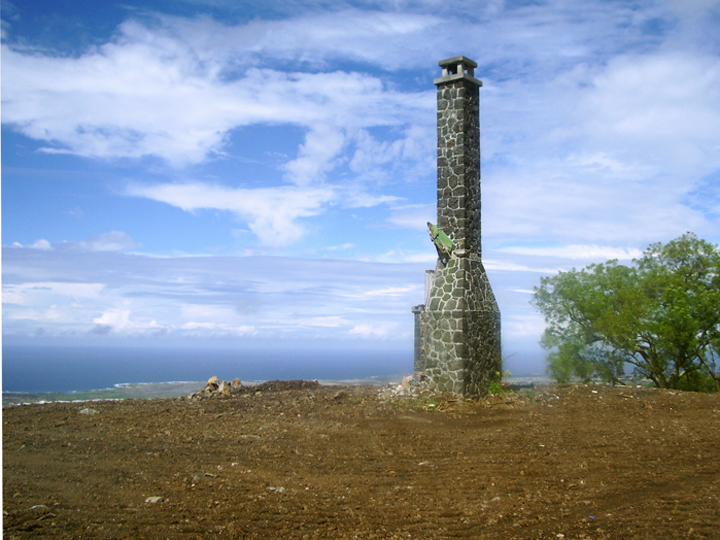
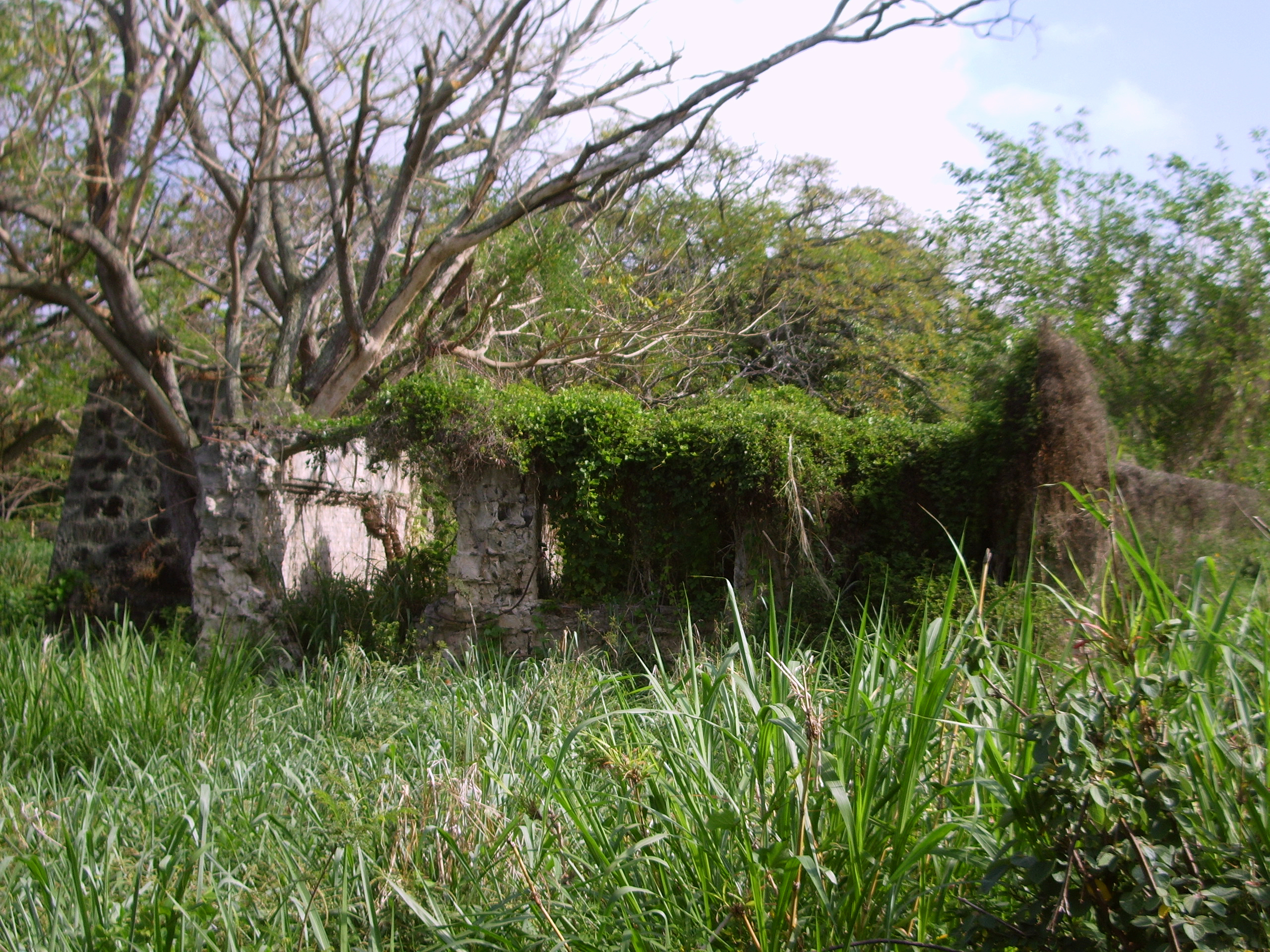
The Jungle Has Nearly Reclaimed the Old Kona Sugar Mill Below Holualoa Town: Photo by Donnie MacGowan

Such was the seductive lure of easy riches to be gained by growing sugar in Hawai'i at the beginning of the 20th Century, that investment capital for a large sugar plantation, sugar mill and railroad in Kona could be raised not once, but three times. The Kona Sugar Company plantation was established in 1899 and every available scrap of land was stripped of whatever crops had grown there previously and planted in cane. Although the sugar grew well enough above about 500 feet elevation, a notable lack of fresh water in Kona's semi-arid landscape made Wai'aha Stream the only logical choice for the mill site. Unfortunately, the stream flow is vastly insufficient for year-round cane milling and the mill, built in 1901, went broke in 1903. Kona Sugar was bought by investors; renamed Kona Development Company, the plantation again went broke in 1916 and was in turn bought by investors in Tokyo. This group managed to eek out a profit until the industry imploded in 1926. Originally planned to run 30 miles, the railroad was only built to total length of 11 miles in the 27 years of sugar plantation operation. Work camps, communal baths, stables, workshops and all the requisite infrastructure of a giant agricultural plantation lay abandoned in the Mauka Kona countryside. During World War II, the U.S. Army used the mill site as a training camp to acclimate troops to warfare on their way to the tropical Pacific Theater. Fearing the tall smokestack of the mill would act as an artillery landmark for any invading forces, the Army pulled it down and Kona lost one of its first post-contact, industrial landmarks. Traces of the rail bed can still be seen from the top of Nani Kailua and Aloha Kona residential neighborhoods. Located just west of the town of Holualoa along Hualalai Road (the major intersection just south of town), near the intersection with Hienaloli Road, are impressive stone breastworks and trestles for the railroad. Built by hand but still strong today, the rail bed can be explored and hiked from here. Further up Hienaloli Road from the intersection with Hualalai Road, the old mill site remnants are still visible.

Keauhou Store

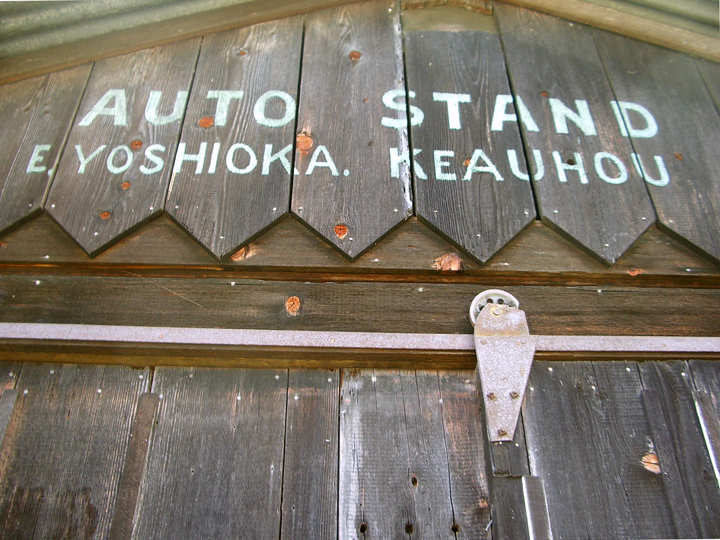
The Old Keauhou Store in the Kona Heritage Corridor: Photo by Donnie MacGowan

Originally Sasaki Store, Keauhou Store was founded by noted carpenter, coffee farmer and prominent local business man Yoshisuki Sasaki in 1919, and remains one of the great neighborhood stores of Kona. Run most recently by Yoshiuki's son, Rikiyo, they once offered gas, sundries, fresh coffee and local produce; today, however, the Keauhou Store stands closed by the roadway, as traffic that used to pass by the front door now travels the makai highway. However, the front porch of Keauhou Store still serves as a gathering place for local coffee farmers and neighborhood children. A true remnant of Old Kona, Keauhou Store is worth a visit, especially to history buffs and photographers.Tong Wo Tong Cemetery

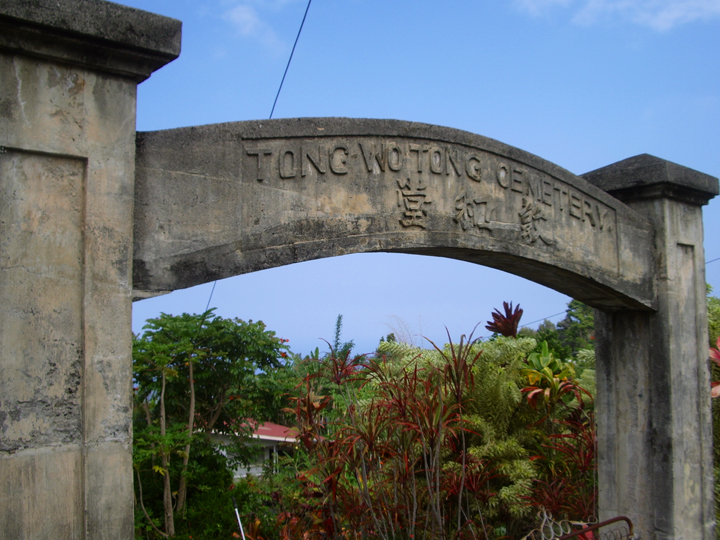
Although Chinese have lived in the Islands since the turn of the 19th Century, the first large scale immigration of Chinese came when they were brought over to work the cane fields in 1852. There was soon a burgeoning population of Chinese field workers and shopkeepers; by 1860 Chinese outnumbered Caucasians in Hawai'i. This community established the Tong Wo Tong Cemetery to honor their ancestors and commissioned Yoshisuki Sasaki, a noted local carpenter and prominent business man, to build the ornate gate in 1902. In English and Chinese the inscription on the gate reads "Tong Wo Tong Cemetery".

Gateway to Tong Wo Tong Cemetery, Kona Heritage Corridor: Photo By Donald MacGowan

Daifukuji Soto Mission

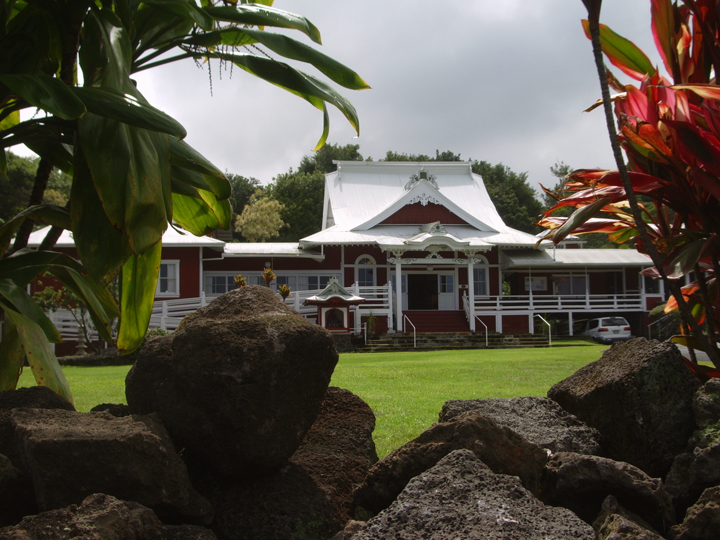
This Buddhist Temple has served the Mauka Kona community as a site for worship and retreat since opening on May 27, 1921. Reverend Kaiseki Kodama, who, since founding the first Kona Soto Mission in 1914, for years had held services at Hanato Store and other sites, planned the original mission building which was designed and built by Yoshisuki Sasakai. Reverend Hosokawa opened a Japanese Language School here in 1926; the school, living quarters and social hall all enlarged upon the original structure. The traditional Japanese music and dance-filled O Bon Festival is held here each July; visitors are welcome.

The Daifukuji Mission Near Kainaliu: Photo by Donnie MacGowan

Lanakila Church/Kaona Uprising

Lanakila Church was the beginning and focal point for one of the strangest and more interesting episodes in Mauka Kona history during the latter half of the 19th Century. This, the last church built by the ubiquitous Reverend John D. Paris, was finished in 1867. Lanakila Church is still today a vibrantly strong, active parish of Congregationalists. The quiet country setting of this church gives little indication that it was in the center of a violent, deadly uprising in the late 1860s. Called the Kaona Uprising, the events of 1867 and 1868 comprised a perhaps natural reaction of the native Hawai'ians to having been so recently, and completely, dispossessed of their way of life, their naturist religion and their ancient traditions. The uprising started peaceably enough; in 1867 a man named Kaona introduced himself to the Reverend Paris, saying he had a great quantity of Hawai'ian Bibles he wished to distribute and asked permission to store them in the as-yet-unfinished Lanakila Church building. The Church elders assented and the Bibles were stored. However, Kaona and his followers tried to usurp the church building and its land for living space and at the pleas of Reverend Paris the Governor, Princess Ke'elikolani, eventually evicted them. Kaona moved his growing group of malcontents onto a neighbor's property until rain and cold forced them to seek warmer lands downslope by the ocean. Growing more powerful with each new cult member, Kaona resisted the efforts of the local law enforcement, in the person of Sheriff Neville, to evict them, reportedly spitting on and destroying the first eviction order. Preaching Hellfire and Brimstone, and aided considerably by a rash of large earthquakes early in 1868, Kaona convinced his followers that he was the only true Prophet of God and that the earthquakes would destroy all but his most loyal followers. Sensing a mood of violence, Sheriff Neville determined to use force if necessary to evict Kaona and his band from their squatter's camp. In the ensuing melee, Neville and one native policeman were killed. Kaona then whipped his band into a religious frenzy of blood lust, exhorting them to go forth, slay the white people and set fire to their farms and homes. Such was the violence and threat that the South Kona Magistrate organized a volunteer militia to for the protection of citizens, but the uprising wasn't put down until the Steamer Kilauea brought troops from Honolulu to round up the violent mob several days later. Kaona was sentenced to 20 years imprisonment but was later pardoned and freed by King Kalakaua. He died a free man in Kona in 1883.

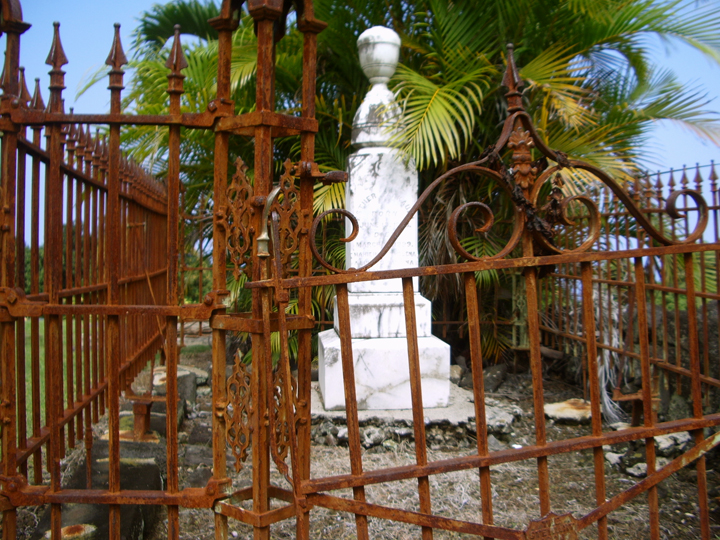
Graveyard at Lanakila Church, Kainaliu: Photo by Donald B. MacGowan

Aloha Theater

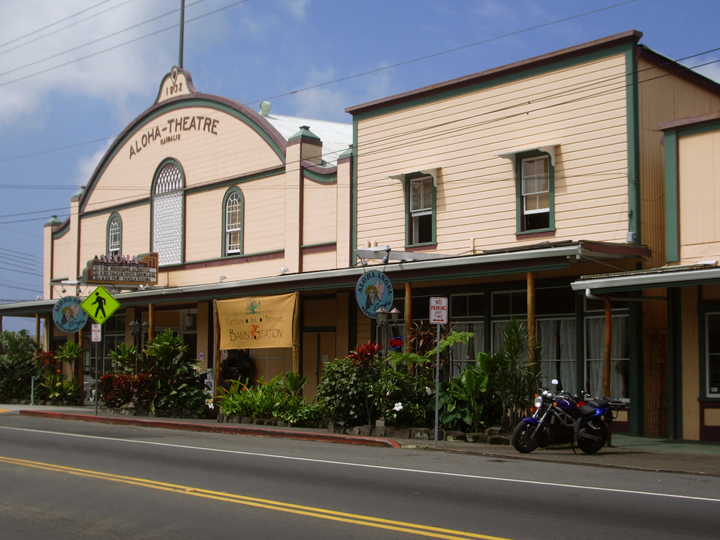
The Aloha Theater and its cafe, serve as a gathering place for the community and the home of independent, classic and second run films as well as the Hawaiian International Film Festival and various community events. Construction of the Aloha Theater began in 1929 and was finished in 1932, long before Hawai'i was a state. Starting life as a silent movie theater, it survived the changeover to 'talkies' as well as the great fire of 1948 that destroyed much of it's side of town. Still in use today as a performing arts center by the Kona Association for the Performing Arts; their performances feature live music and dance as well as film. The Quonset-hut shaped original theater building and the original marquee still in use are very typical of the style used in other theaters of the plantation era in Hawaii. The Aloha Angel Café associated with the theater is a gustatory revelation and offers a wide-ranging menu of entrees, baked goods and deserts and is open daily for breakfast, lunch, and dinner.

The World Famous Aloha Theater and Aloha Angel Cafe in Kainaliu: Photo by Donnie MacGowan

Kainaliu Town

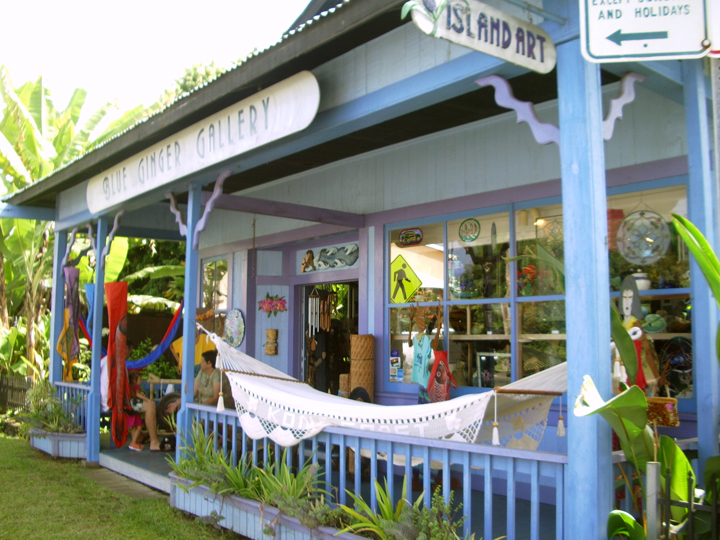
Napping gently on either side of the Hawaii Belt Road, Kainaliu Town is one of the principle commercial centers of Mauka Kona. Kainaliu grew up at the intersection of two donkey tracks which servicee the sugar, coffee and ranching industries, sometime after the construction of Lanakila Church in 1867. The star attraction in Kainaliu is, by far, the Aloha Theater and Aloha Angel Café. This historic and beautiful theater is still the center for stage productions of all kinds as well as cinematic shows; it is the centerpiece for the Kona Association for the Performing Arts (KAPA). Another of the towns interesting attractions is the amazing Oshima Grocery and Dry Goods Store ("If we don't have it, you don't need it"). In addition the town boasts numerous other businesses, galleries, furniture, thrift, herbal medicine shops as well as several wonderful restaurants and coffee houses. Donkey Balls has a candy factory that offers fun tours and tasty samples and Captain Cook Coffee has a roasting house right in town that gives weekday tours. When the weather turns wet in West Hawai'i, or you need a relief from the heat on the beach, a day spent browsing and eating in cool, shady Kainaliu is a real treat.

Kainaliu Town Is Full Of Interesting Boutiques, Shops and Restaurants: Photo By Donald MacGowan

To celebrate the conclusion of our Historical Soirée, as long as you are in Kainaliu Town, you really ought to stop in for a cup of famous Kona Coffee at any one of a number of local coffee shops...not the harsh sameness of the ubiquitously monotonous Starbuck's, each individually special Kona coffee cafe reflects the personality of the local growers and roasters who produce Kona Coffee, widely held to be the best in all the world. Also, the singular and exclusive galleries and stores in Kainaliu makes erfect shopping for completely unique gifts to take home.

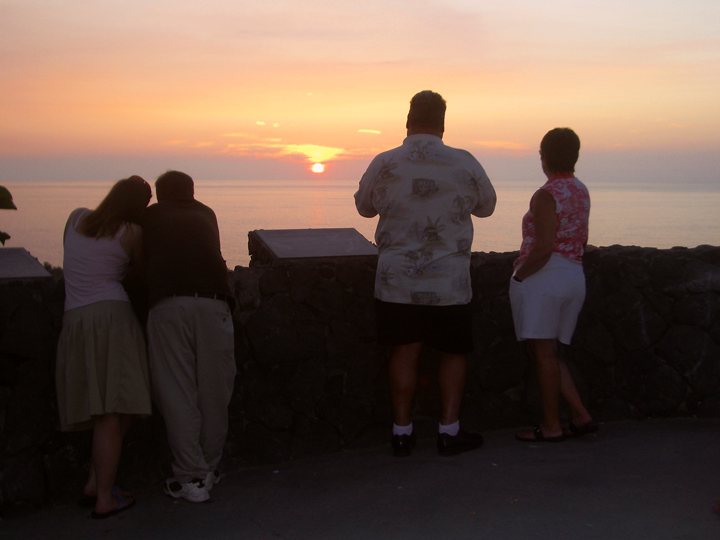
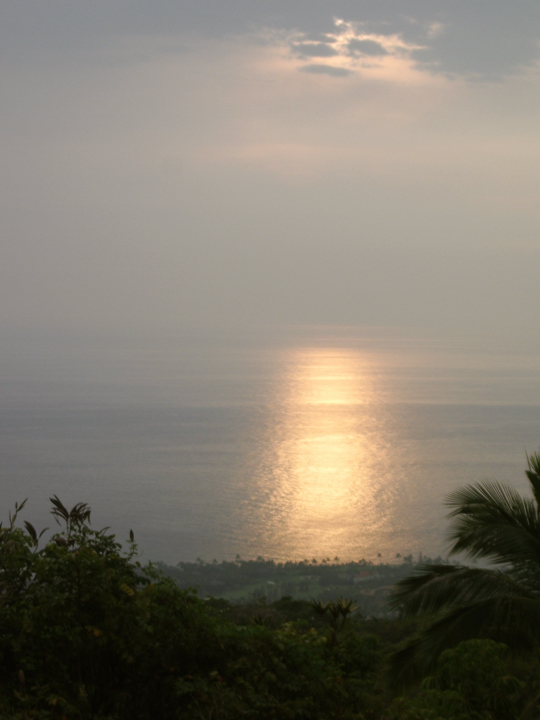
Sunset Over Keauhou From the Kona Historic District: Photo by Donnie MacGowan

For more information about touring Hawaii in general an exploring the Big Island in particular, please also visit www.tourguidehawaii.com and www.lovingthebigisland.wordpress.com. Information about the author can be found here.

All media copyright 2009 by Donald B. MacGowan

Saturday, June 6, 2009

Big Island Scenic Drive #1: The Saddle Road...Kona to the Summit of Mauna Kea , Kaumana Cave and Hilo

Across the Roof of Hawaii

Recent improvements to the Saddle Road make it no longer the grinding, intimidating drive it once was and open hundreds of square miles of unimaginably beautiful, strange and wondrous landscape to the Hawaii Island Visitor.

Approximate minimum time start to finish (to see every site): 12 hours

From Kona take Highway 190 to Highway 200 in 45 minutes of driving. Saddle Road, which cuts between the "saddle" of Mauna Loa on the south and Mauna Kea to the north, passes through ranch lands and the Pohakuloa Military Training Facility, for another 45 minutes, to the turn for Mauna Kea Access Road (John Burns Way). Nearby, Kipuka Huluhulu, or "shaggy hill", is a 20 minute hike to the top and back. From here it is a 30 minute drive to the Mauna Kea Visitor Information Center. The small village is home to scientists and astronomers that work in the observatories and an amazing place to learn what their research tells us about our universe. Returning to Hwy 200, drive 45 minutes to the amazing Kaumana Cave lava tube, a short hike and a wonderful exploration. A further 30 minutes down Hwy 200 brings one to downtown Hilo, where there are shops, restaurants, fine museums, gorgeous waterfront beach parks and a fabulous Farmers Market. From Hilo, it is approximately three hours to return to Kailua Kona over Hwy 200; alternately one can take the faster though less scenic Hwy 19 to Waimea and then Hwy 190 into Kailua Kona, about a 2 1/2 hour drive.

Ahu'ena Heiau, Kailua Kona Hawaii: Photo by Donnie MacGowan

Leg 1) In Kailua Kona, start at Ahu’ena Heiau; take Palani Road east to Hwy 190; take Hwy 190 to jct with Hwy 200, The Saddle Road

Ahu'ena Heiau and Kamakahonu Beach

Centuries ago the inhabitants of this region built a series of sacred temples, or "heiau" which were originally used of the purpose of sacrificing human being to their war god, Kuka'ilimoku. This particular archeological site is called "Ahu'ena Heiau", which means "Temple of the Hill of Fire" and was rebuilt and re-dedicated to the god "Lono"--a god of plenty--by King Kamehameha the Great in the early 19th Century.

Built originally in the 15th century and rededicated by Kamehameha the Great in the early 1800s as the main temple of his capital, the current structures seen at Ahu’ena Heiau were re-built in 1975 under the auspices of the Bishop Museum with financial help from the Hotel King Kamehameha and are constructed to 1/3 the original scale. There are restrooms and showers located on the pier near the beach. Adjacent Old Kailua Town is a treasure of shops, restaurants and aloha.

Hualalai Volcano from Saddle Road, Big Island Hawaii: Photo by Donnie MacGowan

Leg 2) Take Hwy 200, The Saddle Road, east to jct with John Burns Way (also called Mauna Kea Access Road).

Looking West from Highway 190 to Haualai Volcano Halfway between Kona and Waimea, Big Island of Hawaii: Photo by Donald B. MacGowan
Looking West from Highway 190 to Hualalai Volcano Halfway between Kona and Waimea, Big Island of Hawaii: Photo by Donald B. MacGowan

Saddle Road

Crossing the spectacular saddle between the towering bulk of the volcanoes Mauna Kea and Mauna Loa at about 6600 feet, The Saddle Road runs through brush, grass and forest lands, over lava fields and through some of the wildest and most breath-taking scenery on the Island. From this roadway, four of the 5 principal volcanoes that form The Big Island may be seen: Hualalai, Kohala, Mauna Loa, and Mauna Kea. Because the western half of the road is in notoriously poor condition and consists, in reality, of only one operable lane for much of its descent from the saddle to the Mamalahoa Highway.

However, this road provides the only road access to the Mauna Kea Summit Area and Visitor Information Center, Mauna Kea State Park, Pohakuloa Training Area, Mauna Kea Astronomical Observatory Complex, Waikii Ranch and the Kilohana Girl Scout Camp. The Saddle Road also provides the only access to thousands of acres of public forest and open grass lands. Connecting Hilo from about milepost 7.8 on the Hawai’i Belt Road to the Mamalahoa Highway approximately 6 miles south of Waimea, the Saddle Road is widely used by island residents for cross-island travel, despite its somewhat poor condition and undeserved, evil reputation.

Mauna Kea From Mauna Kea State Park; Note V-Shaped Stream Valleys and Glacial Cirques: Photo by Donald B. MacGowan

The Saddle Road frequently has perfect weather, but also fairly routine are patches of intense rain, fog and high winds. It’s takes about 2 ½ to 3 hours straight driving time, depending upon weather, to make the full traverse from Kailua Kona to Hilo; however, one should be sure to leave time in the schedule to drive up to Mauna Kea Visitor Information Station or hike the Pu’u Huluhulu nature trails.

Along its entire 53 mile length between the turn-off from the highway just 6 miles west of Waimea and where it meets Hawaii Belt Road just north of Hilo, there is no gas and there are no services available; plan accordingly. Some food, water and restrooms may be available at the Mauna Kea Visitor Information Station which is a 30 minute drive up a side road off the Saddle Road about half way.

Kipuka Huluhulu from Saddle Road: Photo by Donald MacGowan

Leg 3) Off a Spur road at the jct of John Burns Way and Hwy 200, on the south side, is Kipuka Huluhulu ("Shaggy Hill") Nene Sanctuary.

Pu’u Huluhulu Nature Trails/Kipuka Aina Hou

Frequently described as simultaneously the most noticeable and the most overlooked landmark along the Saddle Road, Kipuka Pu'u Huluhulu rises more than 200 feet out of the surrounding lava flows. It’s name meaning “furry hill”, this forested cinder cone has multiple trails winding up through rare native koa trees to breathtaking 360° views of Hualalai, Mauna Kea and Mauna Loa at the top, where you can also wander a meadow of native Hawaiian plants recently reintroduced in this protected natural habitat. By whatever trail, the summit of Kipuka Huluhulu is only about 20 minutes walk from the car.

Owing to the encapsulated nature of the kipuka, bird watching here is particularly fabulous; the Ā'akepa, Nene and the Ā'akiapola Ā'au, as well as the Kalij pheasants, pueo, i’o and turkeys are among the rare, endangered or just plain beautiful birds you will see here. The numerous roads and trails through the hundreds of square miles of adjacent lava flows makes for interesting, if hot and dry, mountain biking and hiking.

Parking and a unisex pit toilet are the only amenities available at Kipuka Pu’u Huluhulu.

Mauna Kea From Kipuka Huluhulu Nene Sanctuary: Photo by Donald MacGowan
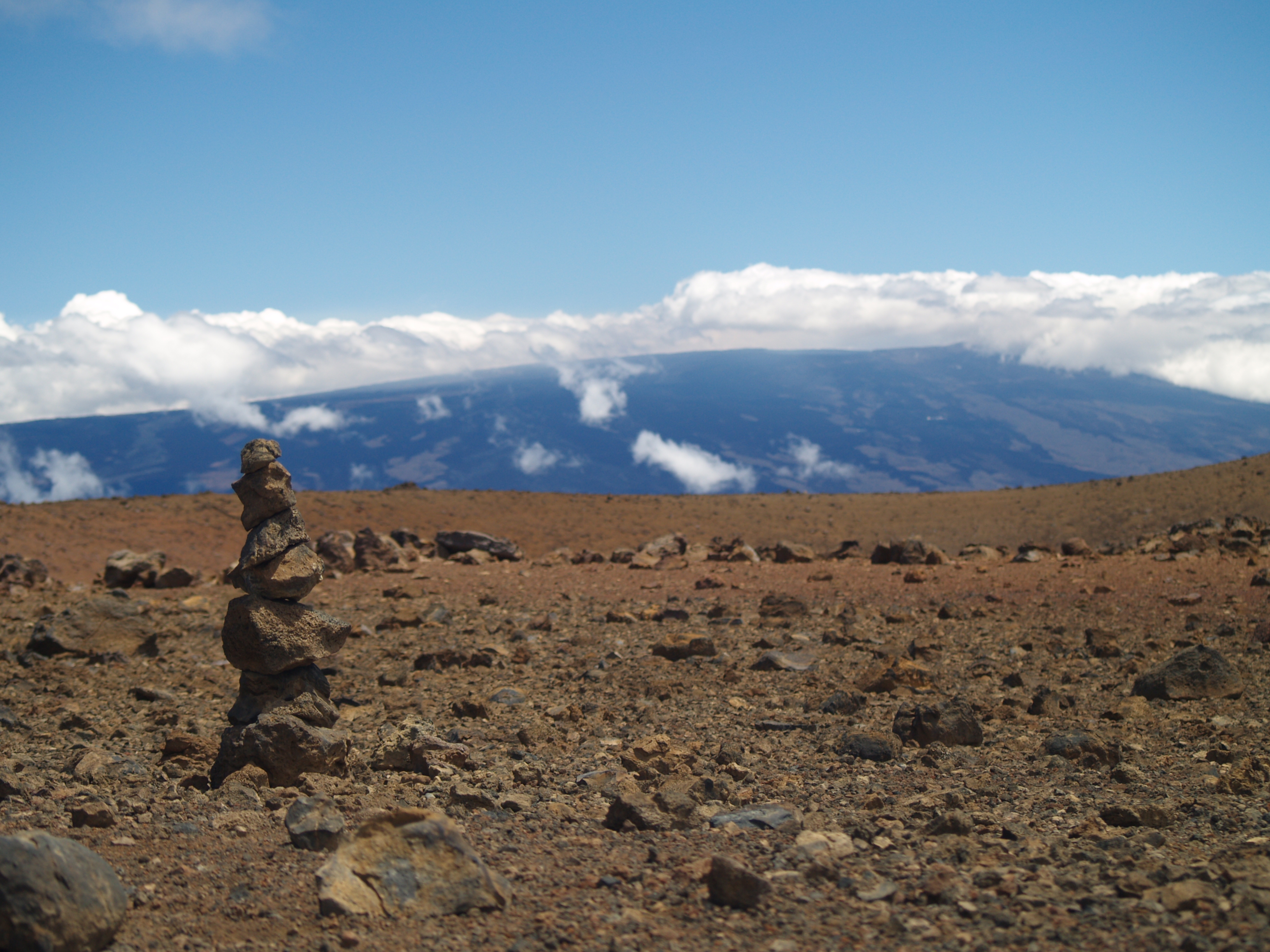
Looking South from Mauna Loa to Mauna Kea from Near Lake Wai'au: Photo by Donnie MacGowan

Leg 4) Go north on John Burns Way to Mauna Kea Visitor Information Station.


Mauna Kea Visitor Information Station

The Visitor Information Station is open daily from 8 a.m. to 5 p.m. During the day there are interactive computer exhibits about Mauna Kea, the observatories and astronomical research, plus there are video presentations and nature trails to hike. Many evenings after dark National Park personnel and astronomers put on public programs and discuss what the latest astronomical findings tell us about the nature of our universe. The souvenir shop has some food items, including hot chocolate, coffee and hot soup, for sale.

Hikers on Mauna Kea Summit Looking at Mauna Loa Summit: Photo by Donnie MacGowan

Leg 5) John Burns Way to Mauna Kea Summit

Mauna Kea Summit

Before you decide to go to the summit of Mauna Kea, stop, think, plan. Are you prepared for cold and high altitude? Do you understand the nature and dangers of altitude sickness and UV radiation? Are you experienced at traveling icy dirt roads? Is you car safe for the trip (many car rental agencies on the island forbid you to drive this road)? The Rangers at the Visitor's center can brief you on altitude sickness, UV radiation preparedness, the condition of the road and all other information you need to decide whether to visit the summit (see a video here).

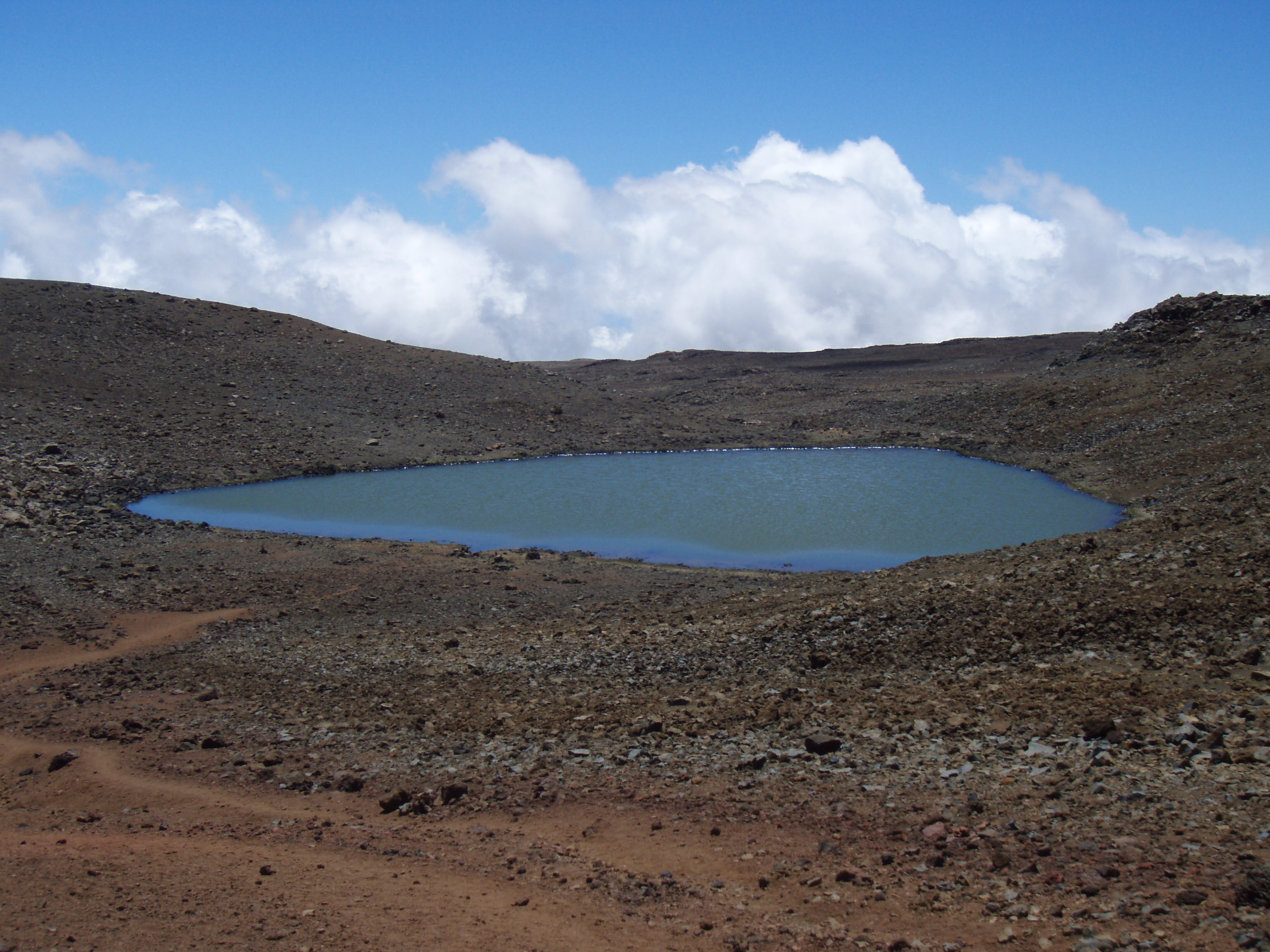
Lake Wai'au--the Seventh Highest Lake in the US--Whose Name Means "Swirling Water", Perches Near the Summit of Mauna Kea On The Big Island of Hawaii: Photo by Donnie MacGowan

The summit of Mauna Kea is truly an amazing place. Beautiful, awe-inspiring, 360 degree views of the entire Big Island, the summit is also culturally and religiously important to the native Hawai’ians and is home to several, world-class astronomical observatories and their support buildings. Because of the extremity of the altitude and the poor quality of the road above the Visitor's Center, it is advised that extreme caution be exercised in deciding to visit Mauna Kea's Summit. From the road's end very near the summit, a short, 10 minute trail leads up Pu'u Weiku cinder cone to the actual mountain top and a Hawaiian religious shrine. Also near the summit is the 1-mile hike to Lake Waiau, the 7th highest lake in the US, as well as numerous archeological sites. Moving at altitude is strenuous, so conserve energy. Do not over-tax yourself, be sure to drink plenty of fluids and protect yourself from the sun, wind and cold. Leave the summit area and return to the paved road long before you are tired.

Kaumana Cave, Hilo Hawaii: Photo by Donnie MacGowan

Leg 6) Return John Burns Way to Hwy 200; take Hwy 200 east to Kaumana Caves

Kaumana Caves

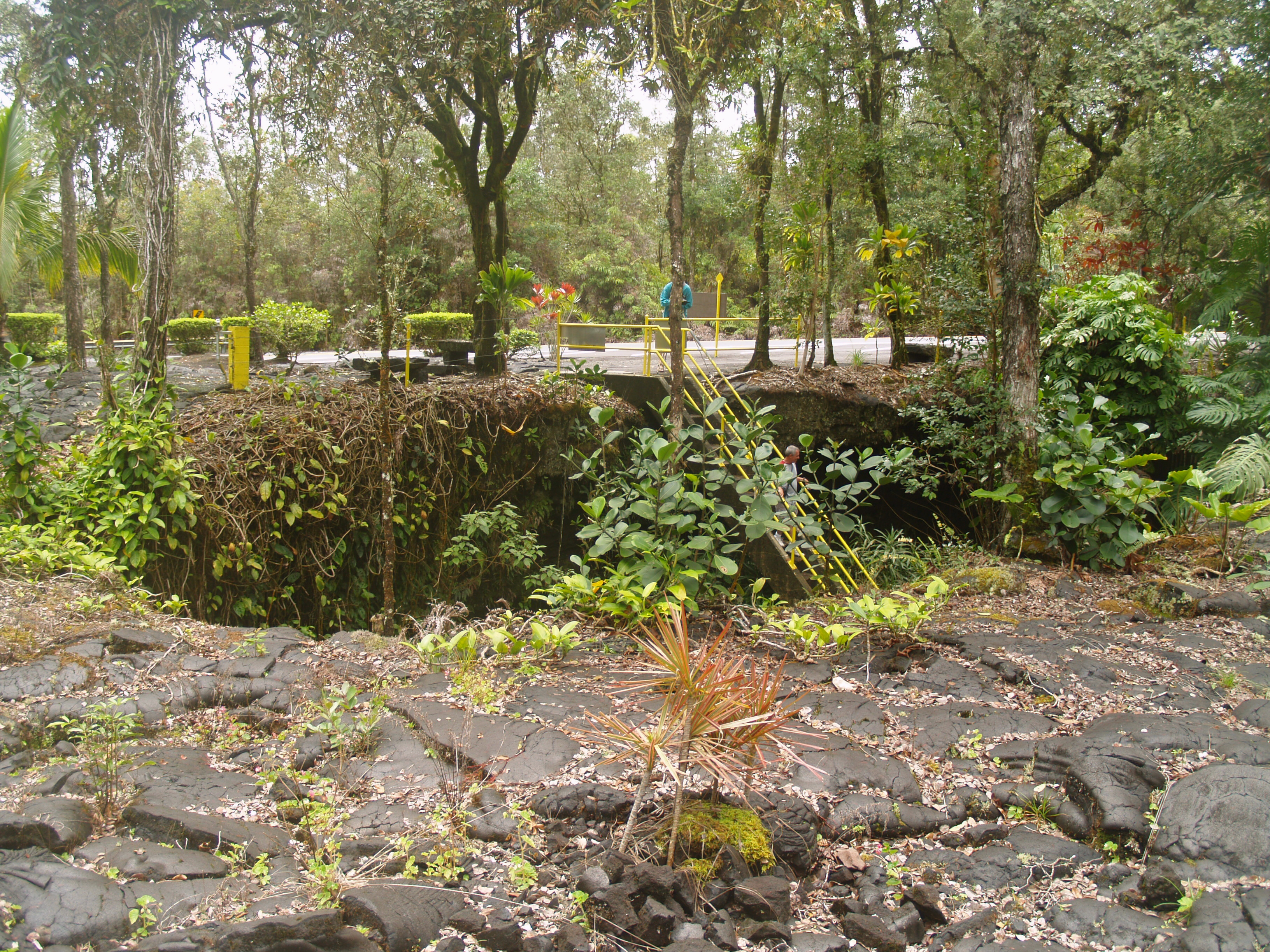
A skylight opening to 25-mile long Kaumana Cave is located at the county park near the 4-mile marker on the Hilo side of the Saddle Road. Concrete stairs take you down through the rain forest jungle to the bottom of a collapse pit forming two entrances to the cave. Most people are drawn to the entrance on the right, a large, opening leading to cavernous rooms. In this entrance, graffiti from hundreds of years ago to the present is preserved, scratched into the rocks. The entrance on the left, however, is more interesting, leading through squeezes and low spots to numerous rooms with fascinating speleo-architecture and cave formations. Both caves go to true dark in fewer than 300 feet in either direction. There are more than 2 miles of easily accessible, wild cave to explore here, but if you intend more than just a cursory inspection near the entrances, bring a hard hat, water and at least 3 sources of light. A quick tour of the caves takes fewer than 20 minutes.

Kaumana Cave's Skylight Entrance: Photo by Donnie MacGowan

Parking for the caves is located across the highway from the park; extreme care should be taken when crossing he road. Public restrooms, water and picnic tables are available at the park. As you approach Hilo from Kaumana Caves, Hwy 200 becomes variously called Kaumana Drive, then Wainuenue Avenue.

Astronomical Observatories on the Summit of Mauna Kea, From Downtown Hilo: Photo by Donnie MacGowan

Leg 7) Take Hwy 200 into Hilo Town.

Hilo Town

Beautiful but wet, metropolitan but decrepit, bustling but laid back, Hilo is a lovely, maddening, heartbreaking, addictive study in contrasts. In can rain all day long for 50 days in a row, yet when the sun does shine, the views of Mauna Loa and Mauna Kea from the Lilioukalani Gardens, or of Hilo Bay as you drive down from the mountains, or the rain-forest and waterfall choked gulches with lovely beaches along the highway north of town, make Hilo one of the most truly, achingly-lovely spots on earth.

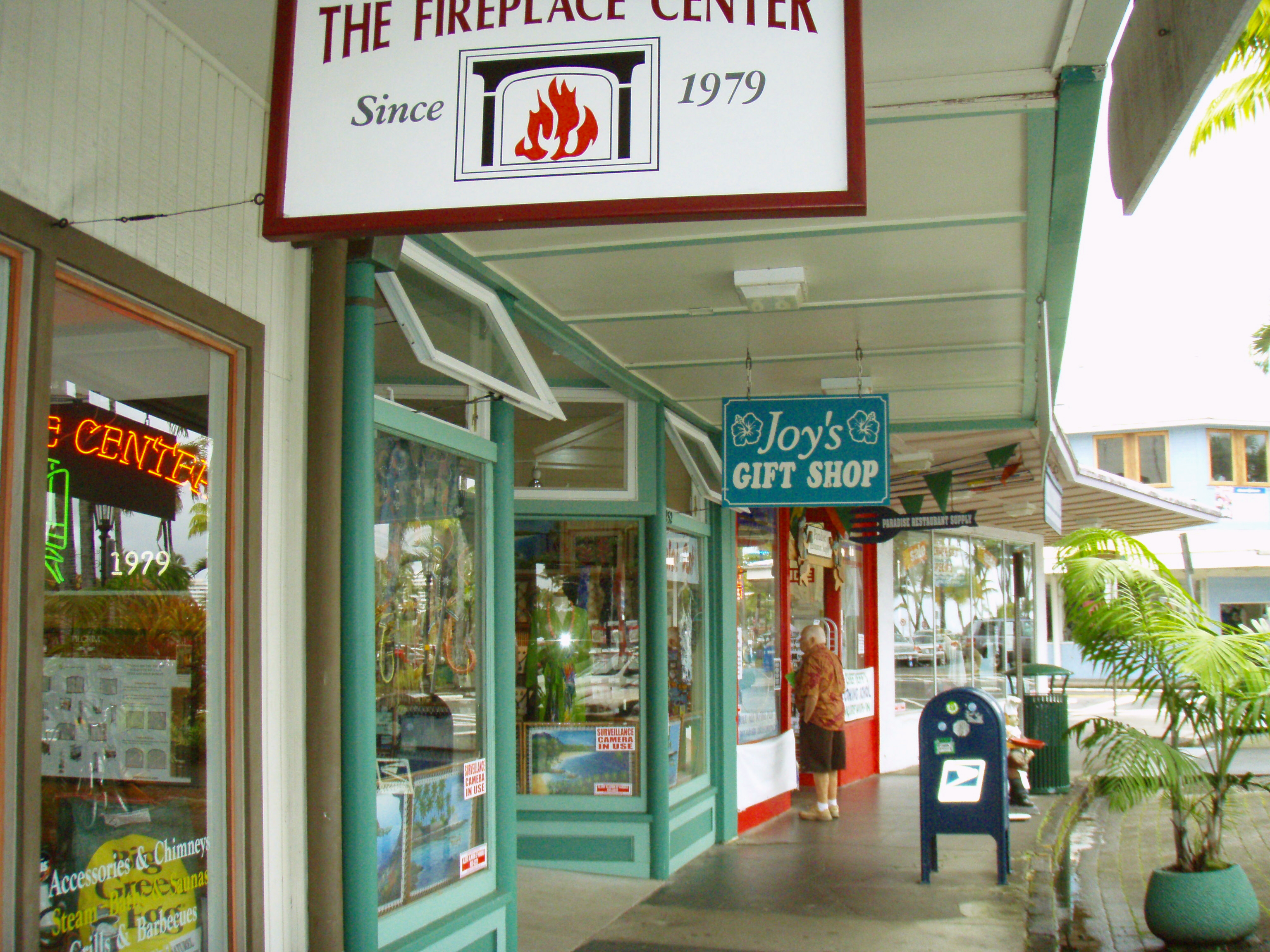
Hilo's Charming Bayfront Shops: Photo by Donald MacGowan

More laid back and sleepier than bustling Kailua Kona, Hilo is the largest town on the island, and the county seat. The Imiloa Astronomy Center of Hawaii, Tsunami Museum, Lyman House Missionary Museum and the Panaewa Rainforest Zoo are all wonderful places to learn about various aspects of Hawaii. There are numerous shopping districts, two large malls and the Historic Old Hilo downtown shops to browse through, a variety of sprawling green parks, a fabulous tropical arboretum right downtown and a mile-long black-sand beach fronting the bay to explore. Hilo's Farmer's Market is a "must see" for any visitor who is spending time on this side of the island.

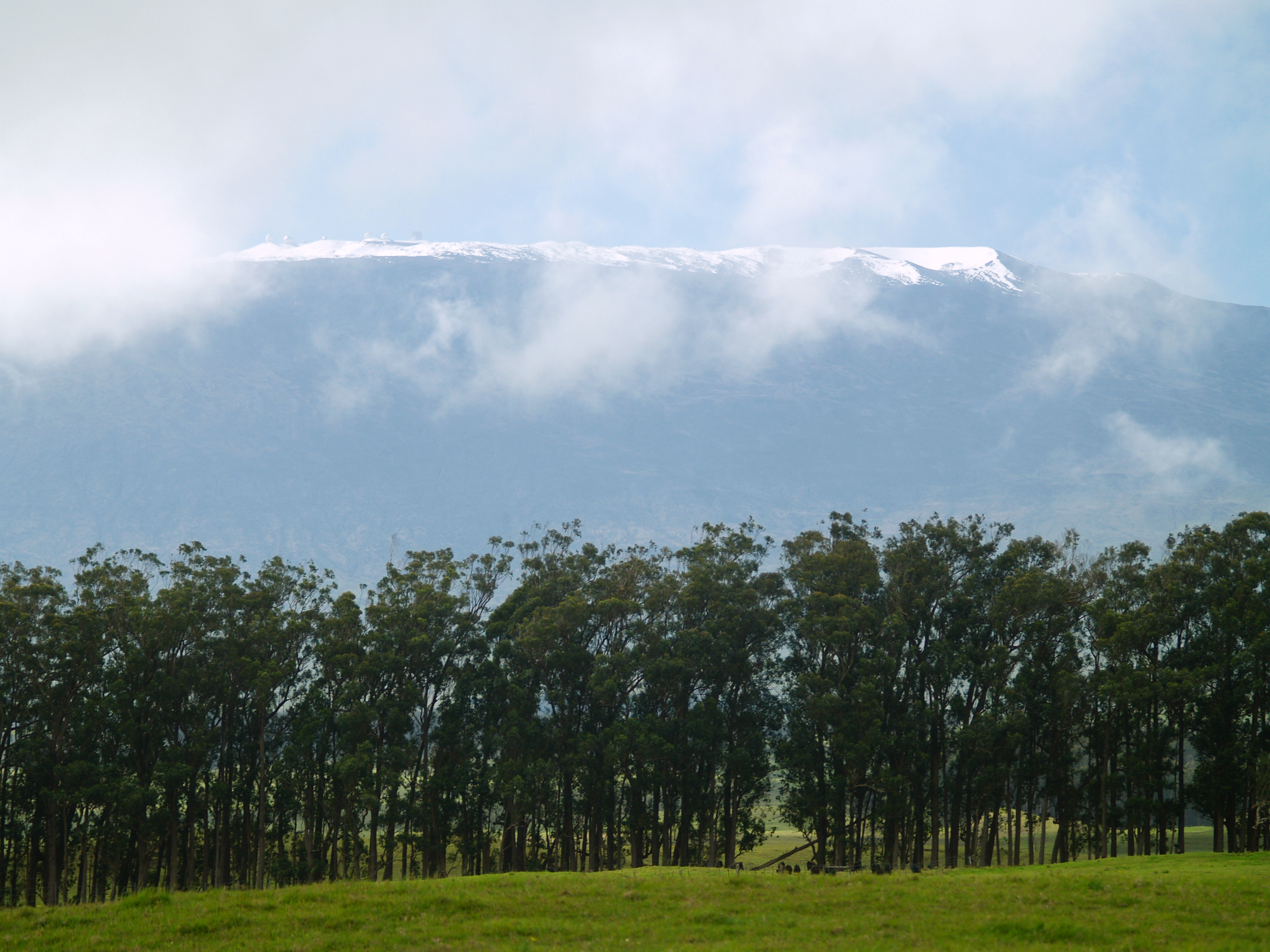
Mauna Kea's Summit  from Highway 19 Near Waimea Town: Photo by Donald MacGowan
Mauna Kea's Summit from Highway 19 Near Waimea Town: Photo by Donald MacGowan

Leg 8) Return Wainuenue Avenue to Kaumana Drive to Hwy 200; take Hwy 200 west to jct with Hwy 190; take Hwy 190 west to Kailua Kona.

Trogdor at Keauhou Bay, Kona Hawaii: Photo by Donnie MacGowan

For more information on traveling to Hawaii in general and touring the Big Island in particular, please visit www.tourguidehawaii.com and www.lovingthebigisland.wordpress.com. Information about the author is available here.

All media copyright 2009 by Donald B. MacGowan


Thursday, May 7, 2009

Pu'u Kohola National Historic Park and Spencer Beach Park, Big Island Hawaii


Pu'u Kohola National Historic Park and Spencer Beach Park are two of the most interesting and fun visitor attractions on the Kohala Coast of the Big Island of Hawaii.


Produced by Donnie MacGowan and Frank Burgess and presented by Tour Guide Hawaii...Aloha!

For more information, visit www.tourguidehawaii.com or www.lovingthebigisland.wordpress.com.


All media copyright 2009 by Frank Burgess and Donald B. MacGowan

Tuesday, May 5, 2009

Sulfur Banks and Steaming Bluff, Hawaii Volcanoes National Park


Sulfur Banks, on the crater side of the road, is just one of hundreds of gas seep on the flanks of the summit crater spewing hydrogen sulfide, sulfur dioxide, carbon dioxide and steam. Hematite, native sulfur and gypsum minerals precipitate out of the gas flux streaming through the rocks, making colorful splashes on the outcrops. Children and people with heat or respiratory conditions, or anybody with a weak stomach should be wary of venturing down the road to see this.

Non-sulfurous steam vents, mostly across the road from the crater and at the aptly named Steaming Bluff, result from rainwater percolating down through the ground being boiled by the hot rock beneath and streaming up vents to the surface. There is a short walk to the Steaming Bluff from the Sulfur Banks parking area which comes to a breathtaking view of the crater and more productive steam vents.

For more information on touring Hawaii in general and the Big Island in particular, please also visit www.tourguidehawaii.com and www.lovingthebigisland.wordpress.com.

Written and produced by Donald B. MacGowan; narrated by Frank Burgess. All media copyright 2009 by Donald B. MacGowan and Frank Burgess.

Saturday, April 25, 2009

The Sugar Industry in Hawaii:Kona Sugar Company and West Hawai’i Railway Company

By Donald B. MacGowan and Frank Burgess

The Sugar Industry in Hawaii

Scattered across the Hawaii Island landscape are remnants of old sugar mills, fields and even some feral cane can still be seen. But when Captain Cook came to the Islands in 1778, only wild sugar cane grew.

Feral Sugar Cane Field, Hamakua, Hawaii: Photo by Donnie MacGowan

The climate in Hawaii offered a perfect environment for raising sugar cane; cooling ocean currents keep the average temperatures around 80 degrees, with frequent rains, abundant groundwater and year round sunshine. 


In 1834 the first successful sugar plantation company marked the beginning of Hawaii's love affair with sugar. Sugar provided Hawaii an economic foundation allowing a cosmopolitan society to flourish which spurred U.S. Annexation and eventual statehood in 1959.


In its heyday during the early 1960s, one out of every twelve people employed in Hawaii was in the sugar industry whose workers were the highest paid in the world. Hawaii produced a million tons of cane sugar a year from about 221,000 acres of land on four islands.  Hand milling of cane was replaced by mechanical milling in the late 1800s.These mills easily handled a number of processes including washing, crushing, grinding, and centrifuging. Raw, milled sugar was then shipped to the California & Hawaiian Sugar Refining Corporation in Crockett, California.  Unable to compete in the global sugar market the Hawaiian sugar industry declined in the 1980s and the last plantation closed at Pahala in 1992.


Though the business is gone, what is left are the people who once worked the fields and mills. The melding of the rich cultures of Japanese, Chinese, Filipinos, Portuguese, and others is what gives today's unique Hawaii lifestyle its flavor.  


Kona Sugar Company and West Hawai’i Railway Company


Such was the seductive lure of easy riches to be gained by growing sugar in Hawai’i at the beginning of the 20th Century, that investment capital for a large sugar plantation, sugar mill and railroad in Kona could be raised not once, but three times.  


Remnants of the old Kona Sugar Company Mill Near Holualoa: Photo by Donnie MacGowan


The Kona Sugar Company plantation was established in 1899 and every available scrap of land was stripped of whatever crops had grown there previously and planted in cane.  Although the sugar grew well enough about 500 feet elevation, a notable lack of fresh water in Kona’s semi-arid landscape made Wai’aha Stream the only logical choice for the mill site.  Unfortunately, the stream flow is vastly insufficient for year-round cane milling and the mill, built in 1901, went broke in 1903.  


Kona Sugar was bought by investors; renamed Kona Development Company, the plantation again went broke in 1916 and was in turn bought by investors in Tokyo. This group managed to eek out a profit until the industry imploded in 1926.  Originally planned to run 30 miles, the railroad was only built to total length of 11 miles in the 27 years of sugar plantation operation.  Work camps, communal baths, stables, workshops and all the requisite infrastructure of a giant agricultural plantation lay abandoned in the Mauka Kona countryside.


During World War II, the U.S. Army used the mill site as a training camp to acclimate troops to warfare on their way to the tropical Pacific Theater.  Fearing the tall smokestack of the mill would act as an artillery landmark for any invading forces, the Army pulled it down and Kona lost one of its first post-contact, industrial landmarks.

The Overgrown Walls of the old Kona Sugar Company Mill: Photo by Donald B. MacGowan


Traces of the rail bed can still be seen from the top of Nani Kailua and Aloha Kona residential neighborhoods.  Located along Hualalai Road, near the intersection with Hienaloli Road, are impressive stone breastworks and trestles for the railroad. Built by hand but still strong today, the rail bed can be explored and hiked from here.  Further up Hienaloli Road from the intersection with Hualalai Road, the old mill site remnants are still visible.


Abandoned Stone Trestle of the West Hawaii Railroad, Near Holualoa, Highway: Photo by Donnie MacGowan


For more information on traveling to Hawaii in general and touring the Big Island in particular, please also visit www.tourguidehawaii.com andwww.tourguidehawaii.blogspot.com.

All media copyright 2009 by Donald B. MacGowan and Frank Burgess; all rights reserved.
Monday, April 13, 2009

Exploring Mysterious Puna--Jungles, Beaches, Eruptions: A Photo Diary

By Donnie MacGowan

Here in the Department of Research and Eternal Spring Break at the Galactic Headquarters of Tour Guide Hawaii, we have been waiting for a break in the Spring Monsoon on the east side of the island so we could run around Puna, visit, film and photograph all our favorite places and then spend a (relatively) dry evening watching the pyrotechnics as Madam Pele marches into the sea at the lava ocean entry at Waikupanaha.

The Men of Tour Guide At Work: Photo by Donald MacGowan

Well, as wet as Puna and Hilo are, we could have waited an eternity, so we decided to just pack everybody up and hit the highway. We tore down the west side of the island, past South Point, Punalu'u and the Hawaii Volcanoes National Park, making our first stop (for coffee) at Pahoa, the cultural and mercantile center of Puna.

Pahoa is the Commercial and Cultural Center of Puna: Photo by Donald B. MacGowan
From Pahoa, we drove sedately down through the magnificent Tree Tunnels on Hwy 132 to Lava Trees State Monument.

The beautiful Tree Tunneled Roads of Puna: Photo by Donnie MacGowan

Here, a long-ago lava flow swept through a wet ohi'a tree forest. The wet, cold trees chilled the lava, which coated the trees.

Lava Trees at Lava Trees State Monument: Photo by Donald MacGowan

As the lava drained away downhill and through numerous cracks in the earth, the lava coating the trees cooled, leaving these basalt towers with hollow insides…the lava trees have casts of the ohi'a, bark and all, in their middles…an amazing place!

Lava Trees Cast: Photo by Donnie MacGowan

We took highway 137, named the Kapoho-Kalapana Road--I imagine this is the only road in America--perhaps the world--that is named for two towns destroyed by the same volcano.

Kapoho Kalapana Road Sign: Photo by Donnie MacGowan

Driving through the jungles and beaches of Puna we came to Ahalanui Hot Pond. This man-made pool was first constructed to retain the refreshing waters of a cold spring.

Ahalanui Hot Pond: Photo by Donald MacGowan

During eruptions in the early 1960s, however, the plumbing on Kilauea changed and the spring became hot…and the pool became even more refreshing. Continuing on we stopped in at Isaac Hale Beach Park, which has recently had a complete makeover and is now one of Hawaii County's first rate facilities.

Isaac Hale County Beach Park: Photo by Donald B. MacGowan
Once run down, decrepit and populated by social undesirables, it's now a vibrant, safe and enjoyable place to have a picnic, snorkel and just enjoy exploring where jungle meets ocean.

Isaac Hale Park Hot Spring: Photo by Donnie MacGowan

Next stop was McKenzie State Park, a real rustic gem with not much going on but miles of hiking trails, a copse of beautiful ironwood trees and some amazing, huge boulders hurled 60 feet up the sea cliffs by tsunamis past.

McKenzie State Park Tsunami-Tossed Boulders: Photos by Donnie MacGowan

Makes you think twice about camping here!

The next part of Puna we drove through along Highway 137 is undergoing intense development--once a land of rolling jungle punctuated with lava flows and crossed by red cinder roads, civilization is finally finding Puna--too bad. Of course, Madame Pele decrees that any human settlement on this part of Hawaii Island is an "at will tenancy"--at her will--and she may reclaim the land as wild lava at any time.

Modern Carved Pohaku Iki in Puna: Photo by Donnie MacGowan

We came into what's left of Kalapana and hiked out to the new black sand beach at Kaimu. There is an amazing story of love and rebirth centered around this tiny village which I have previously told elsewhere, but it's a moving and gorgeous spot.

Kaimu Black Sand Beach in Winter: Photo by Donald MacGowan

After getting our toes wet in the ocean at Kaimu, we turned north towards the Hawaii County Lava Viewing platform near what used to be Waikupanaha. We parked and hiked in to await dusk and see the eruptions (see video here).

Littoral Explosions as Lava Enteres the Ocean Near Royal Gardens: Photo by Donald B. MacGowan
Littoral Explosions as Lava Enters the Ocean Near Royal Gardens: Photo by Donald B. MacGowan

Then, with full on dark enveloping us, we packed the car, adjusted the mirrors, and sat back for the 3 1/2 hour drive back to Kailua Kona…we timed it perfectly to arrive in time to have coffee and ice cream at Lava Java and to watch the evening surf pound against the seawall in Old Kailua Town and told ourselves, in the local pidgin, the same thing residents of Kona tell eachother at least twice a day…"Hey, lucky we live Hawaii, eh?"

Sunset from Lava Java in Kailua Kona: Photo by Donnie MacGowan

For more information on touring Hawaii in general and the Big Island in particular, please also visit www.tourguidehawaii.com and www.lovingthebigisland.wordpress.com.

All media copyright 2009 by Donald B. MacGowan; all rights reserved.


Casino Bonus no Deposit