Showing posts with label eruption. Show all posts

Monday, October 26, 2009

Hawaii Vacations Come Alive in the Palm of Your Hand with Tour Guide Hawaii's Fabulous, New, Amazing iPhone and Ipod Touch App

THE must have iPhone / iPod Touch app for all residents and visitors to the Big Island of Hawaii. Get the Tour Guide iPhone and iPod App here today!


For more information on Tour Guide Hawaii's fabulous new iPhone and iPod App, please go here, here and here.

For more information on traveling to Hawaii in general, or details on how to buy the iPhone/iPod App, please go to www.tourguidehawaii.com.

Monday, October 12, 2009

Volcano Watch: Hualalai is third most active volcano in Hawai`i

Reprinted from here. Brought to you by Tour Guide and our new, comprehensive GPS/Internet/3G navigation App for iPhones and iPod Touch available today at iTunes!

View of Hualalai Volcano, Hawai`i, looking SE.  Photograph by J. Kauahikaua on December 30, 1996.
View of Hualalai Volcano, Hawai`i, looking SE.
Photograph by J. Kauahikaua on December 30, 1996.

The West Hawai`i Today issue for September 11, 2009, contained a letter to the editor titled "Hualalai is a real and present threat." The writer's main point was that "Hualalai is the 'secret in the closet' that nobody wants to talk about," that Hualalai is under-monitored, and that, should Hualalai erupt, there is no evacuation plan.

The letter writer's concerns about Hualalai were valid, but he was not aware of HVO's current efforts and plans to improve the monitoring of Hualalai. We hope to shed some light on recent and future activities planned for Hualalai.

Hualalai is the third most active volcano on Hawai`i Island behind Kīlauea and Mauna Loa, according to the Hawaiian Volcano Observatory's (HVO) Web site (http://hvo.wr.usgs.gov/), and attained national ranking of "High Threat" for active volcanoes in the U.S. (see http://pubs.usgs.gov/of/2005/1164/).

In the ranking, there were 37 volcanoes nation-wide that were highest-priority targets for improved monitoring; Kīlauea and Mauna Loa were included in this group. Furthermore, 21 additional volcanoes were found to be under-monitored and were regarded high priority for improved monitoring; Hualalai is in this group.

What is the basis for this ranking? Hualalai has erupted three times in the last 1,000 years, the most recent eruption occurring in 1801. An intense and damaging seismic swarm in 1929 marked a failed eruption. In the same interval, Mauna Loa and Kīlauea have each erupted more than 150 times, and Haleakala has erupted at least 10 times. Hualalai was rated a higher threat than Haleakala, due to the extent of development (airport, power station, etc.) and the larger population living on the volcano's flanks.

Is Hualalai under-monitored? In 2005, HVO and the Pacific Tsunami Warning Center (PTWC) each had one seismometer on the volcano, and bi-annual deformation surveys were conducted by our staff. With the permission of Kamehameha Schools, a continuous GPS receiver was installed near the summit in late 2006. In 2009, HVO still has one seismometer and uses two instruments operated by PTWC for eruption monitoring, and we continue the bi-annual surveys. Plans for the next two years include upgrading our seismic site and adding a new one.

We routinely scrutinize all available satellite imagery daily, including visual and thermal images to indicate any significant visual and temperature changes, or increased gas emissions. Moreover, radar scans several times each year can pinpoint any ground deformation that may be a precursor to volcanic activity. The radar scans are so sensitive that several small areas of subsidence were detected after the October 15, 2006, Kiholo earthquakes.

The conclusion from evaluating all of these data is that there have been no signs of swelling, major subsidence, temperature changes, gas emissions, or unusual seismic activity on Hualalai that would indicate volcanic activity in the near future. Nevertheless, we continue to look for any changes.

If the rankings were done today, Hualalai would be nearly fully monitored.

We agree with the letter writer that "the more people know about Hualalai, the more will be prepared." In 2004, University of Hawai`i at Manoa (UHM) scientists published two studies on Kona community's perception of volcanic risk and preparedness for lava flows from Hualalai and Mauna Loa. They concluded that "current community understanding and preparedness… falls short of that required for a volcanic crisis, particularly for those eruptions with short onset and high effusion rates on steep slopes that would impact Kona in just a few hours…"

There are several reasons for the lack of understanding, but foremost may be the constant influx of new residents who haven't educated themselves about volcanic hazards. The primary mission of the U.S. Geological Survey's Hawaiian Volcano Observatory is to monitor the active volcanoes in the State of Hawai`i. Through our Web site, public forums, and newspaper articles, we strive to disseminate information on the volcanoes and their hazards.

The people of Kona should know that we are keeping an eye on Hualalai and that if there are any changes (in its eruption status), we will let the public know!

Kīlauea Activity Update

Lava continues to erupt from the TEB vent, on Kīlauea's east rift zone and flow through tubes to the ocean at Waikupanaha. A deflation-inflation cycle this past week resulted in a reduction of lava supply for several days, followed by a resumption of flow on Wednesday, Sept. 30. Breakouts from the tube system started at that time, and these surface flows remain active at the top of Royal Gardens subdivision. The flows are mostly staying close to the breakout point along the east margin of the flow field.

Faint glow above the vent at Kīlauea's summit has been visible at night. A portion of the Halema`uma`u vent cavity collapsed on Saturday, Sept. 26, followed by the appearance of an active lava pond deep within the vent cavity on the night of Tuesday, Sept. 29. Volcanic gas emissions remain elevated, resulting in high concentrations of sulfur dioxide downwind.

Four earthquakes beneath Hawai`i Island were reported felt this past week. A magnitude-2.3 earthquake occurred at 12:30 p.m., H.s.t., on Friday, September 25, 2009, beneath Kilauea's summit at a depth of 6 km (4 miles). Two earthquakes occurred on Sunday, September 27-a magnitude-2.1 earthquake at 9:52 a.m., H.s.t., located 7 km (4.3 miles) N of Kailua at a depth of 8 km (5 miles) and a magnitude-2.3 earthquake at 10:22 p.m., H.s.t., located 7 km (4.3 miles) ENE of Honaunau at a depth of 6 km (3.7 miles). A 1.6-magnitude earthquake at 7:11 p.m. H.s.t., on Wednesday, September 30, was located 15 km (10 miles) NW of Mauna Kea's summit at a depth of 25 km (16 miles).

Visit our Web site (http://hvo.wr.usgs.gov) for detailed Kīlauea and Mauna Loa activity updates, recent volcano photos, recent earthquakes, and more; call (808) 967-8862 for a Kīlauea activity summary; email questions to askHVO@usgs.gov.

-------------

Planning on visiting the Big Island Volcanoes, hiking the beautiful summits or going to see the flowing lava? Tour Guide Hawaii is proud to announce the release of their new iPhone and iPod Touch App available at iTunes...this App will help you plan your trip to Hawaii, help you decide what you want to see, how you want to see it and help you get there with GPS, interactive maps and on-board driving instructions. In addition to concentrating on Hawaii's volcanoes, beaches and waterfalls, the Tour Guide App presents hours of interesting videos and information about many other places of historical, cultural and recreational interest, giving you a sense of the people, the natural history and the unique specialness of each destination. The information is so comprehensive and complete they even tell you where all the public restrooms are!

We highly recommend all Big Island visitor's who have iPhones or an iPod Touch check out our App on iTunes; we think you'll agree it's far better than old-fashioned, cumbersome maps or expensive guide books that seem to be out of date before they are printed. See it today!

Thursday, October 8, 2009

Frank's Big Island Travel Hints #8: Mysterious Puna!

Frank's Big Island Travel Hints #8: Mysterious Puna!
by Frank Burgess, brought to you by Tour Guide Hawaii


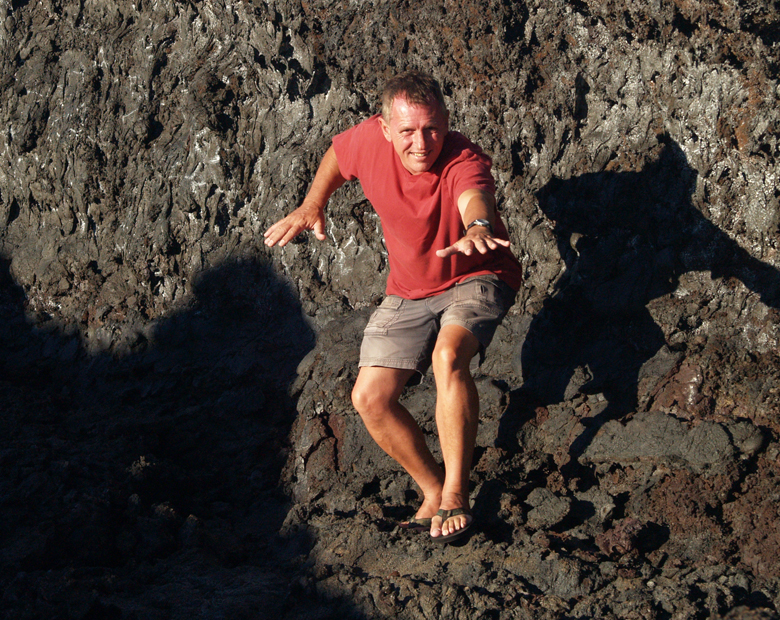
Frank Burgess lava surfing at Muliwai O Pele, Hawai Volcanoes National Park: Photo by Donnie MacGowan

Tour Guide Hawaii is proud to announce the release of their new iPhone and iPod Touch App available at iTunes...this App will help you plan your trip to Hawaii, help you decide what you want to see, how you want to see it and help you get there with GPS, interactive maps and on-board driving instructions. The Tour Guide App presents hours of interesting videos and information about places of historical, cultural and recreational interest, giving you a sense of the people, the natural history and the unique specialness of each destination. The information is so comprehensive and complete they even tell you where all the public restrooms are! What else will Tour Guide help you find? Let's look at a trip north from Kona along the Hawaii Belt Road to the Waikoloa area...Tour Guide will not only help you find many amazing sights along the way, it will tell you all about them, what to take and what to expect.

Today's hints cover the area from Kona to Puna District. Driving south along the Kona Coast, through Ka'u and into Puna there several fantastic places to stop and explore, but there is also a lot of lovely, open countryside for several miles, so enjoy the panoramic views. Your Tour Guide download from iTunes will give you more detailed information about this area.

Exploring Mysterious Puna...

For your next day of driving, let’s go south on Highway 11 headed for the Puna District. Leave early and expect to get back just after dark because this area is furthest from Kona and contains some of the most beautiful, yet hidden, wonders on the Big Island. It is from Puna that, currently, the only up-close viewing of flowing lava is possible. You may want to pack a cooler for this day trip.

As you’re passing through Kainaliu, just south of Kona, a quick stop at Kona Joe’s Coffee Plantation, for some great Kona Coffee, will jump start your day. See their ad in the sponsors section in your Tour Guide. If you are driving straight to Puna, plan on about 3½ hrs drive time to get to the first sights in this discussion. If you have missed any sights that you wanted to see on the southern route, refer to Frank’s Travel Hints #1 and #2 and catch them on the way...just don't forget to allow for extra time.

Along the way you will pass Hawaii Volcanoes National Park. This is a fascinating place and not to be missed, but we will reserve discsussing it for as a full day trip in a later post.

The first turn is about 20 minutes past the park entrance at the town of Kea’au. Look for the stop light on the highway and the Highway 130 sign. The Kea’au Shopping Center has some great places to eat, like Paradise Bar and Grill, and is a good restroom break.

The first stop, in the Puna district, is the town of Pahoa. You will think you have just stepped back into the Wild West as Pahoa has a unique atmosphere like nowhere else on the island. Cute shops, and a great farmer’s market on Sundays, lends to picture taking and shopping. Tour Guide will suggest that parking is easiest at the Community Pool just a block from downtown, and there are public restrooms here.

Continue driving further into Puna on Highway 132 through the lovely tree tunnels to a magical stop at Lava Trees State Park. This gorgeous rainforest park is filled with birds and tropical plants and flowers. What makes this park so intriguing is the lava trees. Tour Guide will tell you how old lava flows surrounded the trees, leaving spires of hardened lava, giving it an eerie look. There are trails for hiking and bird watching is spectacular. This is also a good place for a restroom break as it will be a good while before the next restrooms are available. Highway 132 leads you to Highway 137, the Kapoho-Kalapana Road--the only road in America that is named for two towns buried by a volcano.

Turning toward Kapoho on Highway 137, the next stop is the Kapoho Tide Pools where you can experience great shoreline shell collecting and fantastic snorkeling amongst vibrant corals and tropical fish in protected tidepools. Though hard to find on your own, Tour Guide again knows the way to this secluded sanctuary and ancient village. Port-a-potties and showers are the only facilities here.

Just a few miles down Highway 137 is Ahalanui Hot Pond. This tropical park is centered around a hot spring that mixes with ocean water to create one of the most relaxing and soul recharging oases anywhere. Tour Guide gives you the history of what this area meant to the ancient Hawaiians. Picnicking, hiking, swimming and “expert only” surfing are some of the things to do here. There are restrooms, showers and water available also.

As you continue along the coast road, you will next encounter McKenzie State Park. Here the Ironwood trees create an unusual ambience of a pine tree forest. The sheer cliffs and majesty of the ocean beg for photographing. Swimming would be near impossible here, but the hiking is spectacular. Tour Guide will give more information about this other- worldly park. A permit is required for camping and the facilities are a bit run down.

Not far away is Kahena Beach. This beautiful black sand beach involves a bit of a scamper to get down the cliff, but is well worth the effort. Tour Guide will give you the easiest path to take. You may notice that this beach is “clothing optional”, thus it’s popularity. Swimming here is good, but currents can be strong if you get too far from shore.

Highway 137 used to become the Chain of Craters Road in Hawaii Volcanoes National Park, but it has been cut by several miles of intervening lava flows. Today, it ultimately ends at Highway 130, the road back to Kea'au and the Hawaii Belt Highway. At the intersections of Highways 137 and 130 are the remnants of the town of Kalapana, buried in the 1960 eruption of Kilauea. Tour Guide will tell you all about the eruption, the heroic recovery efforts, and lead you on a brief hike to Kaimu Black Sand Beach, the newest beach on the Island of Hawaii. From the end of the road you can frequently see the both the eruption cloud over Pu'u O'o Vent and the steam plume where lava is entering the ocean, both several miles distant. At night, the glow from streams of lava pouring down the pali can sometimes be seen from here. Although hiking to the lava can be an experience to cherish, it is dangerous and hard work. The best, and most consistent, viewing is by taking an air tour, such as Big Island Air or Paradise Helicopter Tours.

Heading back from Kalapana, you will want to take Highway 130 toward Pahoa and Kea'au, you pass the famous "Painted Church". Tour Guide can tell you the history of this fascinating place. Just a little farther north is the intersection of Highway 130 with the road to Royal Gardens Estates, which currently leads to the Hawaii County-maintained lava viewing area. Call the Lava Hotline at 808.961.8093 for current eruption updates, lava viewing information and times of road openings and closures. As you continue towards Kea'au you will pass the Steam Rooms--a field of steam vents in small craters where locals go to take steam baths. Tour Guide has information on finding these craters and how to safely enjoy the wonders of natural, volcanic steam baths.

Upon returning to the Hawaii Belt Highway at Kea'au, one can proceed in either direction back to Kona, north through Hilo, a bit shorter and faster, or west through Hawaii Volcanoes National Park which, though longer, is much more scenic. If time permits, you may want to stop in Volcano Village, just off the highway, for some food, gasoline, shopping or maybe even some wine tasting. This may be the last gasoline available until you get back to Kona as it is many times hard to find an open gas station in the rural part of Hawaii Island after dark. Find your hotel in your Tour Guide and get turn-by-turn directions right to the door.

To see the new iPhone/iPod Touch App, please visit http://www.tourguidehawaii.com/iphone.html. The best of Tour Guide Hawaii's free content about traveling to, and exploring, the Big island, can be found here. For more information on traveling to Hawaii in general and on touring the Big Island in particular, please also visit www.tourguidehawaii.com and www.lovingthebigisland.wordpress.com.

Copyright 2009
by Frank Burgess; photography copyright 2009 by Donald B. MacGowan. All rights reserved.

Wednesday, October 7, 2009

Volcano Watch: Ancient Hawaiians: Plenty of Oars but No Ores

Reprinted form here.

Ancient Hawaiians: Plenty of Oars but No Ores

A September 25, 2009 photo showing Pu`u `Ō `ō fuming in the foreground (note the dense white fume from a vent in the east wall) and Halema`umau fuming in the distance.
A September 25, 2009 U.S.G.S. photo showing Pu`u `Ō `ō fuming in the foreground (note the dense white fume from a vent in the east wall) and Halema`umau fuming in the distance.

Most accounts of Captain Cook's first arrival in Hawai`i describe the Hawaiians' fascination with metal objects. The crew soon found that an iron nail could be traded for any number of goods or services. The fascination with metal stemmed from its novelty. Although Hawaiians had encountered metal before Cook arrived—either from other European ships or from debris washed ashore—it was, at best, exceedingly rare.

Naturally occurring or "native" metals, such as gold, silver, and copper are rare anywhere on earth, and are beyond rare in Hawai`i—they don't exist. Nickel-iron meteorites are also rare everywhere, but Hawai`i has an equal opportunity to receive them. So it's possible that meteoric iron was known to the ancient Hawaiians.

Though native metal is rare, metal combined with other elements is as common as rock itself. For example, about one-third of Hawaiian basalt is iron oxide, aluminum oxide, and calcium oxide, in roughly equal proportions.

To obtain metal in quantity, however, it must be smelted—separated from the other elements with which it is combined. To be suitable for smelting, a rock must contain a much higher proportion of a single metal-bearing mineral than would be found in common rock. Rocks suitable for smelting are called ores.

Many different mineral-concentrating processes are known to produce ore deposits. Placer deposits form when weathering releases mineral grains from rocks and flowing water segregates the minerals according to their densities. Minerals with high densities—most ore minerals—will tend to stay put while less dense minerals are carried away by the current. Placer deposits thus form along streams, rivers or the sea shore. The mineral olivine, heavy but not an ore mineral, was concentrated in this way to form the Green Sand Beach.

Some ores are produced in association with large intrusions of basalt—great blobs of magma that are injected into the earth's crust but that don't reach the surface. Instead they slowly cool deep underground. The slow cooling allows mineral grains to grow and to rise if they are less dense than the magmatic liquid or to sink if they are more dense than the liquid. The dense ore minerals collect in layers on the bottom of the intrusion. Essentially, all of the world's chromium ores and some platinum, nickel, and copper ores formed in this fashion.

Other ores are produced around the roots of volcanoes, where magma gives off heat, chemical-rich solutions, and vapors to surrounding rocks. These products mix with the groundwater-the water found in fractures and cavities in the rock virtually everywhere. The hot mixture is less dense than normal ground water so it migrates upward through fractures. The hot solutions can selectively dissolve low-concentration minerals contained in the country rock. As this witch's brew rises it cools and experiences a pressure reduction. The temperature and pressure reduction reduces the solubility of the various dissolved substances until they eventually crystallize on the fracture surfaces. In this way, metallic minerals that were in low concentrations in the country rock can become highly concentrated in the fractures to form veins. Vein ores yield copper, lead, zinc, gold, silver, tin, and other metals.

Given that ores are commonly associated with igneous processes—that is, with volcanism and magmatic intrusions—you might expect Hawai`i to have some metallic ores. But in fact, ore deposits are unknown in Hawai`i. This may be because they never formed, because they are just not exposed at the surface, or because they have not yet had time to form. Deep erosion is required to bring to the surface ores formed at great depths. So if metallic ore exists within Hawaiian volcanoes, erosion has not been deep enough to bring it to the surface.

The Hawaiians had learned to exploit wood, fiber, stone, and bone to the fullest, so why hadn't they developed the ability to mine, smelt, and work metals? Well, you can't exploit a non-existent resource. "Paradise" didn't come equipped with the raw material to produce metals.

Kīlauea Activity Update

Lava continues to erupt from the TEB vent, on Kīlauea's east rift zone and flow through tubes to the ocean at Waikupanaha. A small lava breakout on the rootless shield complex was active for a few days this week, but has now stagnated. A lava breakout from the tube near the top of the Royal Gardens subdivision has been active throughout the past week. The flows are mostly staying close to the breakout point and are building a broad shield-shaped mound of lava.

Faint glow above the vent at Kīlauea's summit has been visible at night. Volcanic gas emissions remain elevated, resulting in high concentrations of sulfur dioxide downwind.

Two earthquakes beneath Hawai`i Island were reported felt this past week. A magnitude-2.5 earthquake occurred at 5:56 a.m., H.s.t., on Monday, September 21, 2009, and was located 9 km (6 miles) northeast of Waiki`i at a depth of 26 km (16 miles). A magnitude-2.3 earthquake occurred at 7:28 a.m. on the same day and was located in the same area at a depth of 25 km (16 miles).

Visit our Web site (http://hvo.wr.usgs.gov) for detailed Kīlauea and Mauna Loa activity updates, recent volcano photos, recent earthquakes, and more; call (808) 967-8862 for a Kīlauea activity summary; email questions to askHVO@usgs.gov.

For all the information you need about seeing Hawaii's volcanoes, including everything from viewing flowing lava to touring Hawaii Volcanoes National Park or getting to the top of Mauna Kea, please see Tour Guide Hawaii's new iPhone/iPod Touch application here. For more information about traveling to Hawaii in general and visiting the Big Island in particular, please also see www.tourguidehawaii.com and www.tourguidehawaii.blogspot.com.

Friday, September 11, 2009

Tour Guide Hawaii Presents The Incredible New iPhone and iPod App: The Greatest App for Travel in the History of Forever!

The most innovative way to travel in the history of Forever. Get the Tour Guide iPhone and iPod App here today!

Say Goodbye To Cumbersome Maps and Guide Books That Are Obsolete Before They Are Printed!

Tour Guide Hawaii iPod and iPhone App puts the magic, mystery and romance of Hawaii in the palm of your hand. It's like having a friend from Paradise sitting in your car, telling you where to go, what to do and all the island secret spots...


>Tour Guide Hawaii iPod and iPhone App puts the magic, mystery and romance of Hawaii in the palm of your hand. It's like having a friend from Paradise sitting in your car, telling you where to go, what to do and all the island secret spots...

>Over 3 1/2 hours of in-depth video presentations about the most popular, most spectacular and most secluded spots!

>Day by Day scenic drive and road trip suggestions!

>Fascinating discussions on Hawaiian culture and history!

>Bonus features on seeing lava flows, snorkeling, language and culture, what to bring to Hawaii and getting around Hawaii!

> Uses GPS for turn-by turn driving instruction, Google Maps for navigation with iPod, or on-board interactive maps with embedded audio driving directions if no Wi-Fi, 3G or GPS connection is available--you literally can't get lost!!!

> All the public restrooms, located and rated for your convenience and protection!

Tour Guide Hawaii iPod and iPhone App puts the magic, mystery and romance of Hawaii in the palm of your hand. It's like having a friend from Paradise sitting in your car, telling you where to go, what to do and all the island secret spots...

Available from the Apple App Store, or by clicking here.

For more information on traveling to Hawaii in general or exploring the Big Island in particular, please also visit www.tourguidehawaii.com and www.lovingthebigisland.wordpress.com.

Friday, August 28, 2009

Volcano Watch: Scientists have mixed success with forecasting volcano hazards in Hawai`i

Reprinted from here.

This image from the Space Shuttle Atlantis shows distinct gas plumes rising from Kīlauea Volcano in Halema`uma`u Crater and at Pu`u `Ō `ō, the two vents responsible for the vog that shrouds  Hawai`i Island.  An ocean entry plume, created by molten lava from Kīlauea's east rift zone flowing into the sea, is also visible.
This image from the Space Shuttle Atlantis shows distinct gas plumes rising from Kīlauea Volcano in Halema`uma`u Crater and at Pu`u `Ō `ō, the two vents responsible for the vog that shrouds Hawai`i Island. An ocean entry plume, created by molten lava from Kīlauea's east rift zone flowing into the sea, is also visible.

To most Hawai`i Island residents, the eruption of Kīlauea Volcano has been something that is happening "over there." Pele's domain might be an attraction you show to visitors. It might be a frustrating complication if you live in a high Lava Flow Hazard Zone area and you're trying to get property insurance or a mortgage.

It's what the volcano brings to people's homes that understandably concerns them. During the summer of 2007, Puna residents were worried about the possibility of active lava flows advancing north of Kīlauea's east rift zone and affecting many homes there. Once the flows turned southward, the concerns of many shifted to the concerns of the few who resided in and downslope of the Royal Gardens subdivision. The ability to forecast where lava might invade has been very useful in planning responses and focusing on the most vulnerable.

We are forecasting lava hazards with increasing accuracy. Lava flows downhill. The path along which a lava flow advances is primarily a function of the terrain and can be confidently forecast, using the best and most recent digital-elevation models. Details about the rate at which flows advance rely on understanding the physical and chemical nature of molten lava and its eruption rate. These are important items of research and monitoring for the Hawaiian Volcano Observatory and other institutions worldwide. The current state of lava-flow forecasting provides accurate flow paths and somewhat less accurate flow dimensions and speed.

Lava, however, isn't the only thing flowing out of Hawaiian volcanoes. In early 2008, Kīlauea's sulfur dioxide (SO2) emissions nearly doubled with the onset of the Halema`uma`u summit eruption, causing widespread public concern.

Like lava flow hazards, successful forecasting of gas hazards requires detailed knowledge of fluid properties, but, in this case, for gases. Most of Kīlauea's emissions are water vapor and carbon dioxide, but public concern understandably focuses on the irritating and readily detectable SO2. Although heavier than air, this gas rises above ground level when released hot. To our eyes, SO2 itself is invisible. Reacting with sunlight, oxygen, and water vapor, however, SO2 converts to the visible, inhalable, acid sulfate aerosol droplets we "see" as vog.

According to the Hawai`i State Department of Health's monitors, vog's effects on the Island of Hawai`i have recently diminished; air quality is somewhat improved. In the first 7 months of 2009, 24-hour SO2 health standards were exceeded 4 times, and inhalable aerosol particle (PM2.5) standards were exceeded 18 times. This contrasts sharply with the last 9 months of 2008, when the 24-hour SO2 standards were exceeded 37 times, and PM2.5 aerosol standards were exceeded 31 times.

The apparent improvement in air quality is welcomed but puzzling. Although Kīlauea's emissions were down in July, the long-term emissions have not decreased to the same extent. Perhaps there's something different about the winds.

Gases emitted by a volcano flow downwind the way lava flows downhill. Downwind movement of gas, however, is not as easily calculated as downhill movement of lava. Local winds mix with regional winds, such as the trades (northeasterly) or konas (southerly). In addition, a thermal inversion layer in the atmosphere around 2,000 meters (6,000 feet) altitude effectively caps the highest vertical extent of emissions from Kīlauea's vents.

The downwind calculations for volcanic gas flow are not the expertise of most volcanologists, and HVO has benefitted by collaborating with atmospheric scientists. Many different gas dispersion models are available, and a few have been tried with Kīlauea's emissions with some success. An experiment run by the National Park Service and the National Oceanic and Atmospheric Administration through several months of 2008 showed promise and suggested a path for future work.

Native Hawaiian knowledge may also offer guidance on the wind issue in the way it has helped enhance our appreciation of volcanic processes. In Hawaiian mythology, many deities influence volcanic phenomena, but Pele is clearly the one in charge. The hierarchy for wind deities, however, is more complex; winds are represented by a number of gods and goddesses, depending on locality. So, for now, forecasting lava distribution is easier than forecasting gas distribution, but we are making some progress incorporating knowledge about the local wind deities while we refine our gas dispersion models.

Kīlauea Activity Update

Lava continues to erupt from the TEB vent, on Kīlauea's east rift zone, and flows through tubes to the ocean at Waikupanaha. Breakouts from the tube on the pali have been supplying surface flows in the Royal Gardens area. A DI event which began yesterday, and is ongoing as of this writing (Thursday, August 6), has disrupted the lava supply and resulted in a decrease in ocean entry and surface activity. The lava supply, however, typically recovers after a few days.

The vent at Kīlauea's summit was dark and quiet all week, producing only a very small quantity of rock dust from small collapses of the vent walls. Volcanic gas emissions remain elevated, resulting in high concentrations of sulfur dioxide downwind.

No earthquakes beneath Hawai`i Island were reported felt this past week.

Visit our Web site (http://hvo.wr.usgs.gov) for detailed Kīlauea and Mauna Loa activity updates, recent volcano photos, recent earthquakes, and more; call (808) 967-8862 for a Kīlauea activity summary; email questions to askHVO@usgs.gov.

For more information on touring Hawaii in general or exploring the volcanoes of the Big Island in particular, please visit www.tourguidehawaii.com and www.lovingthebigisland.wordpress.com.

Wednesday, August 19, 2009

Volcano Watch: Volcano Stratigraphy and Hydrology--layers and groundwater.

Reprinted from: http://hvo.wr.usgs.gov/volcanowatch/2009/09_07_30.html

A Volcano's Many Layers Determine the Richness of Hawai`i's Groundwater Resources

Fresh water cascades from a spring on a cliff face into a pool next to the Pacific Ocean near Nahiku on the island of Maui. The water comes from rain that fell at higher elevations on Haleakala Volcano, seeped into the ground, and has traveled slowly toward the coast. (USGS photograph by Gordon Tribble from http://pubs.usgs.gov/circ/1312/c1312.pdf)

Groundwater provides most of the fresh drinking water used in Hawai`i. Thus, discoveries that increase our understanding of the groundwater stored in our shield volcanoes are of great importance to us.

In matters of water, an island's size counts, because the ability to wring moisture from passing air masses and hold it as groundwater depends on an island's altitude and area above sea level. Also important is an island's volcanic history, because it determines the rocks' porosity (ability to absorb fluids) and permeability ("flow-through-ability"), which, in turn, affect the flow and storage of groundwater.

Having grown from the sea, a volcanic island is infused with seawater. Fresh water originates as rain, fog drip, or snow, some of which percolates into the lava flows to recharge groundwater. Most groundwater filters downward to sea level within the island, where it forms a freshwater lens-shaped body that floats upon denser salt water. The fresh-water lens thickens slightly inland, but, in most places, the top of the lens stands no more than a few meters above sea level.

The fresh-water lens is dynamic: groundwater flows constantly from inland areas of recharge to be discharged at the coast. Vertical dikes in rift zones tend to retard the lateral flow of groundwater and may impound (confine and store) it at high altitudes. Buried soil layers and ashy beds with low permeability impede the downward migration of water. They cause—above the fresh-water lens—the formation of small, perched aquifers, bodies of rock permeable enough to conduct groundwater. These dike-impounded and perched aquifers feed scattered springs found far above sea level on some islands.

Recent discoveries have added to this picture. In the 1990s, USGS hydrologists working in East Maui discovered that numerous perched aquifers in regions of abundant rainfall may be stacked until even the more permeable, intervening layers become saturated with groundwater. The result is a much thicker lens of fresh water, with an upper surface higher than the typical few meters of the conventional model.

At about the same time, researchers at the University of Hawai`i made a startling discovery about the role that soil and ash beds play in guarding the groundwater in the lava flows of Mauna Kea. Their findings resulted from chemical analyses of water in lava flows intercepted by drilling of the hole for the Hawai`i Scientific Drilling Project near Hilo Airport.

As the weight of the island bowed the underlying oceanic crust downward, these low-permeability soil and ash layers, now deep below sea level, prevented fresh and salt water from mixing. Thus, fresh groundwater fed by rainfall in lava-flow aquifers upslope persists well below sea level at the island's edge. The layering of beds in the Hilo drill hole is like a sandwich of alternating fresh- and salt-water-bearing lava flows, each separated by low-permeability layers. Fresh water in the deep layers seeps unseen into the ocean at depths of 300 m (1,000 ft) or more.

Discoveries don't end with Maui and Hawai`i, however. USGS hydrologists working in the Lihu`e basin of Kaua`i have found that low-permeability layers impounded a groundwater system that stands at least 100 m (300 ft) above sea level and more than that below sea level. The low-permeability layers were formed during late-stage volcanism, long after most of the island had been built. On Kaua`i, this volcanic stage, known as the rejuvenated stage, has produced rocks with characteristics that differ from those of more typical shield-building lava-flow aquifers. Natural seepage from the thick freshwater lens plays an important part in maintaining the flow of perennial streams in the basin.

The same low permeability that results in the formation of thicker freshwater lenses on Kaua`i and Maui and causes deeper fresh water to leak offshore from Hilo, however, also limits the rate at which groundwater can be extracted. Overpumping allows underlying brackish water to intrude and diminishes the flow to springs and streams. As with all natural resources, we need to manage our use of groundwater in a sustainable way. Recent and ongoing studies of Hawai`i's geology and hydrology will enable us to do that more effectively.

Kīlauea Activity Update

Surface flows continued to be active on the pali in Royal Gardens subdivision. At the coast, the Waikupanaha ocean entry remains active, but the Kupapa`u ocean entry is no longer active. A deflation-inflation cycle (or DI event) started at the summit on Thursday, July 30 (the date of this writing). DI events often disrupt the lava supply to the east rift zone for several days.

The vent at Kīlauea's summit was dark and quiet all week, producing only a very small quantity of rock dust from small collapses of the vent walls. Volcanic gas emissions have increased over the past two weeks and are currently similar to levels prior to June 30, resulting in high concentrations of sulfur dioxide downwind.

No earthquakes beneath Hawai`i Island were reported felt this past week.

Saturday, August 1, 2009

Weekly Volcano Watch: A laser's look into the lua reveals how pit craters grow

Reprinted from here.

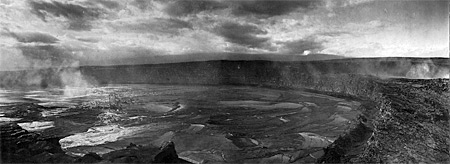
Light detection and ranging (LiDAR) image of the southeast wall and currently active pit crater of Halema`uma`u.  Image courtesy of Todd Erickson, Pacific GPS Facility SOEST University of Hawaii, Manoa.
Light detection and ranging (LiDAR) image of the southeast wall and currently active pit crater of Halema`uma`u. Image courtesy of Todd Erickson, Pacific GPS Facility SOEST University of Hawaii, Manoa.

This month, researchers from the University of Hawai`i teamed up with the Hawaiian Volcano Observatory staff to use laser-based technology to peer into the depths of a new pit in Halema`uma`u. What they saw was startling. The look revealed that the vent has a cavernous interior that dwarfs the size of the opening that we see at the surface. The cavern is approximately 200 m (650 ft) below the floor of Halema`uma`u, making it a dizzying 285 m (935 ft) below the now-closed Halema`uma`u overlook area.

To obtain the image, the UH researchers were using a technology called Light Detection and Ranging, or LiDAR, for short. By bouncing pulses of lasers off objects, LiDAR can determine the distance to out-of-reach objects. Readers may be familiar with similar technology used in the laser range finders employed by golfers, hunters, and builders. Simple laser range finders measure a single distance to an object. In contrast, scientist using LiDAR data can produce entire images, or models, of distant surfaces based on thousands of individual laser bounces.

The remarkable part of the image is that it reveals a very deep pit crater with dramatic overhanging walls near the surface. This is different from the steep and vertical walls of the larger Halema`uma`u and Kilauea caldera.

What the image actually reveals is a snapshot in the evolution of a Hawaiian pit crater. "Pit crater" is a general term used to describe the steep-sided, semi-circular, and flat-bottomed craters that are characteristic of the summit and rift zone areas of Kilauea and Mauna Loa volcanoes. Interchangeable terms for these features include, "collapse crater", and of course the eloquent Hawaiian name for a pit, "lua". But how are these craters created?

Looking into this deep hole created by a volcano may lead one to think that all the material was blasted out. But if this were the case, we would be able to see a vast amount of excavated material deposited around the rim of the pit. In fact, the amount of ejected material, or ejecta, surrounding Hawaiian pit craters is relatively small -- far less than the amount of material required to fill the hole back up. And, some Hawaiian pit craters do not have any ejecta surrounding them.

The answer to how pit craters form is being witnessed right now as the new vent evolves. Hawaiian pit craters form primarily through the evacuation, or loss, of magma somewhere beneath the vent. As magma evacuates from the plumbing system below, the conduits collapse and the vent floor sinks away. The walls may become overhung, since the interior of the pit expands as it drops. Eventually, the overhung portions of the rim collapse into the pit, and the characteristic near-vertical sides of the pit crater are formed.

Our observations of lava within the vent, data from instrumentation, and measurements of magma flux at the east rift zone near Kalapana, suggest that the amount of magma within the plumbing system of Kilauea has been reduced. This ebbing has caused the drop in the lava level and the growth of the cavern we now see. The recent pulses of ash-laden plumes issuing from Halema`uma`u have been caused by collapses of the pit's overhanging rim.

Of course, the drop in the vent floor, and ebb in the flow of magma within the system, does not necessarily mean the eruption is winding down. A characteristic behavior of Hawaiian pit craters is that the floor may refill with a lava lake, only to drain and collapse again and again. So the laser's look into the lua is certainly only a snapshot of the on-going evolution of Halema`uma`u.

Kīlauea Activity Update

Surface flows have been active on the pali within Royal Gardens subdivision throughout the past week, burning forest and one unoccupied structure. At the coast, the Waikupanaha and Kupapa`u ocean entries remain active and continue to produce steam plumes and small littoral explosions.

The vent at Kīlauea's summit was dark and quiet all week, producing only a very small quantity of rock dust from small collapses of the vent walls. The plume has been thin and wispy, and volcanic gas emissions have been relatively low. They are, however, still elevated above background levels, resulting in high concentrations of sulfur dioxide downwind.

One earthquake beneath Hawai`i Island was reported felt this past week. A magnitude-2.8 earthquake occurred at 10:38 p.m., H.s.t. on Thursday, July 9, 2009, and was located 3 km (2 miles) south of Holualoa at a depth of 36 km (22 miles).

Visit our Web site (http://hvo.wr.usgs.gov) for detailed Kīlauea and Mauna Loa activity updates, recent volcano photos, recent earthquakes, and more; call (808) 967-8862 for a Kīlauea activity summary; email questions to askHVO@usgs.gov.

For more information on visiting Hawaii in general and touring Hawaii Volcanoes National Park in particular, please also visit www.lovingthebigisland.wordpress.com and www.tourguidehawaii.com.

Wednesday, July 29, 2009

Volcano Update: 2009—A year of noteworthy volcano anniversaries in Hawai`i

Reprinted from here.

2009—A year of noteworthy volcano anniversaries in Hawai`i

Thomas Jaggar (second from left) prepares to measure the temperature of the Halema`uma`u lava lake in 1917.  Pictured, left to right, Norton Twigg-Smith, Thomas Jaggar, Lorrin Thurston, Joe Monez, and Alex Lancaster.
Thomas Jaggar (second from left) prepares to measure the temperature of the Halema`uma`u lava lake in 1917. Pictured, left to right, Norton Twigg-Smith, Thomas Jaggar, Lorrin Thurston, Joe Monez, and Alex Lancaster.

Thomas A. Jaggar, founder of the Hawaiian Volcano Observatory (HVO), first visited Hawai`i 100 years ago during a decade-long period of exploration in which he witnessed first-hand the destructive power of volcanic processes.

His quest began in 1902, when Jaggar traveled to the West Indies just 13 days after two volcanoes there erupted with devastating consequences. The first eruption at La Soufriere on the island of Saint Vincent resulted in 1,500 deaths. It was followed only a few hours later by a second, more tragic, eruption at Mount Pelee on Martinique, in which 28,000 people perished. Jaggar's experience at Martinique set the stage for his work on volcanoes and earthquakes during the next half century.

After Martinique, Jaggar's expeditions took him to the scenes of earthquakes and volcanic eruptions in the Aleutians, Central America, and Japan. In 1908, an earthquake near Mount Etna in Italy killed 125,000 people. Following that natural disaster, Jaggar declared that "something must be done" to support systematic studies of volcanic and seismic activity.

The next year, in 1909, he traveled at his own expense to Hawai`i, where he determined that Kīlauea was to be the home of the first American volcano observatory. His vision was to "protect life and property on the basis of sound scientific achievement."

In 1912, construction began on the new Hawaiian Volcano Observatory with support from Hawai`i businesses, private endowments through the Hawaiian Volcano Research Association, and funding from the Massachusetts Institute of Technology. HVO has since been managed by the U.S. Weather Bureau (1919-1924), U.S. Geological Survey (1924-1935), and National Park Service (1935-1947). The USGS became the permanent administrator of HVO in 1947.

In 2012, HVO will celebrate its centennial anniversary, a milestone made possible through the vision and efforts of Thomas A. Jaggar.

Today, in 2009, as we look back at Jaggar's first visit to Kīlauea 100 years ago, we also reflect on the landmark anniversaries of several significant eruptions on Kīlauea and Mauna Loa:

25th1984 Mauna Loa summit and northeast rift zone eruption
40th — start of the 1969-74 Kīlauea east rift zone eruption (Mauna Ulu)
50th — 1959 Kīlauea summit eruption (Kīlauea Iki)
60th1949 Mauna Loa summit eruption
90th1919 Mauna Loa southwest rift zone eruption
150th1859 Mauna Loa northwest flank eruption

Wednesday, July 8, 2009

The beginning of a new era—Kilauea's 1952 summit eruption

Reprinted from here.

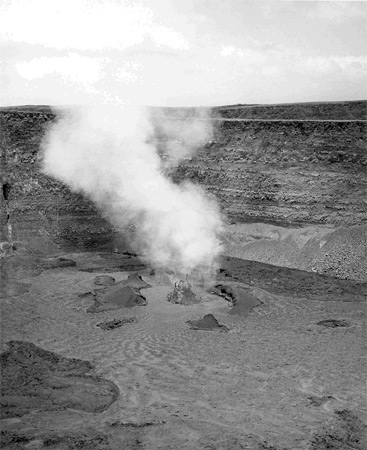
Halema'uma'u 1952:
Halema'uma'u 1952:

A single low lava fountain emitted a steady stream of gas when photographed by Fred Rackle on July 21, 1952, when Halema`uma`u Crater was more than twice as deep as it is at present. View is to the southwest.

The HVO Web site was recently revamped to make access to our increasing number of Webcams easier for About 20 minutes before midnight on June 27, 1952, almost exactly 57 years ago, Mrs. John Fox walked from the living room of her home on the east rim of Kilauea caldera into an adjoining room. She was instantly startled by a loud, whistling roar coming through an open window. Running back into her living room, she saw a bright orange glow lighting the night sky.

At about the same time, just down the road at Kilauea Military Camp (KMC), Colonel B.W. Rushton pointed out the bright glow to Hawaiian Volcano Observatory (HVO) staff member John Forbes, who quickly called Gordon Macdonald, then Scientist-in-Charge of HVO.

When John Forbes arrived minutes later at HVO, on the edge of Kilauea caldera, he was greeted by the top of a huge lava fountain rising above the rim of Halema`uma`u. The crater was then nearly 245 m (800 ft) deep—more than twice its current depth from the rim to the crater's floor. By the time Gordon Macdonald arrived at HVO some 10 minutes later, the fountain was no longer visible, but incandescent fragments could still be seen arcing out of the crater.

Quickly grabbing the necessary equipment, Macdonald and Forbes set out by car for Halema`uma`u Crater to make detailed observations. As they followed Crater Rim Drive down onto the western floor of Kilauea caldera—the section of road that is closed today due to ongoing summit activity—they encountered a choking, sulfurous fume cloud so thick that they could barely see the road.

The fall of tephra onto the road was so heavy that they were hard-pressed to keep the car moving forward as it plowed through the drifts of pumice. The hail of tephra onto the car, with pieces reaching up to 10 cm (4 inches) across, sand-blasted the car's exterior to the point that it later had to be repainted and have its windshield replaced.

Pressing onward, Macdonald and Forbes passed through the tephra fall and quickly walked to the southeast rim of Halema`uma`u, reaching it about 10 minutes past midnight. When they peered into the crater, they saw a continuous line of lava fountains, 790 m (2,600 ft) in length, crossing the entire crater floor from southwest to northeast and extending part-way up the northeastern crater wall.

For the most part, the individual fountains were 15 to 30 m (50 to 100 ft) in height, but a fountain 120 m (400 ft) high jetted up near the bottom of the southwestern wall of the crater—probably a diminished version of the same fountain, at more than 245 m (800 ft) in height, seen minutes earlier from HVO.

Though views were poor due to the heavy fume, brief glimpses of the crater floor showed that older spatter cones on the floor of Halema`uma`u had already been buried beneath a rising lava lake. This suggested that more than 3 million cubic meters (4 million cubic yards) of lava were erupted in the first half-hour of the eruption. It would take about six days for Kilauea's current east rift zone eruption to pump out that much lava today.

The eruption rate quickly declined after the initial outbreak, but lava fountains continued to play on the surface of the lava lake over the following weeks. By late summer 1952, activity had begun to decline, but the eruption persisted until November 10, when the last fountaining activity was observed.

Having erupted for 136 days, the 1952 summit eruption brought to an end, in grand fashion, any doubts as to whether or not Kilauea was still alive. Prior to 1952, Kilauea had been quiescent since October 1934, when the previous summit eruption had ended, and some had begun to think that Kilauea was dead. But frequent earthquakes and the occasional swelling and shrinking of the volcano over the intervening years told volcanologists otherwise. It was no great surprise, then, when the eruption finally occurred.

Followed by dozens of eruptions in the years since, the 1952 eruption undoubtedly ushered in the current era of volcanic activity at Kilauea. Today's ongoing summit and east rift zone eruptions are just the most recent in the string of eruptions that have followed since Mrs. Fox was surprised by the glow outside her living room window.

Kīlauea Activity Update

Surface flows in the Royal Gardens subdivision may have stagnated early this past week in response to a deflation-inflation (DI) event at Kīlauea's summit. Smoke continues to rise, however, from forested kipuka in the subdivision, indicating that at least some burning continues. At the coast, the Waikupanaha and Kupapa`u ocean entries remain active and continue to produce prominent plumes, accompanied by small littoral explosions, as lava spills into the ocean.

At Kīlauea's summit, the vent within Halema`uma`u Crater is still emitting elevated amounts of volcanic gas, resulting in high concentrations of sulfur dioxide downwind. Glow from the vent was visible at night through the past week, and rare views into the vent by HVO scientists found that the lava surface is still present about 205 m (675 feet) below the floor of Halema`uma`u Crater.

No earthquakes beneath Hawai`i Island were reported felt this past week.

Visit our Web site (http://hvo.wr.usgs.gov) for detailed Kīlauea and Mauna Loa activity updates, recent volcano photos, recent earthquakes, and more; call (808) 967-8862 for a Kīlauea activity summary; email questions to askHVO@usgs.gov. Volcano Watch is a weekly article and activity update written by scientists at the U.S. Geological Survey's Hawaiian Volcano Observatory.

For more information on traveling to Hawaii in general and exploring the Big Island's volcanoes in particular, please also visit www.tourguidehawaii.com and www.lovingthebigisland.wordpress.com.

Sunday, July 5, 2009

Give new life to your old photographs of Hawai`i's volcanoes!

Reprinted from here.

A view of the lava lake within Halema`uma`u Crater on December 27, 1911, with Uwekahuna bluff (where HVO and the Jaggar Museum now stand) and Mauna Loa in the background. The lake level had risen about 120 m (400 ft) since October 1911 and will drop 90 m (300 ft) in January, 1912, the month that HVO was founded by Thomas A. Jaggar's arrival for duty.
The adage "a picture is worth a thousand words" is certainly true, especially when it comes to photographs of Hawaiian eruptions and volcanic landscapes from earlier times.

Long-time readers of "Volcano Watch" might recall our January 20, 2005, article (http://hvo.wr.usgs.gov/volcanowatch/2005/05_01_20.html), which describes an HVO geologist's excitement at finding an 1860s photo of Kilauea's caldera. By comparing the photo to a present-day view of the caldera, he could see the location of volcanic features described in written records (with less than a thousand words) but no longer visible today—a valuable discovery when your job is to decipher a volcano's eruptive history.

Without realizing it, you or a family member may have captured a similarly important historical record of Hawai`i's volcanoes. How? By taking a photo and keeping it.

Your `ohana, like many families, probably has several albums—or shoe boxes—filled with old photographs. Perhaps your great-grandmother took a picture of a long-ago Kilauea summit eruption or your brother snapped a photo of `a`a lava as it flowed down the slopes of Mauna Loa. If you possess photographs that show volcanic landscapes or features, volcanic fume (vog), or any kind of eruptive activity, HVO geologists would like to hear from you and see the photos.

We learn the most from photographs that have some documentation about when and where they were taken. Date and location are essential pieces of information that help us interpret the geologic significance of a photo. If people are recognizable in a photograph, their names should also be included. Any other details you can provide about the image will add to its meaning.

Wide-angle shots are more helpful than close-ups. For example, if a photo is zoomed in on the leading edge of a lava flow and shows nothing else, we cannot determine the size of the flow-or much of anything else—from the image. With wide-angle views, we can see the geographic or geologic context of the eruptive activity or volcanic features shown in the photograph.

If you're interested in sharing your photos with HVO scientists, the first thing you should do is contact us by telephone (808-967-7328) or email us (askHVO@usgs.gov). Geologists are standing by to speak with you. The purpose of this initial conversation is to determine which of your photographs might be beneficial to our research and monitoring efforts on Hawai`i's volcanoes. We will then send you additional information on how we can receive and duplicate photos selected from your collection.

No need to worry about giving up your photographs—you retain ownership of them. We will return your photos to you after duplicating the images selected as most useful. In appreciation of your loaning us the photographs, we will be happy to give you digital copies of the images we scan.

To kick off our effort to expand HVO's photographic collection of Hawai`i's volcanoes, we are asking at this time to see photographs from 1924 and earlier. Those years included frequent lava lake activity in Halema`uma`u Crater and culminated in the explosive eruptions of May 1924.

Pre-1924 photos are of particular interest to us now because they could shed light on Kilauea's current summit eruption. Even if they show no eruptive activity, early photographs of Kilauea's caldera can contribute to a better understanding of the volcano's past and reveal features that are no longer visible. The same is true for early photos of Mauna Loa and Hualalai.

We will initially focus on early historical photographs, but you can contact us about any volcanic images you think might interest us. Although we may not be able to look at photos taken in recent decades right away, we would eventually like to see them. Our ultimate goal is to acquire images from the 1800s through the 20th century.

So, please lend us a hand while taking a trip down memory lane. Look through your family photos and contact HVO if you find images of Hawai`i's volcanoes. Your old photographs could give new life to eruptive events and volcanic landscapes rapidly fading from our visual memories.

Kīlauea Activity Update

Surface flows in the Royal Gardens subdivision remained active as of Thursday, June 18, burning through forested kipuka. Another area of breakouts active higher up on the pali was also reported. The Waikupanaha and Kupapa`u ocean entries remain active and continue to produce prominent plumes as lava spills into the ocean.

At Kīlauea's summit, the vent within Halema`uma`u Crater continues to emit elevated amounts of volcanic gas, resulting in high concentrations of sulfur dioxide downwind. Bright glow from the vent was visible at night through the past week. A collaborative effort last week between HVO and UH-Manoa scientists, using a sophisticated optical remote-sensing technology called LIDAR (Light Detection and Ranging), has measured the lava surface to be about 205 m (675 feet) below the floor of Halema`uma`u Crater.

No earthquakes beneath Hawai`i Island were reported felt this past week.

For more information on traveling to Hawaii in general and exploring the Big Island's volcanoes in particular, please also visit www.tourguidehawaii.com and www.lovingthebigisland.wordpress.com.

Monday, June 29, 2009

The Best Short Hikes on Hawaii Island

A River of Lava Flows Down The Pali Toward The Ocean Entry at Waikupanaha, Hawaii Volcanoes National Park: Photo by Big Island Air

Whether you visit the Big Island for a few days, a couple weeks or a few months, you want to make the most of your time in Paradise. With such a wide variety of natural and commercial attractions, it is natural for the visitor to get a little overwhelmed in the “Option Overload” and not be able to make a balanced and informed decision on what they want to do and how best to spend their time.

Glow From the Vent in Halema'uma'u, Kilauea Crater, Hawaii Volcanoes National Park: Photo by Donnie MacGowan August 2008

Even choosing what activities you want to participate in…do you want to snorkel, hike, go on a whale watching tour? We highly recommend you go hiking on your visit…but where do you go? Many of the justly famous mountains, canyons and beaches of Hawaii all have superlative hikes, but which are best? Which suit your interests? Are you looking for an experience that is away from crowds, secluded and empty or one that’s exciting, but perhaps a little more tame? Do you want to hike near your resort or find one that’s at the end of a day of delicious wandering? Do you have the hankering to climb Hawaii's highest peak, and the world's highest peak from base to summit? How about a stroll through dryland forest, over ancient lava fields to a wilderness beach? And what about hiking to the Lava...is that really safe? Is it as unimaginably magical as it sounds?

Ranked in order, with the best on top, are our picks of the finest hikes on the Island of Hawaii. We’ve tried to strike a balance in ranking these places since each is a gem in its own right, we’ve had to leave off many that are equally fine in their own right and of course, recommending some means that their popularity will increase and hence, they will become more crowded. This list at least provides an excellent starting point for deciding where you want to spend you trail time. When you arrive we ask that you treat these special places, and the people who live near them, with care, respect and aloha.

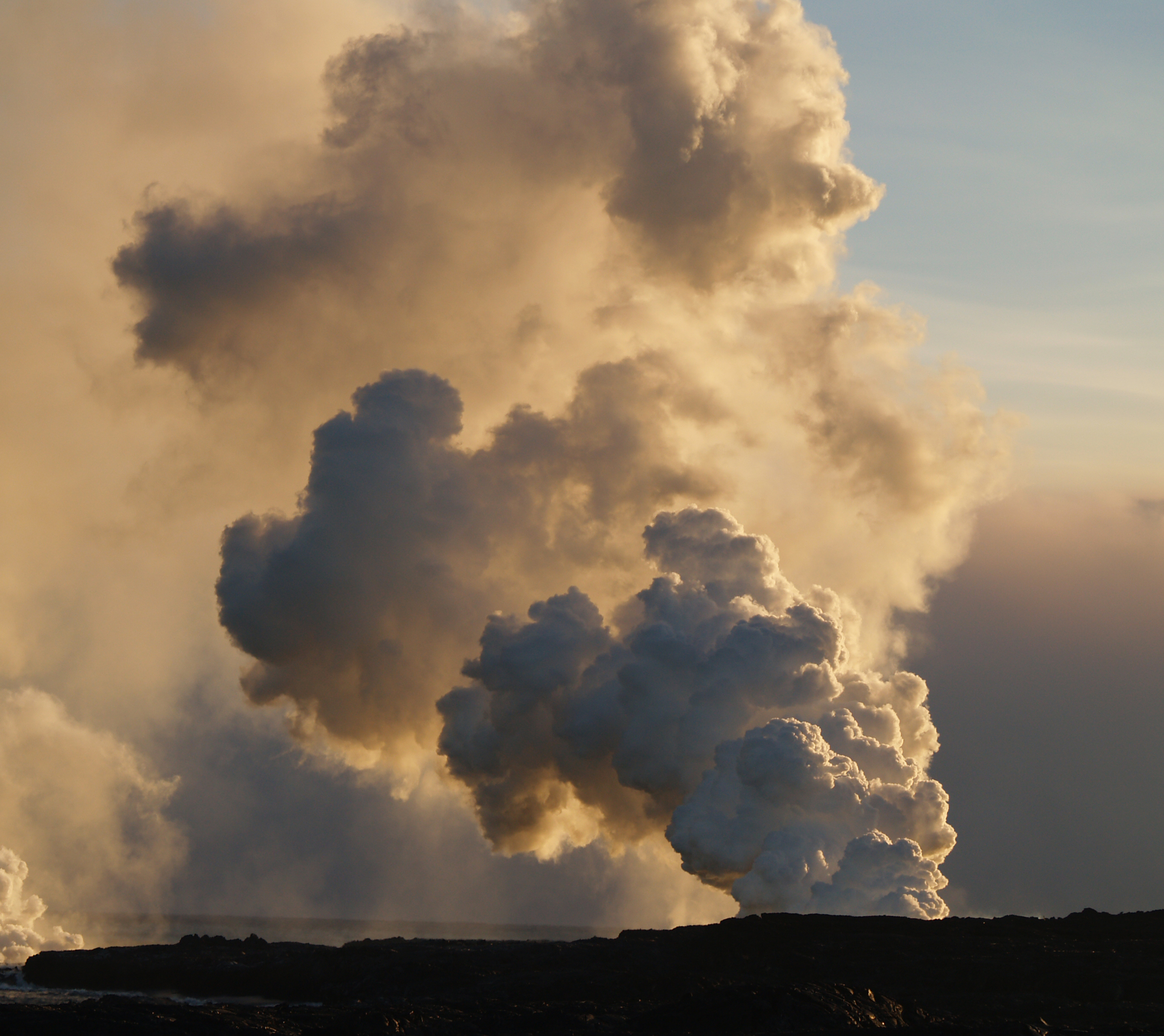
Explosion Cloud of Littoral Explosion at the Waikupanaha Lava Ocean Entry, Big Island, Hawaii:  Photo by Donad B. MacGowan
Explosion Cloud of Littoral Explosion at the Waikupanaha Lava Ocean Entry, Big Island, Hawaii: Photo by Donald B. MacGowan

Lava Viewing at Waikupanaha Ocean Entry: This is truly the one “Must-See” trip for every visitor to Hawaii Island; the unimaginable spectacle and beauty of the earth remaking herself thorough volcanic eruption. Explosions, glowing and flowing lava, waterspouts. lightening and every kind of geological excitement you can imagine, located at the end of an extremely short hike along a trail that is accessible to almost everyone. See a video here.

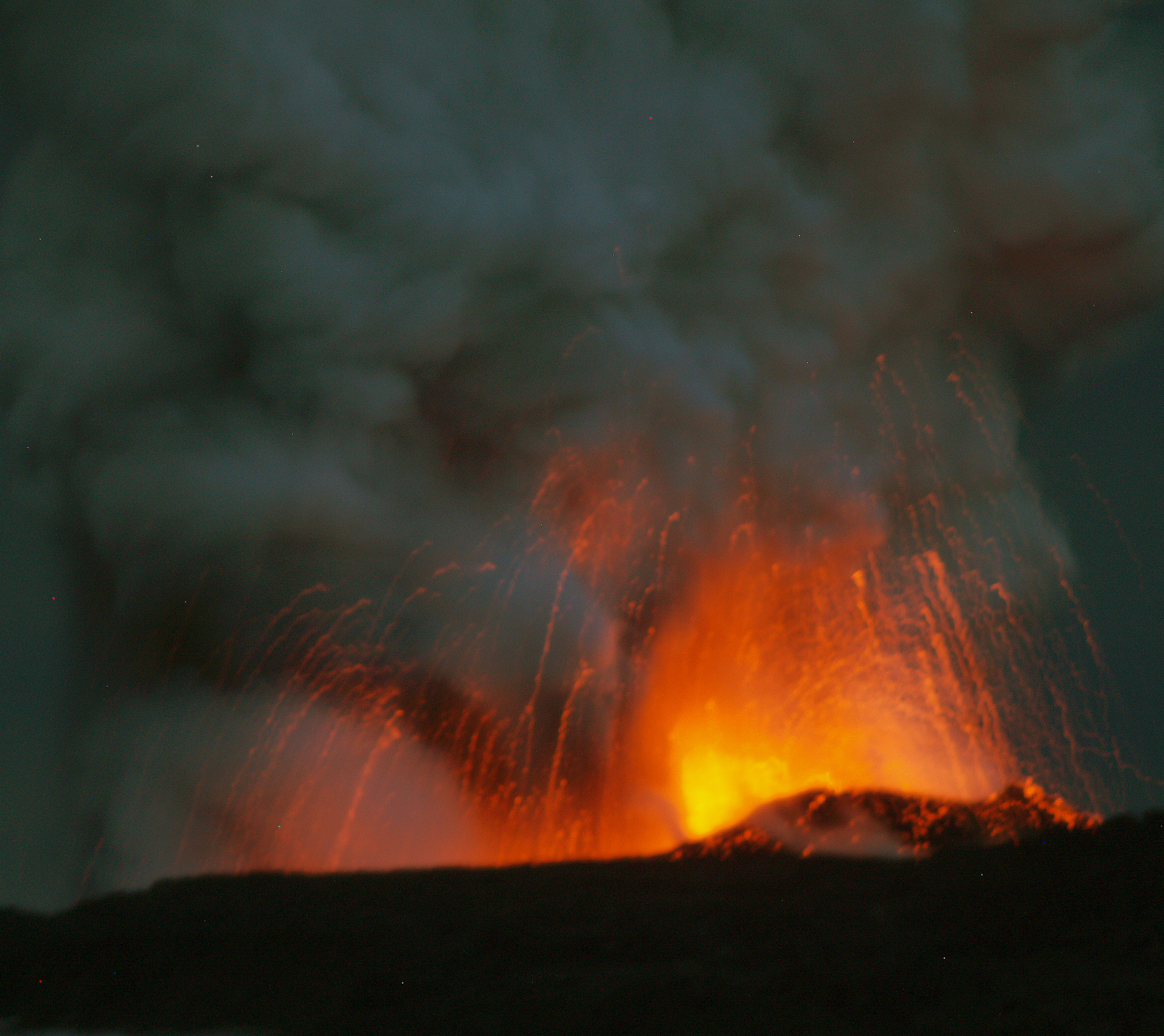
Littoral Explosions as Lava Enters the Ocean Near Royal Gardens: Photo by Donald B. MacGowan

Kilauea Iki Crater in Hawaii Volcanoes National Park: An amazing, wonderful walk through lovely fern and ohi'a forest down the sides and onto the still-steaming floor of an enormous volcanic crater that was, only a few short decades ago, the hellish cauldron of a frothing, liquid lava lake of fire. A fascinating, 4 mile/2 ½ hour loop hike of only moderate difficulty, most people in only fair shape can easily complete it in a couple hours. See a video here.

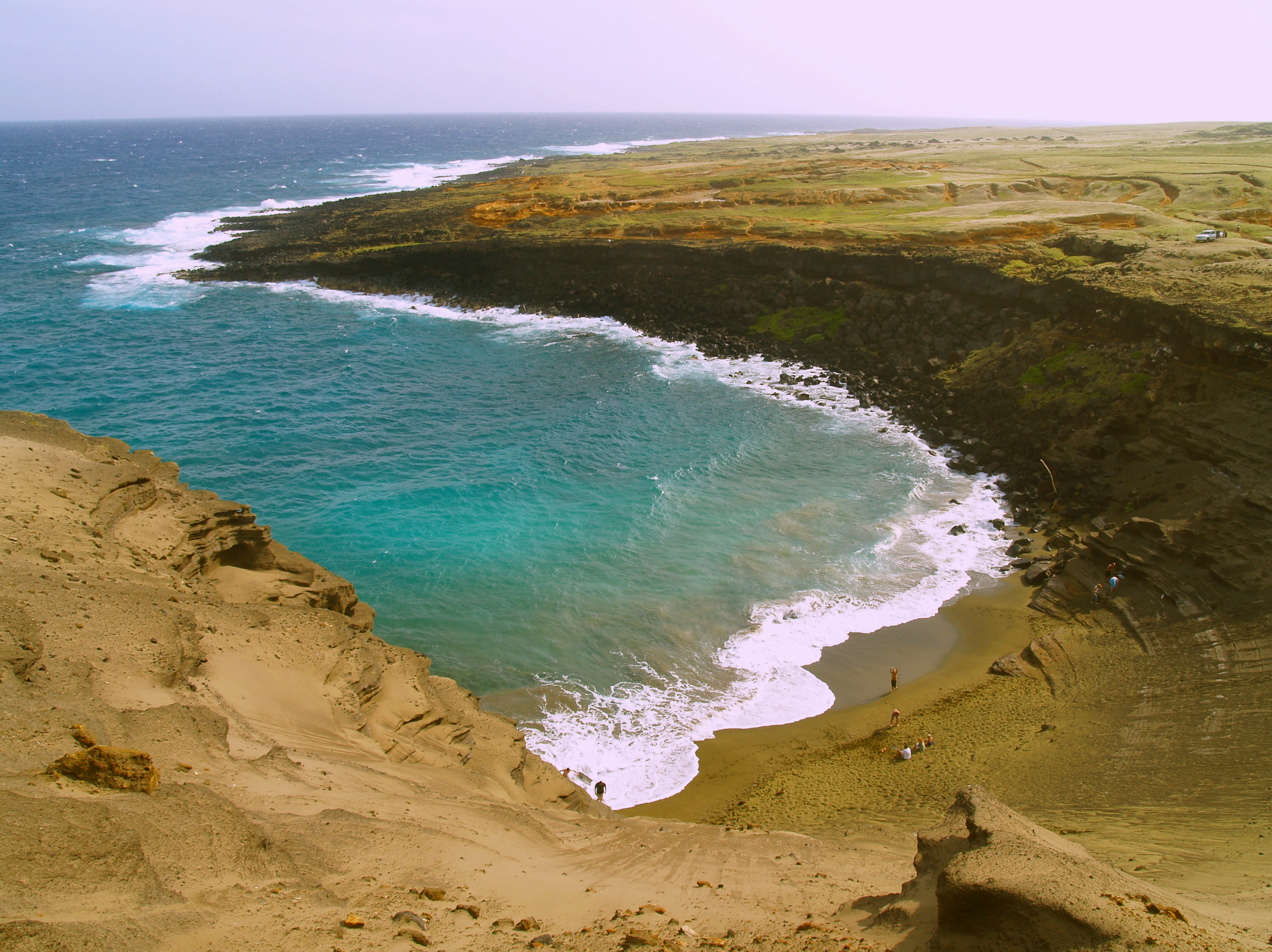
The Beautiful Green Sand Beach at South Point of the Island of Hawaii is Reached by an Easy 2 1/4 Mile Hike: Photo by Donald B. MacGowan

Mahana Green Sand Beach at South Point: One of a handful of true green sand beaches in the world, the Mahana Green Sand Beach near South Point is not to be missed. Beautiful, haunting, intriguing. Although the hike is 2 ¼ miles each way, the trail is relatively flat and easily followed. Swimming and snorkeling in the bay is fabulously weird due to the water color, just be wary of currents out from the mouth of the bay.

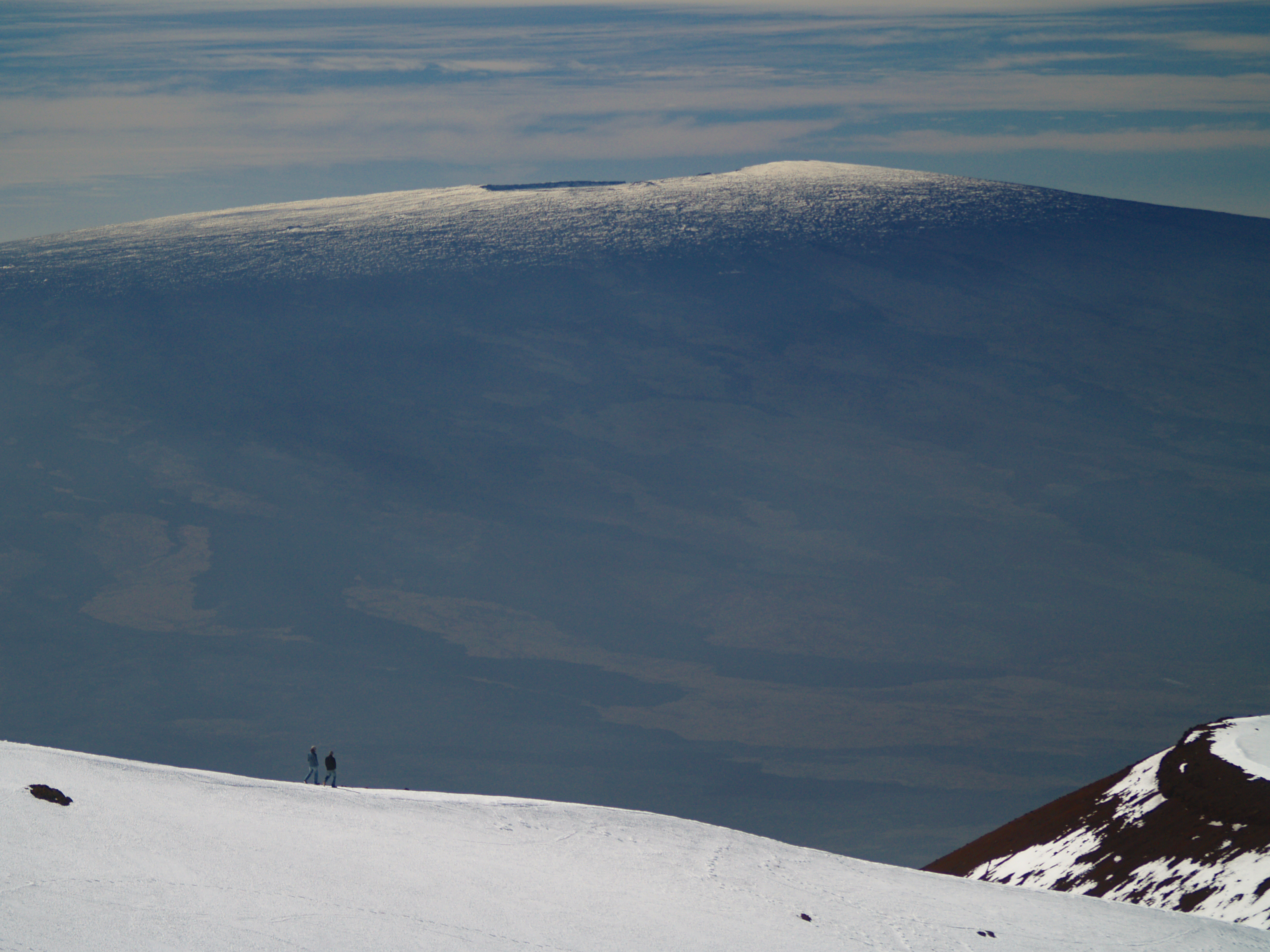
Hikers on Mauna Kea Summit Looking at Mauna Loa Summit: Photo by Donnie MacGowan

Mauna Kea Summit: Whether you struggle up the 6-mile climb from the Visitor's Information Station, or take the 20 minute short hop hike from the end of the road, visiting the summit of Mauna Kea should be on every visitor's wish list of things to do. Simultaneously the highest point in the state of Hawaii and the tallest mountain from base to summit on earth, Mauna Kea is an otherworldly, unique, starkly beautiful place. The hiker is reminded to be wary of changeable weather, severe snow storms that can strand you, altitude sickness, dehydration and sunburn. See a video here.

Makalawena Beach: Perhaps the loveliest beach in Polynesia, Makalawena is the perfect sand crescent, beach backed by palms and iron wood trees with morning-glory-draped sand dunes. A easy mile hike in from Kekaha Kai State Park keeps this beach uncrowded. Snorkeling here is better than perfect, camping here is so wonderful we don't know why it's not mandatory.

Long, Lonely and Wholly Wonderful Makalawena Beach in Kekahai State Park: Photo by Donald MacGowan

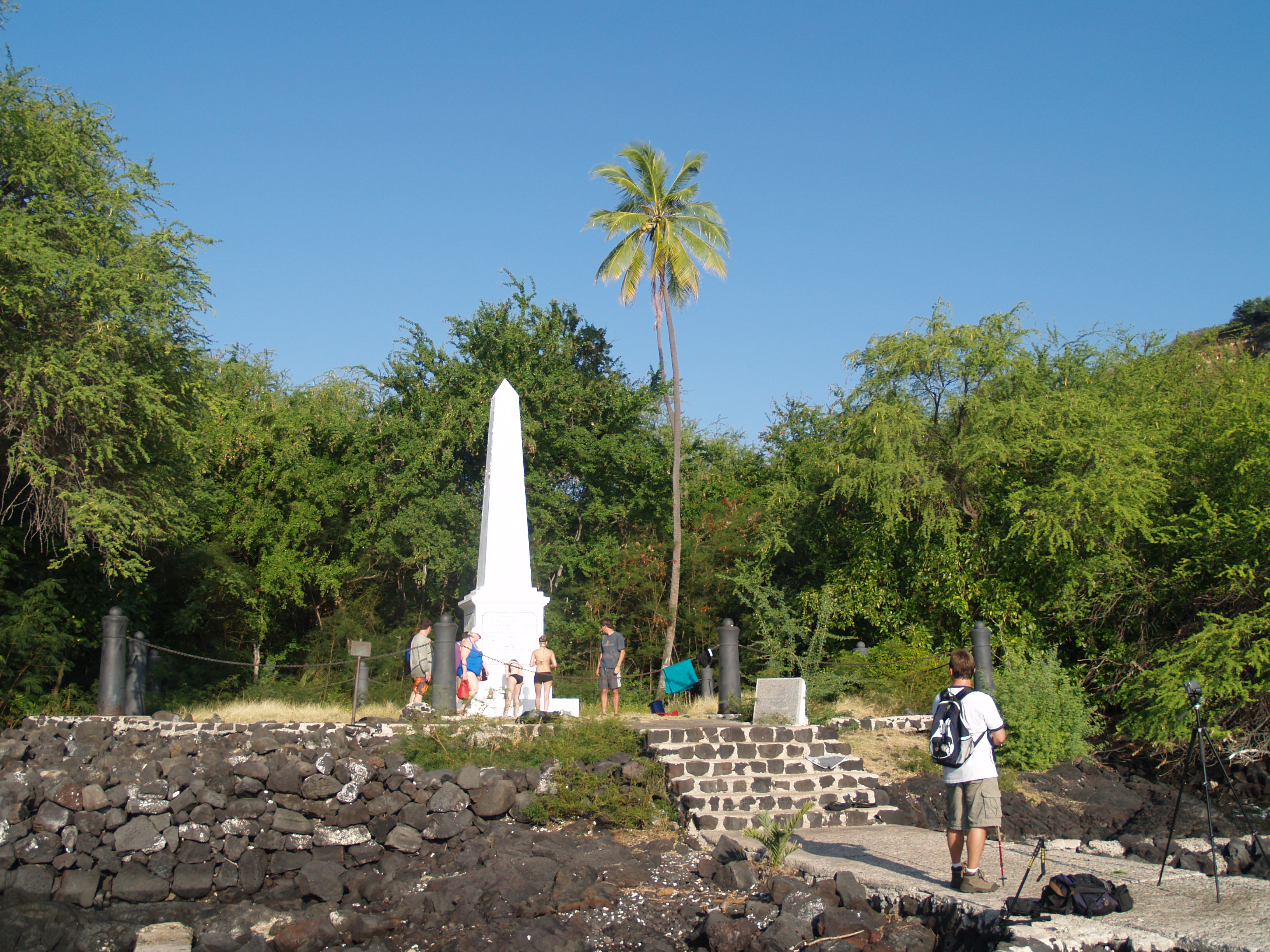
Captain Cook Monument on Kealakekua Bay: Accessed by a steep trail this 2.5-mile hike takes about 1-1 1/2 hours to descend, somewhat more time to come back up. The snorkeling at the monument is second to none and the hike is a fabulous walk back in time, through fruit groves, cattle pastures, lava flows and an abandoned Hawaiian village. Take water, a lot of water, there is none to drink anywhere along the trail or at the bay, once you are there or on the all-uphill hike out. See a video here.

The Captain James Cook Monument at Ka'awaloa Village in Kealakekua: Photo by Donnie MacGowan

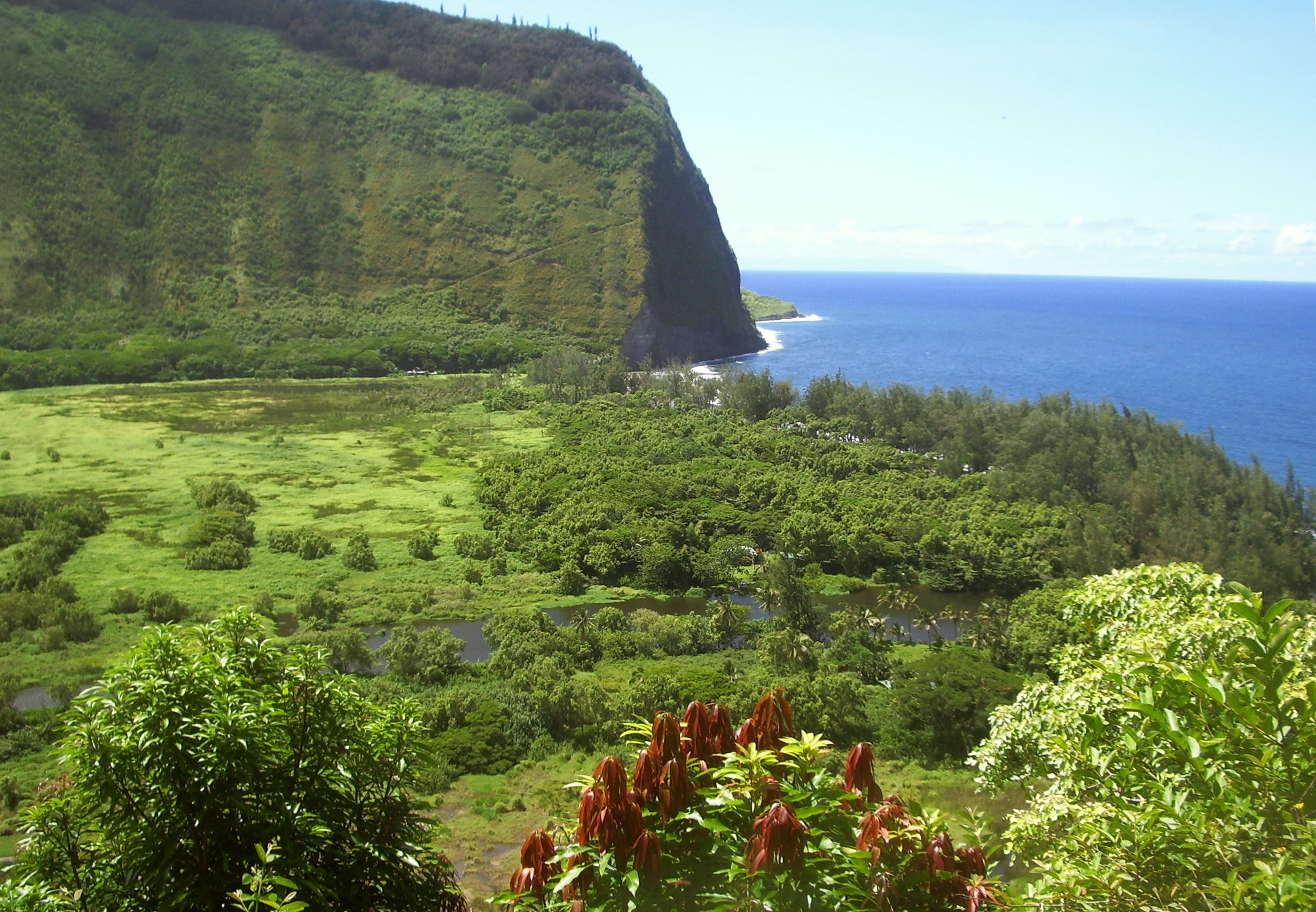
Waipi'o Valley: An amazing hike into the Waipi'o fastness, down a steep narrow road to the largest black sand beach on the island. If vast open spaces, scenery, wild tropical flowers, waterfalls and amazing beaches are your thing, this is your hike. Once on the valley floor, exploring along the beach or farther on to subsequent valleys can take hours, or days, depending on your level of energy and interest.

Waipi'o Valley on the Hamakua Coast of the Big Island: Photo by Donald MacGowan

Honomalino Beach: Starting in the Old Hawaiian Fishing Village of Miloli'i, the hike wanders along the coast in and out of the surf line to the wild and untamed Honomalino Bay—a wonderful place to picnic, snorkel or kayak. Exploring on foot in the area of the bay provides many wonders and archeological treasures, from abandoned temples and villages to the largest holua, or sledding track, in Hawaii. Remember to respect the Hawaiian natives, their culture and their sacred sites.

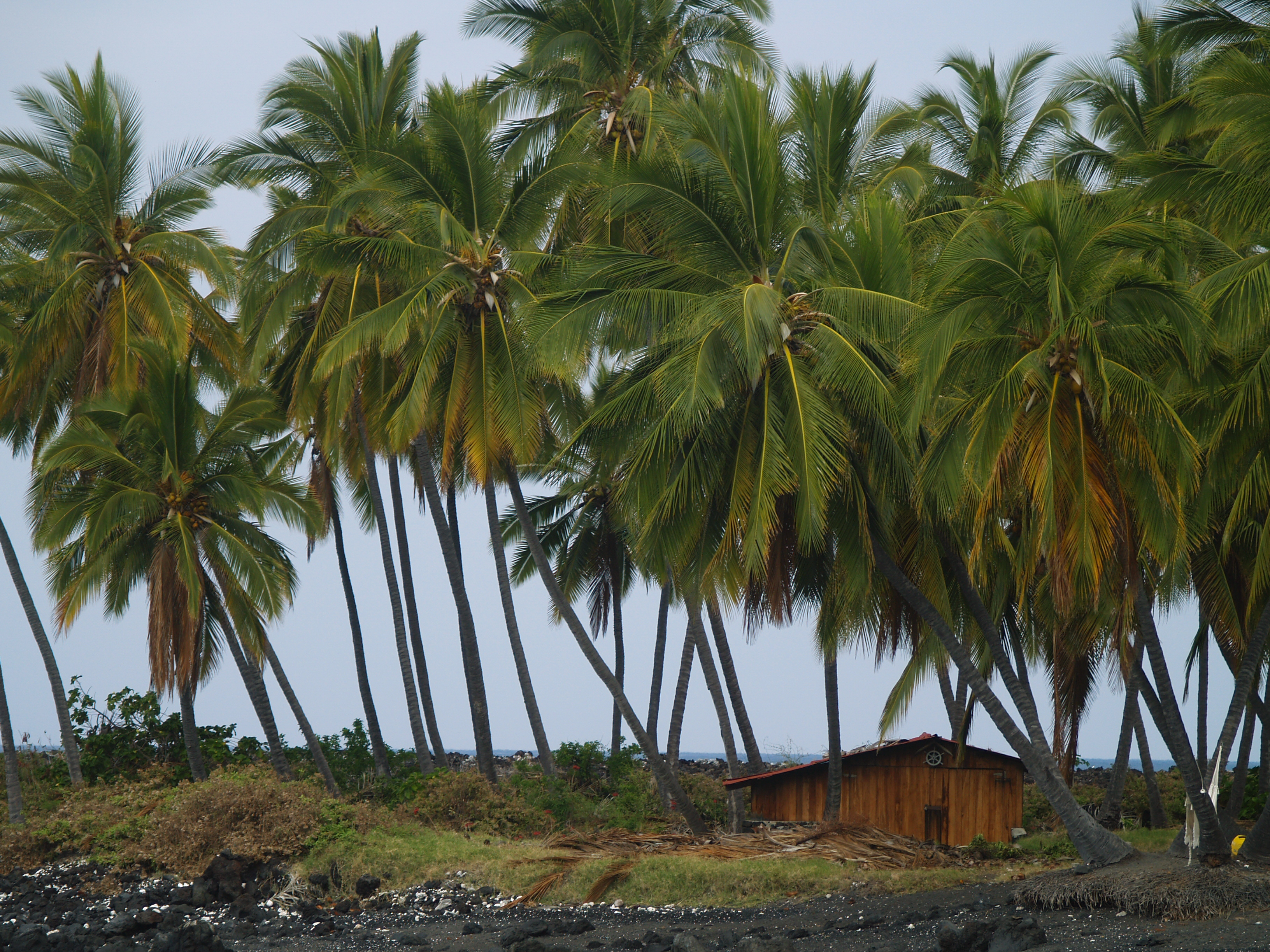
A Small House on Honomalino Beach: Photo by Donnie MacGowan

For more information on traveling to Hawaii in general or exploring the Big Island in particular, please also visit www.tourguidehawaii.com and www.lovingthebigisland.wordpress.com. Information about the author can be found here.

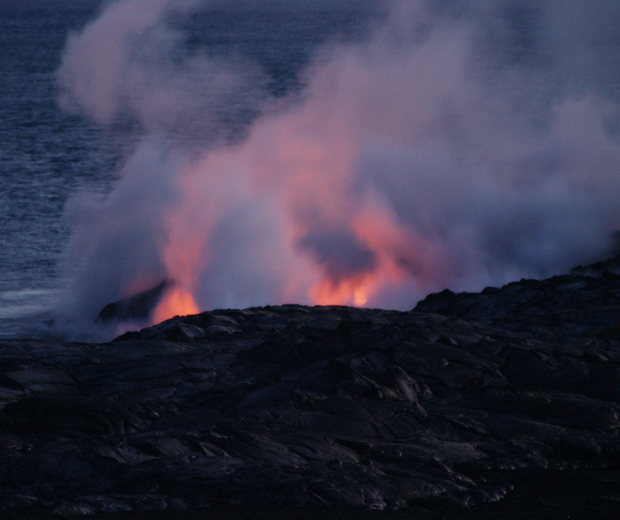
Lava from Kilauea Enters the Sea at Waikupanahu: Photo by Donnie MacGowan

All medial copyright 2009 by Donald B. MacGowan, except where otherwise noted.

Wednesday, June 10, 2009

Volcano Update: New Webcam menu makes lava views safely available

Reprinted from here.

New Webcam menu makes lava views safely available

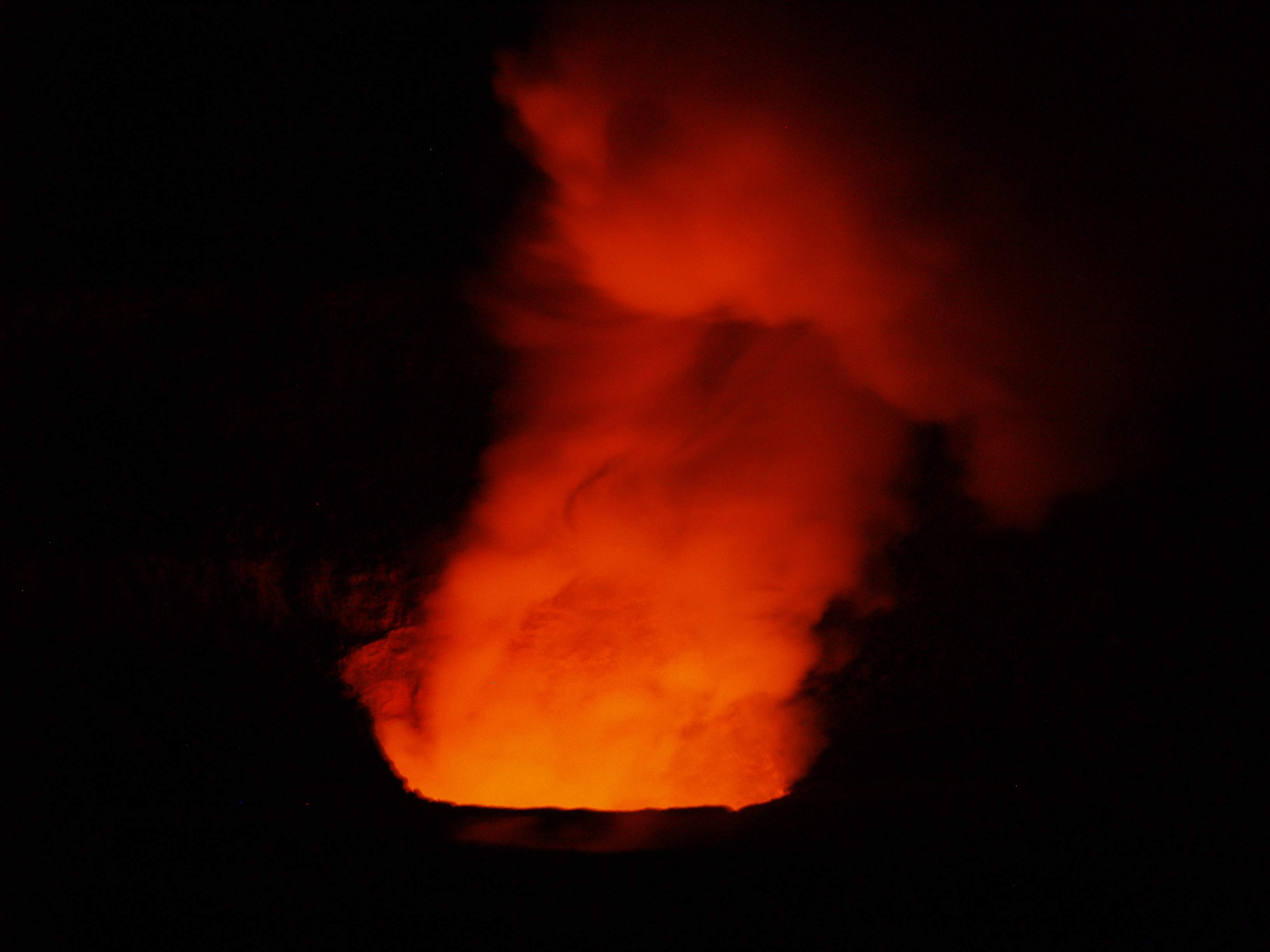
Lava in Kîlauea's summit vent creates a nighttime glow that can be safely observed from the Jaggar Museum overlook in Hawai'i Volcanoes National Park or on the HVO Webcam.  Inset image shows the lava surface, which was moving from top center to lower left at the time it was taken.
Lava in Kīlauea's summit vent creates a nighttime glow that can be safely observed from the Jaggar Museum overlook in Hawai'i Volcanoes National Park or on the HVO Webcam. Inset image shows the lava surface, which was moving from top center to lower left at the time it was taken.

The HVO Web site was recently revamped to make access to our increasing number of Webcams easier for viewers and the HVO staff who post Webcam images. All HVO Webcams are now linked through a single menu at http://hvo.wr.usgs.gov/cams/.

The menu lists our five Webcams showing Moku`aweoweo, Mauna Loa summit caldera, the TEB vent and lava tube system on Kīlauea's east rift zone, Pu`u `Ō `ō crater, and two views of the Halema`uma`u vent—one from HVO and another from the rim of Halema`uma`u crater immediately above the new vent.

Webcams allow us to make critical measurements with relatively little risk. The Webcams can work in rain, wind, very high concentrations of sulfur dioxide, and even moderate amounts of ash blasted from the vent. They can be in areas where access is restricted for safety reasons. Webcams can be where people should not.

Two of our Webcams have shown active lava in recent days. On Tuesday night, the TEB Webcam caught active flows near the top of the abandoned Royal Gardens subdivision. As an added treat, the Webcam also caught lights from a cruise ship passing the Kalapana shoreline in the late evening getting good views of the active flows and the Waikupanaha ocean entry.

The Webcams that chronicle developments below the floor of Halema`uma`u Crater have recorded lots of glow since early May. In fact, the recent glow has been the brightest since October 2008. The brightness of the glow is due to molten lava circulating in a narrow conduit about 100 m below the crater floor and about 180 m below the crater rim.

The Webcam located on the rim of Halema`uma`u was recently repositioned to look directly into the vent for views of the circulating lava when clear enough. The wispiness of the gas plume and the relative shallowness of the molten lava have allowed some good views recently. The vent is masked by sunlit fume during the day and is overexposed at night so the best times to look at Webcam views of lava are at dusk and dawn.

The unwavering Webcam views will allow us to better monitor the rise and fall of the lava within the vent. HVO geologists have also recorded video of the lava surface that shows some fascinating movements (http://hvo.wr.usgs.gov/kilauea/update/images.html). The lava emerges from the right side of the Webcam view and flows left across the opening. The flowing lava surface looks chaotic with lots of splashing and bursting bubbles—activity that produces the tephra that is carried aloft by the hot, rising gas and deposited on the rim.

Two recent Volcano Watches have discussed reasons for lava circulation using a lava lamp analogy. Magma must be convecting with the conduit, like the "goo" in a lava lamp, bringing hot, bubble-rich lava to the surface while allowing cooler, bubble-poor lava to sink.

Looking at lava within the Halema`uma`u vent conduit is like watching a lava lamp from above through a hole in the top, all the goo colored orange, and blobs being gas bubbles that burst when they get to the top.

Views from the Halema`uma`u Webcam should allow us to test our ideas about what precedes brown plumes and explosive eruptions. Do rocks fall from vent walls into the molten circulating lava trigger a vigorous gas release which could carry even more spatter and rock dust out of the vent. Or are the brown plumes and more energetic explosive eruptions initiated by a big slug of gas coming up the conduit.

For safety reasons, Hawai`i Volcanoes National Park restricts access to the entire caldera including Crater Rim Drive from Jaggar Museum south to the Chain of Craters Road intersection. Thanks to the HVO Webcams, we can all see what's happening from much safer vantage points.

Kīlauea Activity Update

A deflation/inflation (DI) event at the summit of Kīlauea last weekend disrupted the supply of lava through the tube system and caused the Waikupanaha and Kupapa`u ocean entries to shut down. Both entries had resumed by mid-week, accompanied by breakouts near the top of Royal Gardens subdivision and just inland from Kupapa`u.

At Kīlauea's summit, the vent within Halema`uma`u Crater continues to emit elevated amounts of sulfur dioxide gas, resulting in high concentrations of sulfur dioxide downwind. Vigorously upwelling lava within the vent below the crater floor produced bright glow at night, loud gas-rushing noises, and the emission of juvenile ash during the past week.

One earthquake beneath Hawai`i Island was reported felt this past week. A magnitude-3.4 earthquake occurred at 3:55 p.m., H.s.t, on Saturday, May 30, 2009, and was located 9 km (6 miles) southwest of Kīlauea Summit at a depth of 26 km (16 miles).

Visit our Web site (http://hvo.wr.usgs.gov) for detailed Kīlauea and Mauna Loa activity updates, recent volcano photos, recent earthquakes, and more; call (808) 967-8862 for a Kīlauea activity summary; email questions to askHVO@usgs.gov. Volcano Watch is a weekly article and activity update written by scientists at the U.S. Geological Survey's Hawaiian Volcano Observatory.

For more information on traveling to Hawaii in general and touring the volcanoes of the Big Island in particular, please also visit www.tourguidehawaii.com and www.lovingthebigisland.wordpress.com.


Casino Bonus no Deposit