Monday, July 13, 2009

What To Pack And Take To Hawaii: What You Need, What You Want, What You Can Leave Out Of Your Luggage

By Donald B. MacGowan

The MacGowan Family Deplanes in Sunny Hawaii; You Want To BE sure You Have Everything You Need to Enjoy Your Vacation, but Not So Much You Have To Haul a Pile of Luggage: Photo by Donnie MacGowan
The MacGowan Family Deplanes in Sunny Hawaii; You Want To Be sure You Have Everything You Need to Enjoy Your Vacation, but Not So Much You Have To Haul a Pile of Luggage: Photo by Donnie MacGowan

Packing Your Bags for Hawaii: With airlines charging for a second--or even for the first--piece of luggage, and strict "50 pounds each" weight limits being enforced, the thrifty traveler is wise to plan ahead carefully, to avoid racking-up expensive fees. I used to travel by the motto "Don't check baggage unless you can afford to lose it; if you can afford to loose it, why did you bring it?"; thus I never traveled with anything more than carry-on. While it is always good to travel lightly, with the advent of stringent new carry-on limits and my advancing age (and concomitant increasing desire to travel in comfort) I have learned to travel with only one piece of checked baggage plus carry-on. The key is packing intelligently so you can pack less.

MacGowan Family and Luggage for 3 for a Fourteen Day Trip to Hawaii: Photo by Donald B. MacGowan

Be Smart About Your Carry On Baggage: Most airlines allow you to bring one carry-on bag and a personal item such as a purse or a lap-top. I push this a little by bringing a carry-on bag plus my lap-top in a computer pack which also has room for one video camera, my SLR Camera and an emergency change of clothes (in case all my other luggage is lost). Usually they let me get away with this. Because I trust neither baggage handlers nor TSA inspectors and my luggage has been lost or ransacked and robbed more times than I remember, I pack my other cameras and the more of my clothes in my other carry on bag so they don't have to be checked. In this bag I also carry a quart of water and some snacks.

You'll want at least one book to read on the flight; your tickets, travelers checks, list of phone numbers, spare glasses (contacts and solution) and medications should be put in a water-proof bag in the carry-on bag you intend to hold most tightly to. It's a good idea to bring a copy of your eye-wear prescription, your health and car insurance cards, confirmations of hotel reservations, tours and activities and any printed itinerary you may have. Bring identification for your children. Put a swim suit and t-shirt in your carry-on--if your luggage is lost, you can wait for it by the pool! I always pack a small first aid kit, wet wipes and hand sanitizer. I always seem to use them. You'll want a sunhat, trust me.

Remember that more books, extra batteries, memory cards, video tape or film, masks-fins-snorkels, insect repellant, sun cream, beach towels--all the extra hoopla one might want on a Hawaii vacation--can be purchased at WalMart or Costco on-island as cheaply as the mainland. If you do pack film, and it is in your carry-on, be sure to protect it against x-rays.

Checked Luggage; First, Plan for Your Activities: Know your itinerary and pack only what you need; resist the temptation to toss in all those extra unnecessary items. You may be planning on some particular activities in Hawaii requiring specific gear or clothing--it is best to think this through thoroughly. Many people intend to save money by bringing their own snorkeling gear. This is false economy if it causes you to pay for additional luggage. Buying snorkel gear on island is fairly inexpensive and renting is faster, easier and even cheaper. The same can be said of renting diving gear and golf clubs. Activities such as hiking and horseback riding require a fairly specific wardrobe, but if you plan correctly, you only have to bring your hiking/riding boots and an extra pair of suitable pants and shirt. If you plan on visiting the mountain summits, remember that they can be quite cold--even snowy or rainy--so plan and pack accordingly. If you bring boots, I advise wearing them (and all your other bulky clothing) on the plane to save room and weight in your bags. As for photography gear or musical instruments--any expensive or delicate equipment for that matter--my philosophy is to never turn loose with it. Never check your cameras, your guitar, your laptop, etc--it's a recipe for theft, loss or destruction.

You Need More Suntan Lotion Than You Think...Put it on Before You Go Out in the Sun and Keep Putting It On Throughout The Day.  Likewise, Drink More Water Than You Think You Need...Drink Before You Get Thirsty, When You Get Thirsty and Drink Again After You've Just Had Some Water.  No, Drink Some More--I'm Serious: Photo By Donnie MacGowan
You Need More Suntan Lotion Than You Think...Put it on Before You Go Out in the Sun and Keep Putting It On Throughout The Day. Likewise, Drink More Water Than You Think You Need...Drink Before You Get Thirsty, When You Get Thirsty and Drink Again After You've Just Had Some Water. No, Drink Some More--I'm Serious: Photo By Donnie MacGowan

Next, Plan for the Weather: Being tropical, temperatures at sea level in Hawaii vary only by about 10 degrees between day and night and throughout the year. It's hot during the day, plan a cool wardrobe. The windward side is generally rainy and the "up-country" towns (mountains) frequently can experience afternoon showers. Evenings, particularly up-country, are delightfully cool as there is generally an evening or onshore breeze. With forethought, your wardrobe can cover all these situations without being bulky, heavy or ornate. Remember to pack layers of clothing for warmth, rather than one or two bulky coats and sweaters-this allows for maximum adaptability and a certain amount of built-in variability. This also means that if an emergency hotel-room laundry session is required, your laundry will dry much more quickly. Remember, chinos will dry in a day hanging in your room--jeans will stay wet all week. When deciding on wardrobe, bear in mind that Hilo is the rainiest city in the US; the Kona and Kohala Coast are mong the driest parts of the US, but rains do come here, as well.

Don't Forget Some Lightweight Raingear: Photo by Donnie MacGowan

Finally, Specifics: Be efficient--coordinate around a basic, neutral color so everything you bring matches everything else. Black or khaki are the traditional traveler's choices. Dark colors show dirt less than light colors, and this can be a saving grace where doing laundry is impractical. Choose clothes for lightness, packability and washability. Remember that suits in Hawaii are unnecessary; even Circuit Court judges wear Aloha Shirts under their robes here. A nice shirt, generally an Aloha Shirt, and a pair of khakis are the wardrobe of choice at the finer restaurants and nightclubs--everywhere else, it's shorts and sandals. I would advise a basic wardrobe consisting of a polo-style shirt and a couple Aloha Shirts, one pair of long khakis and three pair of shorts, a swimsuit, a couple tank tops or t-shirts, a sunhat and a light jacket for evenings; that's all you really need to cover most bases. Women may want to toss in a light sundress or skirt. Sandals are all you'll need or want in the way of footwear (your feet will be HOT)--you may want to toss in a pair of running shoes for exercise or hiking. Unless you are attending a formal event such as a wedding, don't worry about dressing up or you will not only find yourself carting far too much luggage, but awkwardly overdressed as well.

Jewelry is unneccessary, dress-code wise, it causes an extre security headache and it must be left in your hotel room when you are doing most activites. You are coming to Hawaii to get away from all the froofrah...leave the jewelry at home.

Be thoughtful about your wardrobe and activities: for instance, you may wish to think about bringing two swimsuits--you will be amazed how pleasant being in the water is in the hot tropics. Whether you are just cooling off in the pool or snorkeling with the turtles and fish, you'll probably want to swim everyday. Swimsuits rarely dry overnight and it's a lot more pleasant to get into a warm, dry suit than a wet, cold one. Also, if you plan on riding horseback or exploring the higher elevations such as Hawaii Volcanoes National Park or Mauna Kea, be sure to bring some chinos and appropriate footwear, a medium weight fleece sweater and light rain jacket/windbreaker. A compact traveler's umbrella is always a good idea--rains come at unexpected times and they make a nice shelter from the mid-day sun when walking around town or the resort.

Don't forget to pack your toiletries and personal items; I used to carry these on, in case of lost luggage, but restrictions on liquids and gels and razors make this impractical. Medications, of course, go in the carry-on. Sun block, sun hat, sunglasses, insect repellent and sun-burn cream (I use an aloe gel) will make your vacation smoother, but can be purchased cheaply locally if you don't quite have room for them.

Brad MacGowan on Kauai...A Tripod is Essential If You Intend To Photograph The Volcanic Eruptions Or Do Any Video Photography: Photo By Donnie MacGowan

Other Things to Bring: Just as an aside, two things you need to be head's up about when you are in Hawaii--if you begin to feel thirsty, you've waited too long to get a drink of water; if you begin to feel the sun, you've waited too long to put sun block on. Wear your sun hat. All the time. Drink more water than you think you need, apply sun block before you go out and re-apply more often that you think you need. Your body is used to more moderate climates and won't warn you in time of the danger. In fact, sometimes it's dry enough on the leeward side that you won't even feel yourself sweat—it evaporates before you get wet. So remember to keep drinking water—alcohol, coffee and ice tea (as well as caffeinated sodas) are both diuretic and vasodilatory, so are counterproductive to keeping hydrated and cool. Drink water. Lots and lots of water. Although bottled water is abundantly available, being a thrifty traveler, I always bring my own reusable water bottles. These may be carried on, but you need to take them through Security Screening empty, filling them at a water fountain before boarding—this also allows you to have water to drink during the flight, remembering that tap water on some airlines has proven to be unsafe.

Don't forget your sunglasses...if you are in the market to buy new ones, don't scrimp on price; Hawaii's tropical sun glaring off water and bright sand can permanently damage your eyes. If you can, get glasses that provide at least 90% darkening, screen 100% UVA and at least 80% UVB and IR. Cheap sunglasses, designer glasses with amber lenses or only slightly darkened lenses actually do more harm than good by causing the pupil of the eye to open up without screening enough of the damaging radiation out. Even if you wear regular glasses, bring prescription sunglasses or get good clip-ons--remember that cheap ones may be more damaging than none at all.

Lora Aller Hydrates on a Kona Coast Hike; Taking a Small Pack Helps Keep Water Bottles, Sunscreen, Sunglasses, Camera and Other Necessities Handy and Easy to Carry: Photo by Donald MacGowan


Many people plan ahead by leaving ample room in their luggage to bring back souvenirs and gifts; recent luggage restrictions are making this impractical. Rather than buying new outfits for my trip, I spend the week before my trip weeding through my wardrobe, packing one very nice set of clothes and the remainder are items I pack were already bound for the thrift store. Thus, I simply abandon them at the end of my stay and thereby have more than enough space in my luggage for anything I buy. Remember—Hawaii is part of the US and the U.S. Postal Service sells flat-rate, pre-paid, boxes for very inexpensive rates. Ask for "Flat Rate Shipping Boxes" and ship those gifts home safely, cheaply and with no fuss on your part.

You should toss in a small fanny pack or day-pack for day trips...it's amazing how many things you find you need to carry around during the day (sunscreen, water bottles, guidebook, camera, small purchases) and a pack helps to keep them organized and in hand. A small pack can also double as a laundry bag on the flight home.

I never travel anywhere without my laptop...you may not be so addicted, but I like being able to email photos and notes to friends left behind, as well as check-up on or change any reservations or activities at a moment's notice. Hawaii is so strange and wonderful anyway, you will wish you had access to Google to learn more about what you are seeing at least 5 times a day. They are a hassle at airport security and another thing to lug around, but I find it worthwhile. Free Wi-Fi is available all over the islands and your resort most likely will have it, as well. If you are traveling with children, a laptop with a few games in it can make long car rides or a rainy day more bearable.

A Small Pack Come In Very Handy For Keeping Your Stuff Together and Right At HAnd: Photo by Donald MacGowan
A Small Pack Come In Very Handy For Keeping Your Stuff Together and Right At Hand: Photo by Donald MacGowan

Although this is not the time for a discussion of vacation photography in general, let me say a few words about cameras. This is Hawaii for pete's sake, one of the most beautiful places on earth! You are going to want to take pictures while you are here, you are going to wish you had taken pictures all the long years down the road after you return if you do not. You do not have to be like me, packing two video cameras, a digital SLR and a digital underwater camera; even if you are not camera savvy at all, there are easy alternatives.

Simplest by far, and not terribly expensive, are pre-loaded, disposable film cameras. Available for $5-10 each, and costing about the same for film developing, these are the most basic point-shoot-enjoy photographic choice. There are even disposable underwater cameras if you plan on any swimming, kayaking or snorkeling. May I suggest that you have your film developed in Hawaii—WalMart, KMart and Costco all have 1-2 hour processing at reasonable prices. The color balance in Hawaii, because of its equatorial position (angle of sun and thickness of atmosphere) and the richness of the colors of flora, land and sea, is different to what most film-processing shops know and thus, if you wait until you return home to develop the film, the colors will turn our disappointingly. Getting your film processed on island also allows you to share prints with people you meet or are visiting.

Digital cameras may at first seem confusing, but are really much easier to deal with than film cameras, have such great storage capacity that they quickly pay for themselves in film and processing costs and produce images that, even for the rank beginner, are startling and gorgeous. You don't even need a computer to enjoy your digital pictures, just take them to any film processing shop and they'll make prints for you—much more cheaply than prints from film. If you plan to buy a digital camera for the trip, or are not quite used to the one you have, start practicing with it about a month before you leave...standing with your arm around your lover in the perfect sunset, with the palm trees swaying, the hula girls dancing on the beach and the humpback whales leaping in the ocean (oh, yes, these scenes DO happen!) is not the time to be fiddling with camera and instruction booklet trying to figure out how the damn thing works. Secondly, be sure to bring that instruction book, all accessory cords, chargers and adapters in a small plastic baggie when you come—they are expensive to buy on vacation and you never know what you'll need. Experience will teach what you can leave behind on successive trips. If buying a new digital camera to immortalize your trip to Paradise, think about getting a waterproof version. Most major camera manufacturers produce fine, submersible cameras, good to 40 feet or so, that are every bit as good as the regular cameras and are not very much more expensive. Many also have video features that allow you to take brief video clips, even underwater. One final note on your camera—never let go of it. Keep it in your carry-on bag during the flight, in your pocket or you day pack on the trip, do not leave it in your rental car or your hotel room or lunch table. Ever.

Amanda, Liz and Amy Maus Pose for the Underwater Camera: Photo by Donald MacGowan
Amanda, Amy and Laurie Maus Pose for the Underwater Camera: Photo by Donald MacGowan

Another useful item, many tourists bring their GPS from home to help navigate—be sure to download the maps for Hawaii before you come; some brands of GPS do not offer Hawaii coverage. A few of the rental car agencies have GPS units for rent at reasonable prices. The best solution, however, are the folks at Tour Guide Hawaii (808.557.0051; www.tourguidehawaii.com) who offer a hand-held computer with an onboard GPS at very reasonable rental rates (a video about the Tour Guide product is available here). They have stuffed into this device over six hundred points of interest (did you hear that? 600!) of recreational, cultural and historical importance. They have produced a short audio/video presentation for each site, telling you all about it, the history and culture, what to bring, what to do while there; they even have the public restrooms listed! These presentations play as you approach the points of interest, or can be searched for at any time or location. Thus, the device can be used to preview all the sites around the island in the comfort of your hotel room, pre-plan trips or to get information and turn by turn navigation on the road. Combining cutting-edge technology and old-fashioned story-telling, the unbelievably easy to use, fabulously informative and terrifically fun Tour Guide Self-Guided GPS Tours are an amazing bargain and a great way to see Hawaii. They are now offering a pared-down version (45 of the top sites—AND the restrooms!) that is downloadable to iPhone and iPod.

Finally, one of the most enduring visions I have of travel is standing exhausted, late night at the luggage carousel as hordes of weary travelers lift first one anonymous piece of black luggage, then the next, searching for their own amongst a sea of ubiquitous black nylon and leather travel bags. Not everyone is comfortable carrying the bright Hawaiian print luggage I have (although I always instantly recognize my bags...except when returning to Hawaii where EVERYBODY has this luggage), but there are ways to customize and personalize your bags. One of the more common, and therefore useless, is the nylon rainbow-colored strap...there are almost as many of these wrapped around the anonymous black luggage as there are plain black bags themselves. Airlines don't like straps and cords flopping around off the luggage, for obvious reasons, but you can buy colorful and unique baggage tags or tie a bit of uniquely colored ribbon or a small scarf to the handle of your luggage...just something that screams “Mine!” to you as it slides down onto the carousel so you do not have to search plaintively through the weary lot of black bags with rainbow belts on them.

The MacGowan Family Deplanes From Airforce 1--Even Traveling in Style Your Luggage Can Get Lost So Plan Ahead: Photo by Donald B. MacGowan

This is Hawaii, remember? You came to have fun!

For more information on traveling to Hawaii in general, or touring the Big Island in particular, please also visit www.tourguidehawaii.com and www.lovingthebigisland.wordpress.com. Information about the author can be found here.

All media copyright 2009 by Donald B. MacGowan


Wednesday, July 8, 2009

The beginning of a new era—Kilauea's 1952 summit eruption

Reprinted from here.

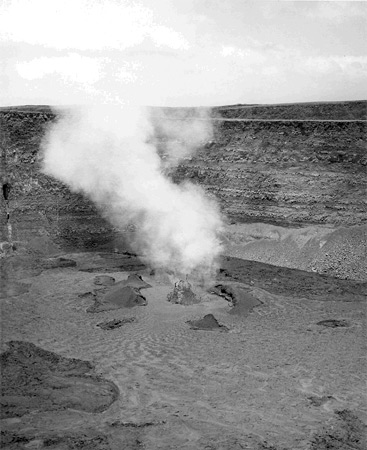
Halema'uma'u 1952:
Halema'uma'u 1952:

A single low lava fountain emitted a steady stream of gas when photographed by Fred Rackle on July 21, 1952, when Halema`uma`u Crater was more than twice as deep as it is at present. View is to the southwest.

The HVO Web site was recently revamped to make access to our increasing number of Webcams easier for About 20 minutes before midnight on June 27, 1952, almost exactly 57 years ago, Mrs. John Fox walked from the living room of her home on the east rim of Kilauea caldera into an adjoining room. She was instantly startled by a loud, whistling roar coming through an open window. Running back into her living room, she saw a bright orange glow lighting the night sky.

At about the same time, just down the road at Kilauea Military Camp (KMC), Colonel B.W. Rushton pointed out the bright glow to Hawaiian Volcano Observatory (HVO) staff member John Forbes, who quickly called Gordon Macdonald, then Scientist-in-Charge of HVO.

When John Forbes arrived minutes later at HVO, on the edge of Kilauea caldera, he was greeted by the top of a huge lava fountain rising above the rim of Halema`uma`u. The crater was then nearly 245 m (800 ft) deep—more than twice its current depth from the rim to the crater's floor. By the time Gordon Macdonald arrived at HVO some 10 minutes later, the fountain was no longer visible, but incandescent fragments could still be seen arcing out of the crater.

Quickly grabbing the necessary equipment, Macdonald and Forbes set out by car for Halema`uma`u Crater to make detailed observations. As they followed Crater Rim Drive down onto the western floor of Kilauea caldera—the section of road that is closed today due to ongoing summit activity—they encountered a choking, sulfurous fume cloud so thick that they could barely see the road.

The fall of tephra onto the road was so heavy that they were hard-pressed to keep the car moving forward as it plowed through the drifts of pumice. The hail of tephra onto the car, with pieces reaching up to 10 cm (4 inches) across, sand-blasted the car's exterior to the point that it later had to be repainted and have its windshield replaced.

Pressing onward, Macdonald and Forbes passed through the tephra fall and quickly walked to the southeast rim of Halema`uma`u, reaching it about 10 minutes past midnight. When they peered into the crater, they saw a continuous line of lava fountains, 790 m (2,600 ft) in length, crossing the entire crater floor from southwest to northeast and extending part-way up the northeastern crater wall.

For the most part, the individual fountains were 15 to 30 m (50 to 100 ft) in height, but a fountain 120 m (400 ft) high jetted up near the bottom of the southwestern wall of the crater—probably a diminished version of the same fountain, at more than 245 m (800 ft) in height, seen minutes earlier from HVO.

Though views were poor due to the heavy fume, brief glimpses of the crater floor showed that older spatter cones on the floor of Halema`uma`u had already been buried beneath a rising lava lake. This suggested that more than 3 million cubic meters (4 million cubic yards) of lava were erupted in the first half-hour of the eruption. It would take about six days for Kilauea's current east rift zone eruption to pump out that much lava today.

The eruption rate quickly declined after the initial outbreak, but lava fountains continued to play on the surface of the lava lake over the following weeks. By late summer 1952, activity had begun to decline, but the eruption persisted until November 10, when the last fountaining activity was observed.

Having erupted for 136 days, the 1952 summit eruption brought to an end, in grand fashion, any doubts as to whether or not Kilauea was still alive. Prior to 1952, Kilauea had been quiescent since October 1934, when the previous summit eruption had ended, and some had begun to think that Kilauea was dead. But frequent earthquakes and the occasional swelling and shrinking of the volcano over the intervening years told volcanologists otherwise. It was no great surprise, then, when the eruption finally occurred.

Followed by dozens of eruptions in the years since, the 1952 eruption undoubtedly ushered in the current era of volcanic activity at Kilauea. Today's ongoing summit and east rift zone eruptions are just the most recent in the string of eruptions that have followed since Mrs. Fox was surprised by the glow outside her living room window.

Kīlauea Activity Update

Surface flows in the Royal Gardens subdivision may have stagnated early this past week in response to a deflation-inflation (DI) event at Kīlauea's summit. Smoke continues to rise, however, from forested kipuka in the subdivision, indicating that at least some burning continues. At the coast, the Waikupanaha and Kupapa`u ocean entries remain active and continue to produce prominent plumes, accompanied by small littoral explosions, as lava spills into the ocean.

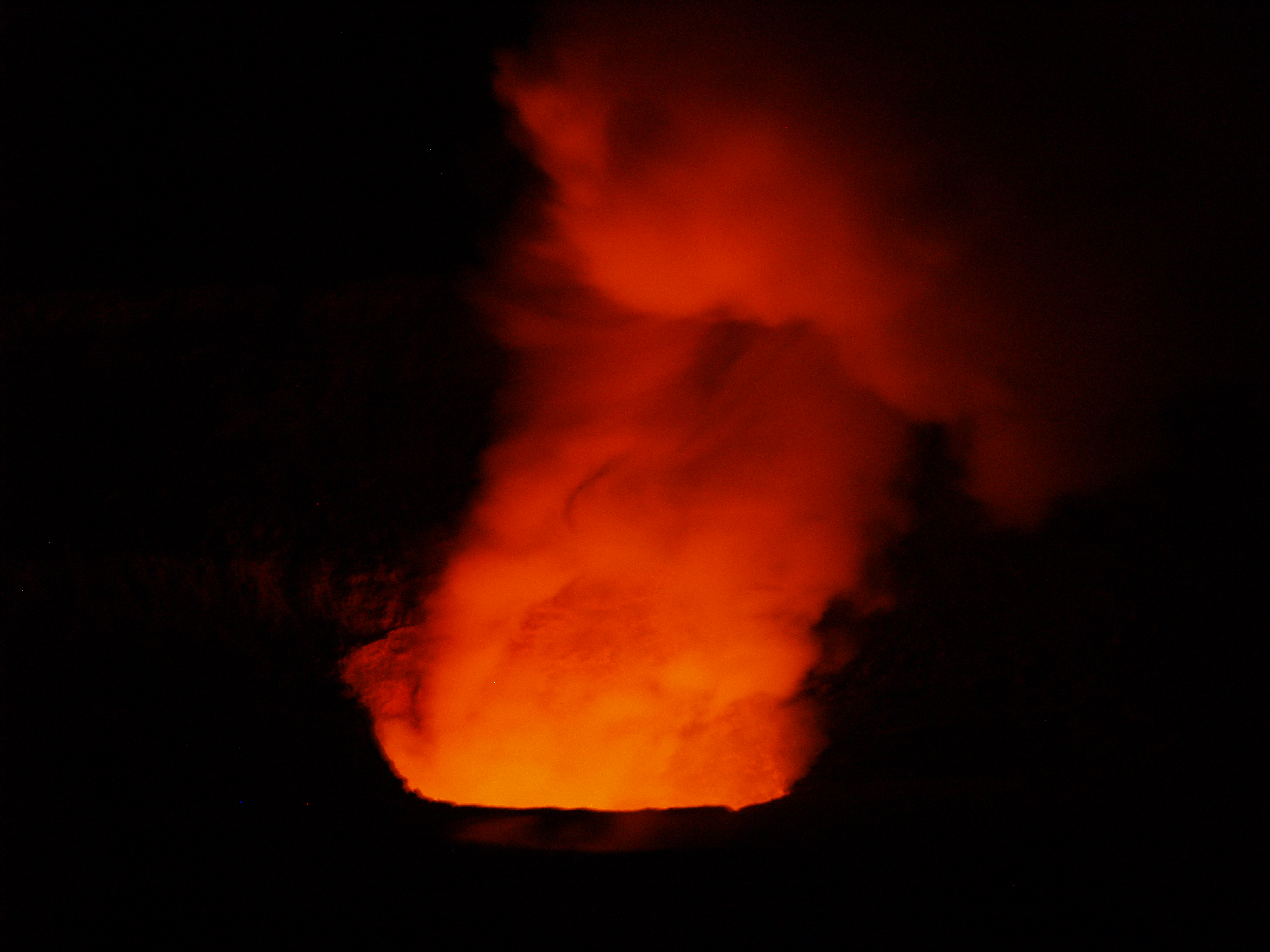
At Kīlauea's summit, the vent within Halema`uma`u Crater is still emitting elevated amounts of volcanic gas, resulting in high concentrations of sulfur dioxide downwind. Glow from the vent was visible at night through the past week, and rare views into the vent by HVO scientists found that the lava surface is still present about 205 m (675 feet) below the floor of Halema`uma`u Crater.

No earthquakes beneath Hawai`i Island were reported felt this past week.

Visit our Web site (http://hvo.wr.usgs.gov) for detailed Kīlauea and Mauna Loa activity updates, recent volcano photos, recent earthquakes, and more; call (808) 967-8862 for a Kīlauea activity summary; email questions to askHVO@usgs.gov. Volcano Watch is a weekly article and activity update written by scientists at the U.S. Geological Survey's Hawaiian Volcano Observatory.

For more information on traveling to Hawaii in general and exploring the Big Island's volcanoes in particular, please also visit www.tourguidehawaii.com and www.lovingthebigisland.wordpress.com.

Sunday, July 5, 2009

Give new life to your old photographs of Hawai`i's volcanoes!

Reprinted from here.

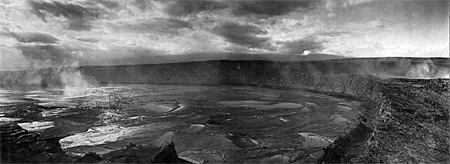
A view of the lava lake within Halema`uma`u Crater on December 27, 1911, with Uwekahuna bluff (where HVO and the Jaggar Museum now stand) and Mauna Loa in the background. The lake level had risen about 120 m (400 ft) since October 1911 and will drop 90 m (300 ft) in January, 1912, the month that HVO was founded by Thomas A. Jaggar's arrival for duty.
The adage "a picture is worth a thousand words" is certainly true, especially when it comes to photographs of Hawaiian eruptions and volcanic landscapes from earlier times.

Long-time readers of "Volcano Watch" might recall our January 20, 2005, article (http://hvo.wr.usgs.gov/volcanowatch/2005/05_01_20.html), which describes an HVO geologist's excitement at finding an 1860s photo of Kilauea's caldera. By comparing the photo to a present-day view of the caldera, he could see the location of volcanic features described in written records (with less than a thousand words) but no longer visible today—a valuable discovery when your job is to decipher a volcano's eruptive history.

Without realizing it, you or a family member may have captured a similarly important historical record of Hawai`i's volcanoes. How? By taking a photo and keeping it.

Your `ohana, like many families, probably has several albums—or shoe boxes—filled with old photographs. Perhaps your great-grandmother took a picture of a long-ago Kilauea summit eruption or your brother snapped a photo of `a`a lava as it flowed down the slopes of Mauna Loa. If you possess photographs that show volcanic landscapes or features, volcanic fume (vog), or any kind of eruptive activity, HVO geologists would like to hear from you and see the photos.

We learn the most from photographs that have some documentation about when and where they were taken. Date and location are essential pieces of information that help us interpret the geologic significance of a photo. If people are recognizable in a photograph, their names should also be included. Any other details you can provide about the image will add to its meaning.

Wide-angle shots are more helpful than close-ups. For example, if a photo is zoomed in on the leading edge of a lava flow and shows nothing else, we cannot determine the size of the flow-or much of anything else—from the image. With wide-angle views, we can see the geographic or geologic context of the eruptive activity or volcanic features shown in the photograph.

If you're interested in sharing your photos with HVO scientists, the first thing you should do is contact us by telephone (808-967-7328) or email us (askHVO@usgs.gov). Geologists are standing by to speak with you. The purpose of this initial conversation is to determine which of your photographs might be beneficial to our research and monitoring efforts on Hawai`i's volcanoes. We will then send you additional information on how we can receive and duplicate photos selected from your collection.

No need to worry about giving up your photographs—you retain ownership of them. We will return your photos to you after duplicating the images selected as most useful. In appreciation of your loaning us the photographs, we will be happy to give you digital copies of the images we scan.

To kick off our effort to expand HVO's photographic collection of Hawai`i's volcanoes, we are asking at this time to see photographs from 1924 and earlier. Those years included frequent lava lake activity in Halema`uma`u Crater and culminated in the explosive eruptions of May 1924.

Pre-1924 photos are of particular interest to us now because they could shed light on Kilauea's current summit eruption. Even if they show no eruptive activity, early photographs of Kilauea's caldera can contribute to a better understanding of the volcano's past and reveal features that are no longer visible. The same is true for early photos of Mauna Loa and Hualalai.

We will initially focus on early historical photographs, but you can contact us about any volcanic images you think might interest us. Although we may not be able to look at photos taken in recent decades right away, we would eventually like to see them. Our ultimate goal is to acquire images from the 1800s through the 20th century.

So, please lend us a hand while taking a trip down memory lane. Look through your family photos and contact HVO if you find images of Hawai`i's volcanoes. Your old photographs could give new life to eruptive events and volcanic landscapes rapidly fading from our visual memories.

Kīlauea Activity Update

Surface flows in the Royal Gardens subdivision remained active as of Thursday, June 18, burning through forested kipuka. Another area of breakouts active higher up on the pali was also reported. The Waikupanaha and Kupapa`u ocean entries remain active and continue to produce prominent plumes as lava spills into the ocean.

At Kīlauea's summit, the vent within Halema`uma`u Crater continues to emit elevated amounts of volcanic gas, resulting in high concentrations of sulfur dioxide downwind. Bright glow from the vent was visible at night through the past week. A collaborative effort last week between HVO and UH-Manoa scientists, using a sophisticated optical remote-sensing technology called LIDAR (Light Detection and Ranging), has measured the lava surface to be about 205 m (675 feet) below the floor of Halema`uma`u Crater.

No earthquakes beneath Hawai`i Island were reported felt this past week.

For more information on traveling to Hawaii in general and exploring the Big Island's volcanoes in particular, please also visit www.tourguidehawaii.com and www.lovingthebigisland.wordpress.com.

Wednesday, July 1, 2009

Frank's Guide to Pronouncing the Hawaiian Langauge

by Frank Burgess

When people come to Hawai'i, especially for the first time, they notice that most of the locations, towns and street names are in a language they are unfamiliar with. It looks strange and sounds even stranger. But Hawaiian isn't very difficult to pronounce once you know a few basic ideas and rules.

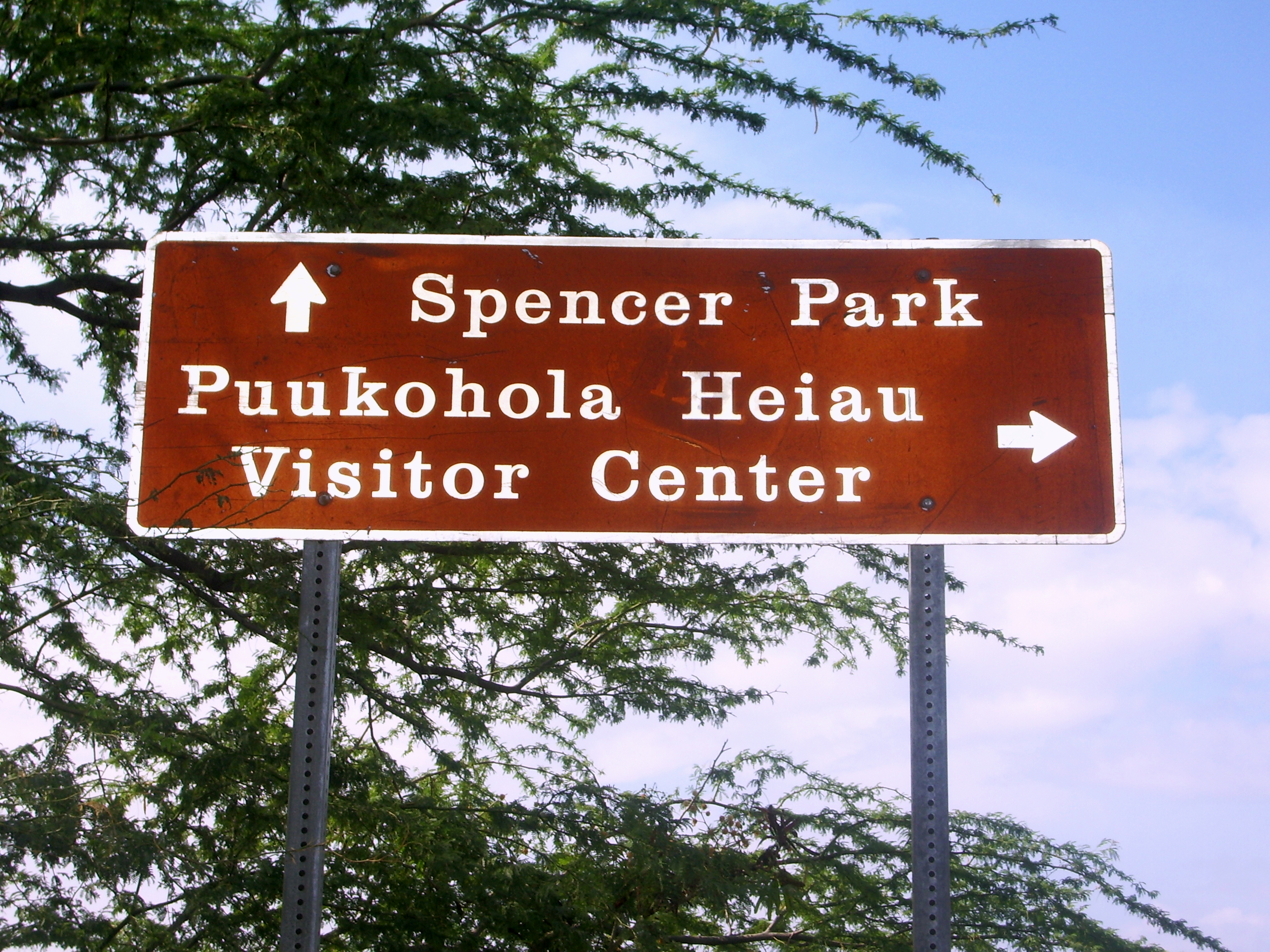
Hawaii Has Very Poor Signage for Towns, Beaches and Attractions; What Signs There Are Are n Hawaiian Words Which May Be Hard For The Visitor To Pronounce And Remember: Photo By Kilgore Trout

Alphabet: The Hawaiian alphabet has five vowels and seven consonants; a total of 12 letters altogether. Several vowels may be used in a row, but consonants are never placed together. Some words have no consonants at all and Hawaiian words always end with a vowel. There are many subtle nuances to the language as well, but for now let's just hit the basics.

Vowels: The vowel sounds in Hawaiian are always pronounced the same and are similar to Spanish or Latin. This chart might visually help as we progress through the sounds using “b” at the beginning and “t” at the end of each vowel sound:

A...pronounced as a soft “u” as in but. (not “aw”)
E...pronounced as a soft “e” as in bet. (not “ay”)
I...pronounced as a hard “e” as in beet.
O...pronounced as a hard “o” as in boat.
U...pronounced as a hard “u” as in boot.

Even at Highway Speeds, The English on This Sign IS Easy To Read, Whereas The Visitor May Have Trouble Decoding The Hawaiian Language Words Quickly Quickly Enough to Turn: Photo By Japhy Ryder
Even at Highway Speeds, The English on This Sign Is Easy To Read, Whereas The Visitor May Have Trouble Decoding The Hawaiian Language Words Quickly Quickly Enough to Turn: Photo By Japhy Ryder

These are the most common vowel sounds. There are some exceptions, such as words with a macron. The macron extends the vowel sound to twice the normal value. (Not all road signs and maps include the macron.)

Ā = Bought...pronounced as “aw” and extends the sound.
Ē = Bet...and extends the sound.
Ī = Beet...and extends the sound.
Ō = Boat...and extends the sound.
Ū = Boot...and extends the sound.

Hokina: The hokina looks like a comma and is added to Hawaiian words to change the meaning or to replace consonants that have been dropped over time. It creates a glottal stop (a slight hesitation with an “uh”, like starting a new word). The hokina will always occur between vowels, especially the same vowel repeated (a'a, i'i, etc). Because of it's significance, in 2004 the hokina was officially added as the 13th letter in the Hawaiian language.

As you explore Hawai'i, you can now begin to pronounce the words correctly. Have fun and aloha.

For more information on traveling to Hawaii in general and visiting the Big Island in particular, please also see www.tourguidehawaii.com and www.lovingthebigisland.wordpress.com.

Copyright 2009 by Frank Burgess.

Monday, June 29, 2009

The Best Short Hikes on Hawaii Island

A River of Lava Flows Down The Pali Toward The Ocean Entry at Waikupanaha, Hawaii Volcanoes National Park: Photo by Big Island Air

Whether you visit the Big Island for a few days, a couple weeks or a few months, you want to make the most of your time in Paradise. With such a wide variety of natural and commercial attractions, it is natural for the visitor to get a little overwhelmed in the “Option Overload” and not be able to make a balanced and informed decision on what they want to do and how best to spend their time.

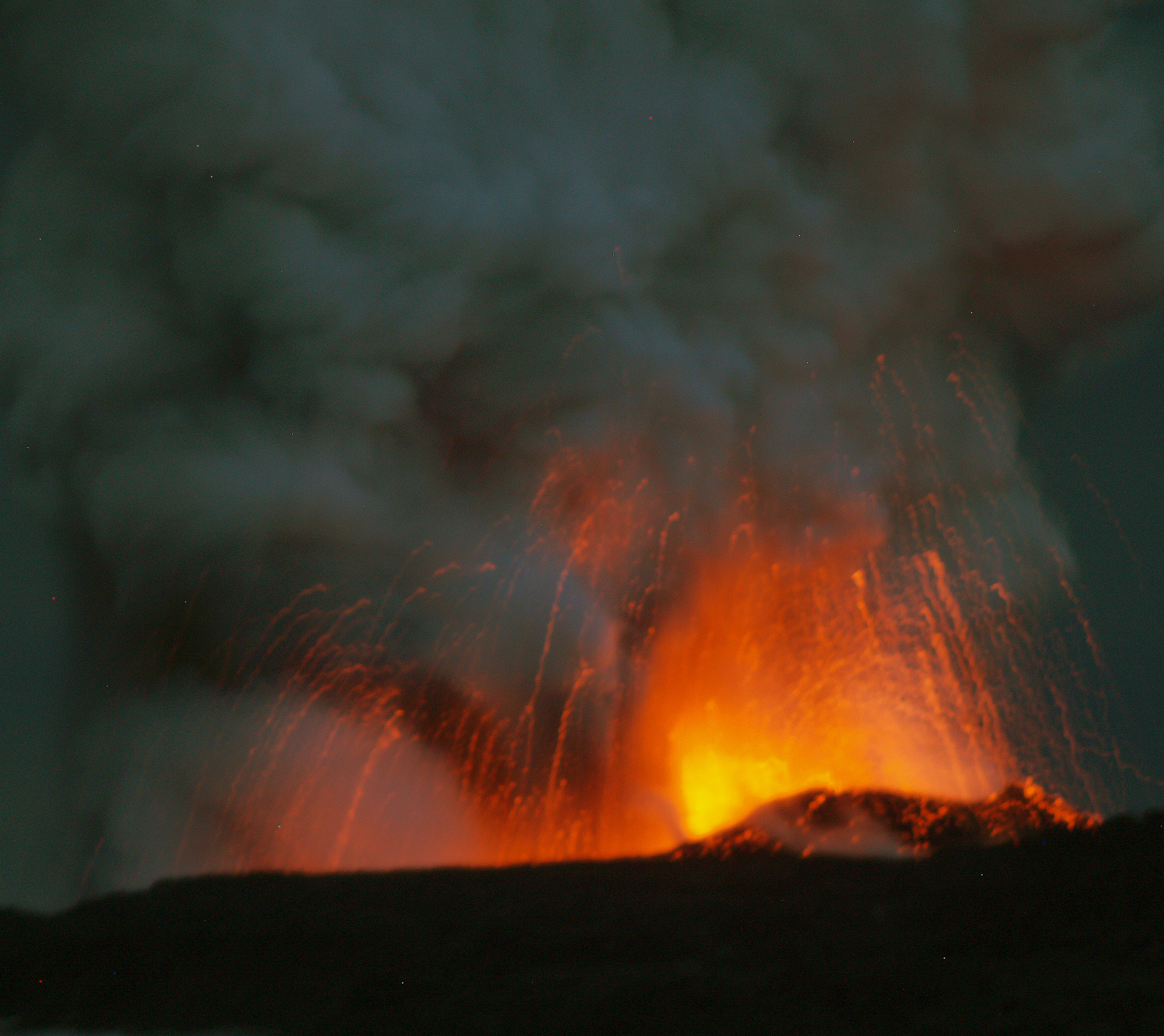
Glow From the Vent in Halema'uma'u, Kilauea Crater, Hawaii Volcanoes National Park: Photo by Donnie MacGowan August 2008

Even choosing what activities you want to participate in…do you want to snorkel, hike, go on a whale watching tour? We highly recommend you go hiking on your visit…but where do you go? Many of the justly famous mountains, canyons and beaches of Hawaii all have superlative hikes, but which are best? Which suit your interests? Are you looking for an experience that is away from crowds, secluded and empty or one that’s exciting, but perhaps a little more tame? Do you want to hike near your resort or find one that’s at the end of a day of delicious wandering? Do you have the hankering to climb Hawaii's highest peak, and the world's highest peak from base to summit? How about a stroll through dryland forest, over ancient lava fields to a wilderness beach? And what about hiking to the Lava...is that really safe? Is it as unimaginably magical as it sounds?

Ranked in order, with the best on top, are our picks of the finest hikes on the Island of Hawaii. We’ve tried to strike a balance in ranking these places since each is a gem in its own right, we’ve had to leave off many that are equally fine in their own right and of course, recommending some means that their popularity will increase and hence, they will become more crowded. This list at least provides an excellent starting point for deciding where you want to spend you trail time. When you arrive we ask that you treat these special places, and the people who live near them, with care, respect and aloha.

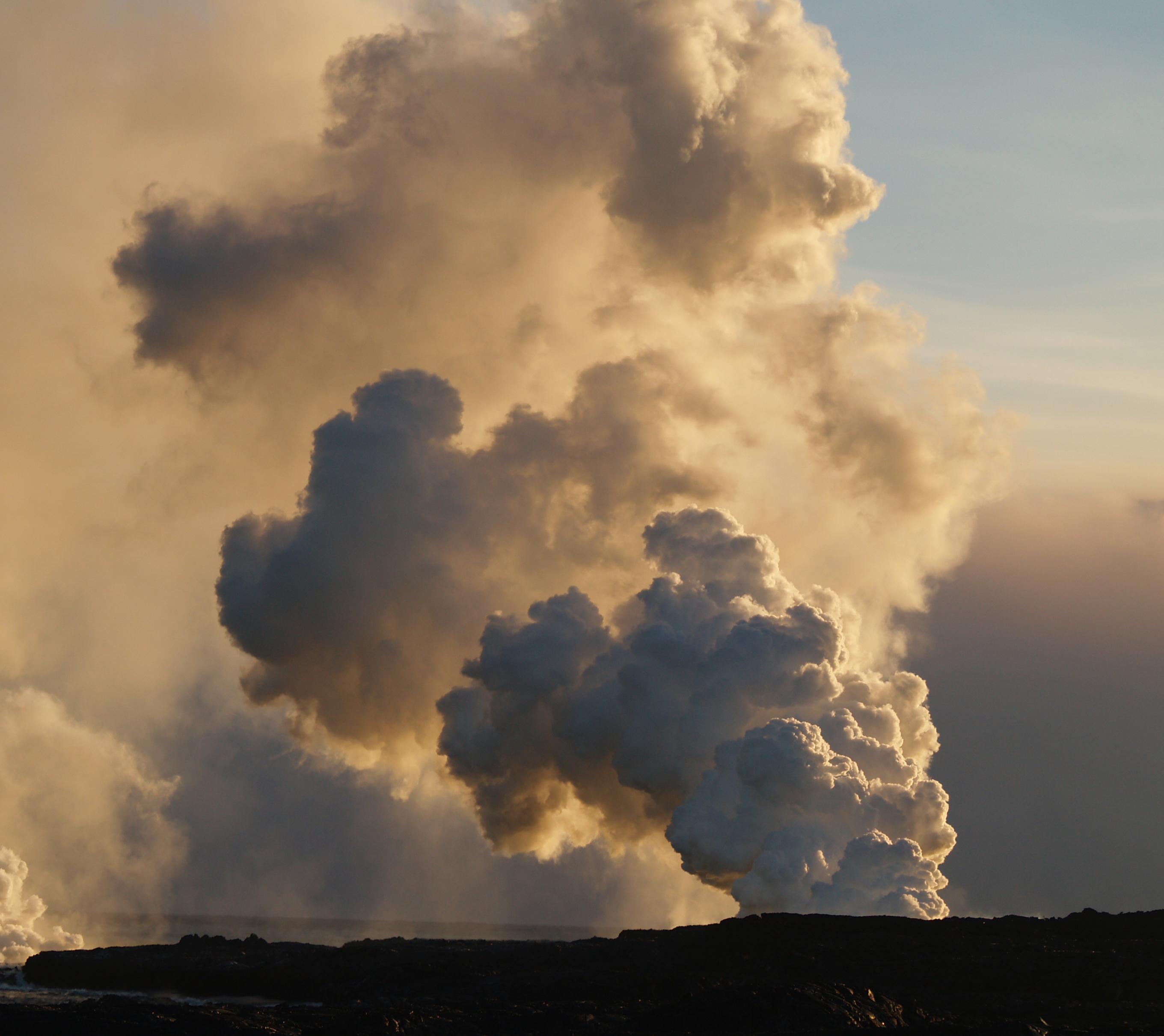
Explosion Cloud of Littoral Explosion at the Waikupanaha Lava Ocean Entry, Big Island, Hawaii:  Photo by Donad B. MacGowan
Explosion Cloud of Littoral Explosion at the Waikupanaha Lava Ocean Entry, Big Island, Hawaii: Photo by Donald B. MacGowan
Lava Viewing at Waikupanaha Ocean Entry: This is truly the one “Must-See” trip for every visitor to Hawaii Island; the unimaginable spectacle and beauty of the earth remaking herself thorough volcanic eruption. Explosions, glowing and flowing lava, waterspouts. lightening and every kind of geological excitement you can imagine, located at the end of an extremely short hike along a trail that is accessible to almost everyone. See a video here.

Littoral Explosions as Lava Enters the Ocean Near Royal Gardens: Photo by Donald B. MacGowan

Kilauea Iki Crater in Hawaii Volcanoes National Park: An amazing, wonderful walk through lovely fern and ohi'a forest down the sides and onto the still-steaming floor of an enormous volcanic crater that was, only a few short decades ago, the hellish cauldron of a frothing, liquid lava lake of fire. A fascinating, 4 mile/2 ½ hour loop hike of only moderate difficulty, most people in only fair shape can easily complete it in a couple hours. See a video here.

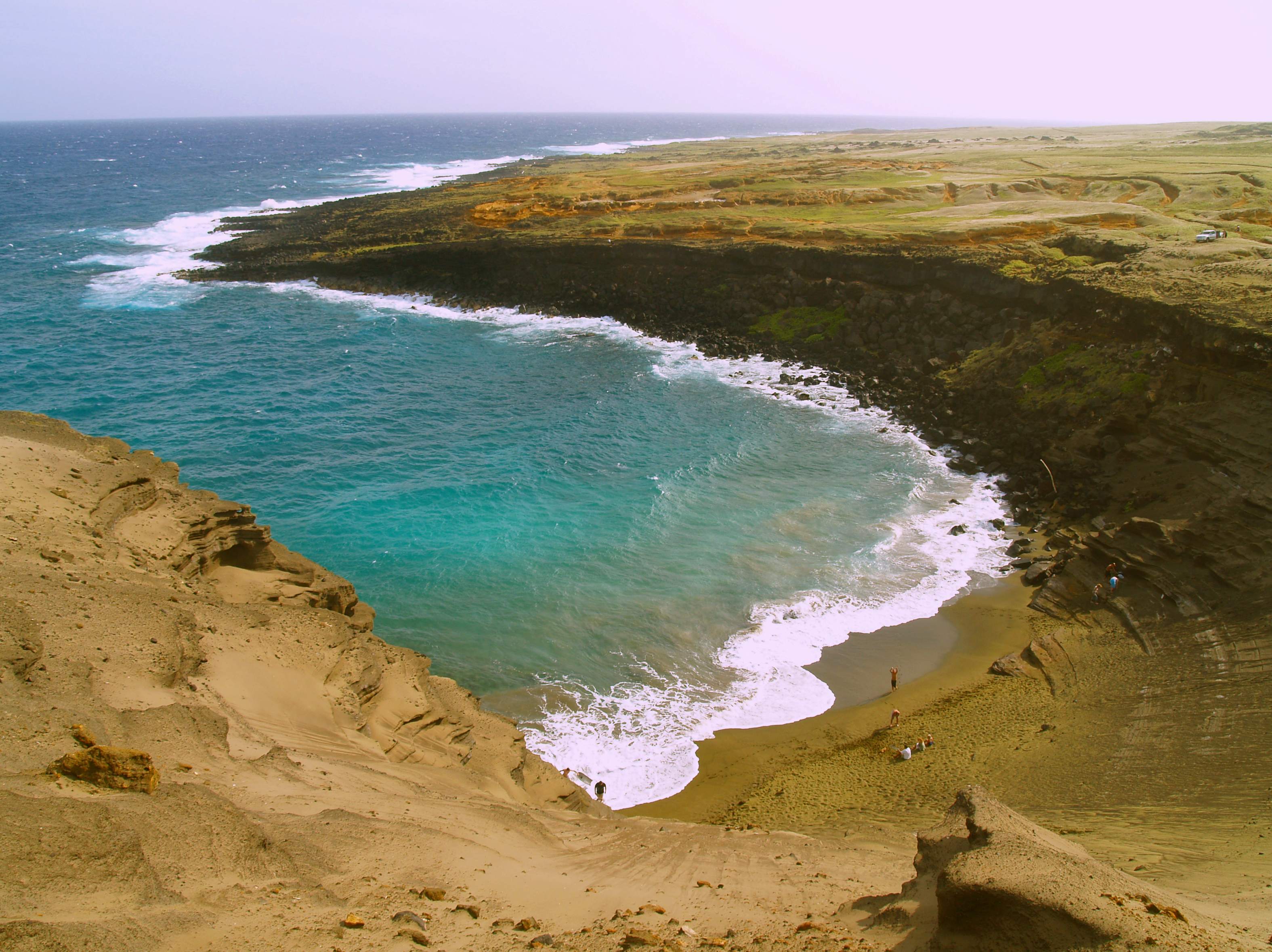
The Beautiful Green Sand Beach at South Point of the Island of Hawaii is Reached by an Easy 2 1/4 Mile Hike: Photo by Donald B. MacGowan

Mahana Green Sand Beach at South Point: One of a handful of true green sand beaches in the world, the Mahana Green Sand Beach near South Point is not to be missed. Beautiful, haunting, intriguing. Although the hike is 2 ¼ miles each way, the trail is relatively flat and easily followed. Swimming and snorkeling in the bay is fabulously weird due to the water color, just be wary of currents out from the mouth of the bay.

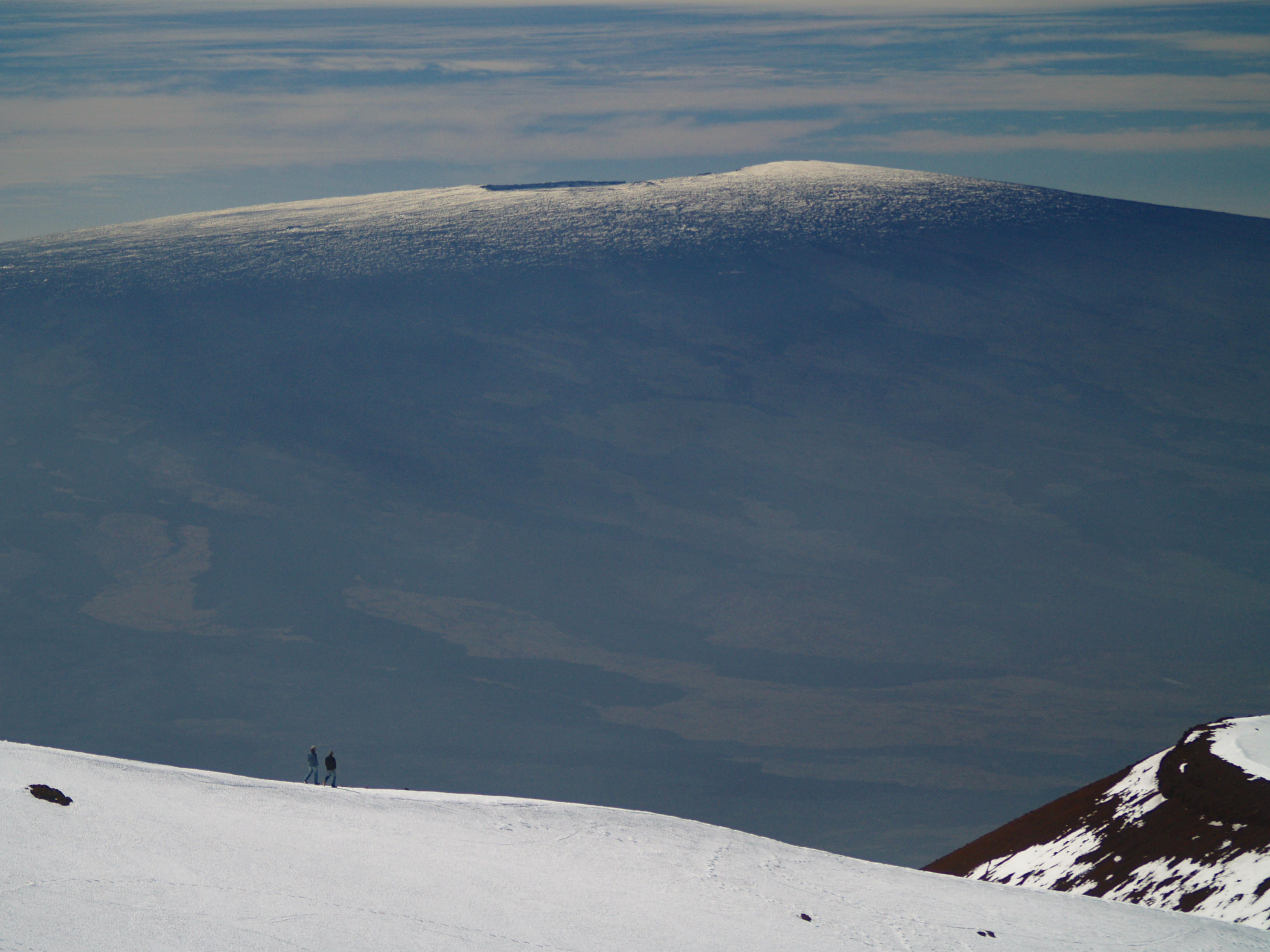
Hikers on Mauna Kea Summit Looking at Mauna Loa Summit: Photo by Donnie MacGowan

Mauna Kea Summit: Whether you struggle up the 6-mile climb from the Visitor's Information Station, or take the 20 minute short hop hike from the end of the road, visiting the summit of Mauna Kea should be on every visitor's wish list of things to do. Simultaneously the highest point in the state of Hawaii and the tallest mountain from base to summit on earth, Mauna Kea is an otherworldly, unique, starkly beautiful place. The hiker is reminded to be wary of changeable weather, severe snow storms that can strand you, altitude sickness, dehydration and sunburn. See a video here.

Makalawena Beach: Perhaps the loveliest beach in Polynesia, Makalawena is the perfect sand crescent, beach backed by palms and iron wood trees with morning-glory-draped sand dunes. A easy mile hike in from Kekaha Kai State Park keeps this beach uncrowded. Snorkeling here is better than perfect, camping here is so wonderful we don't know why it's not mandatory.

Long, Lonely and Wholly Wonderful Makalawena Beach in Kekahai State Park: Photo by Donald MacGowan

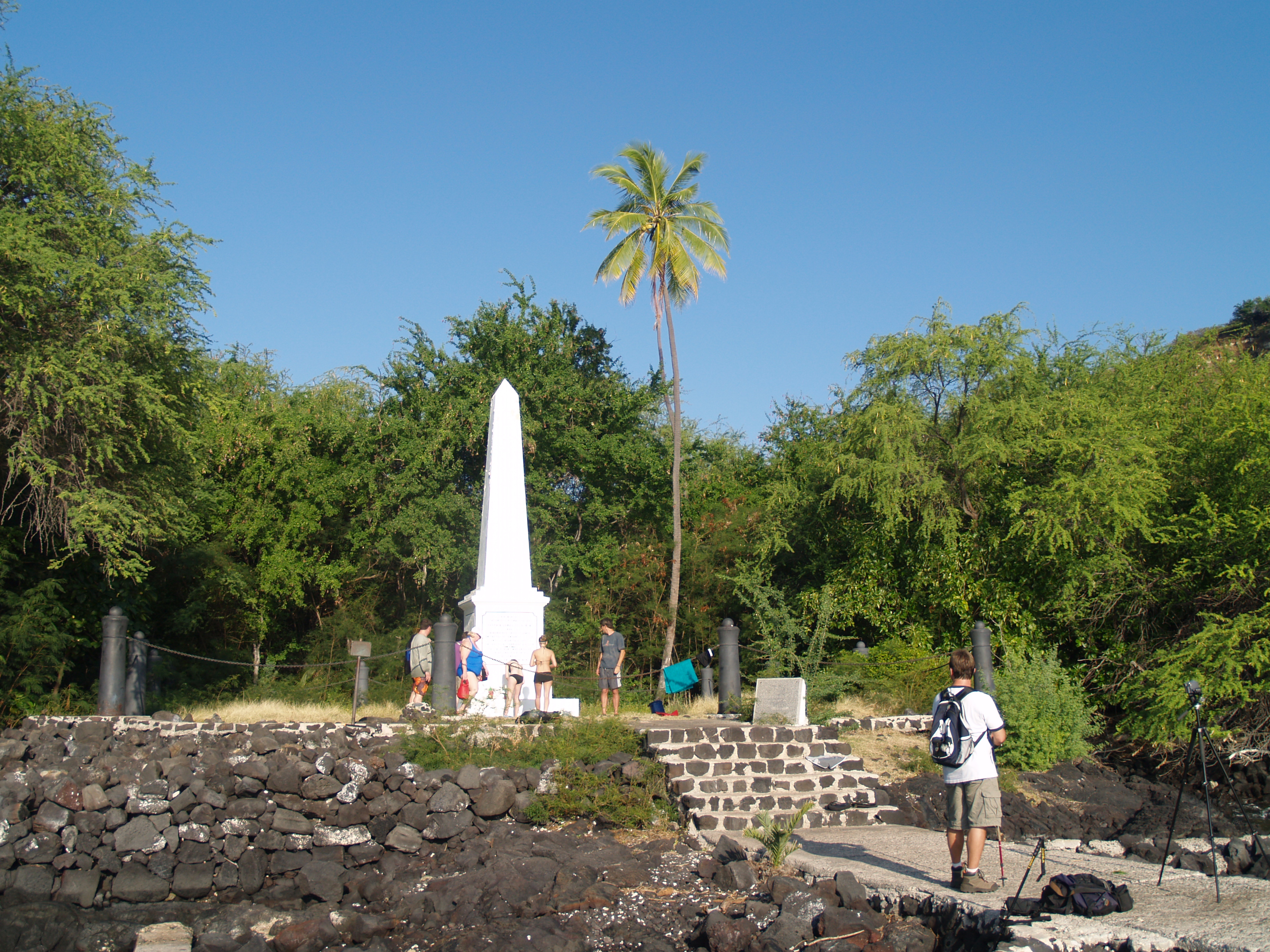
Captain Cook Monument on Kealakekua Bay: Accessed by a steep trail this 2.5-mile hike takes about 1-1 1/2 hours to descend, somewhat more time to come back up. The snorkeling at the monument is second to none and the hike is a fabulous walk back in time, through fruit groves, cattle pastures, lava flows and an abandoned Hawaiian village. Take water, a lot of water, there is none to drink anywhere along the trail or at the bay, once you are there or on the all-uphill hike out. See a video here.

The Captain James Cook Monument at Ka'awaloa Village in Kealakekua: Photo by Donnie MacGowan

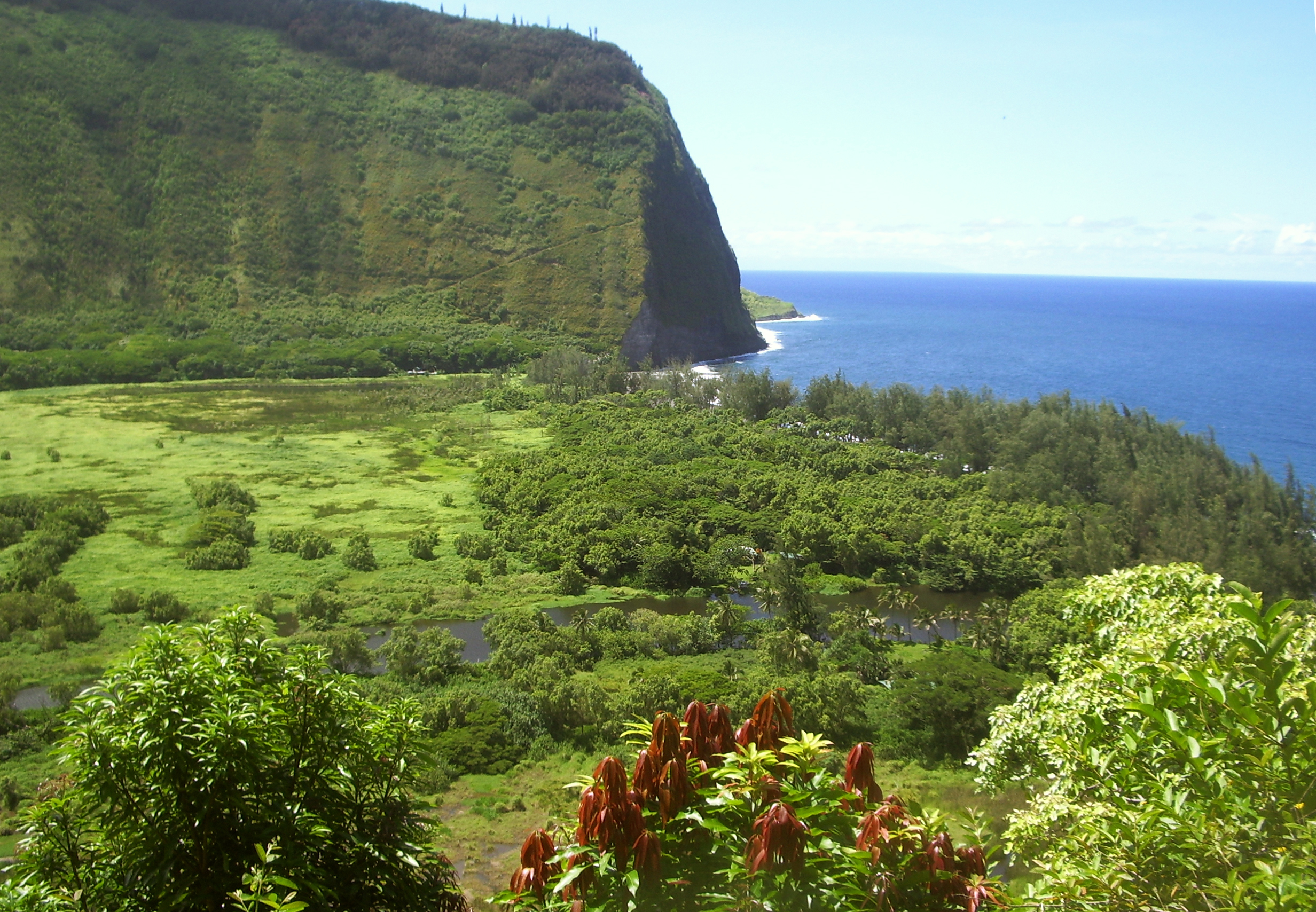
Waipi'o Valley: An amazing hike into the Waipi'o fastness, down a steep narrow road to the largest black sand beach on the island. If vast open spaces, scenery, wild tropical flowers, waterfalls and amazing beaches are your thing, this is your hike. Once on the valley floor, exploring along the beach or farther on to subsequent valleys can take hours, or days, depending on your level of energy and interest.

Waipi'o Valley on the Hamakua Coast of the Big Island: Photo by Donald MacGowan

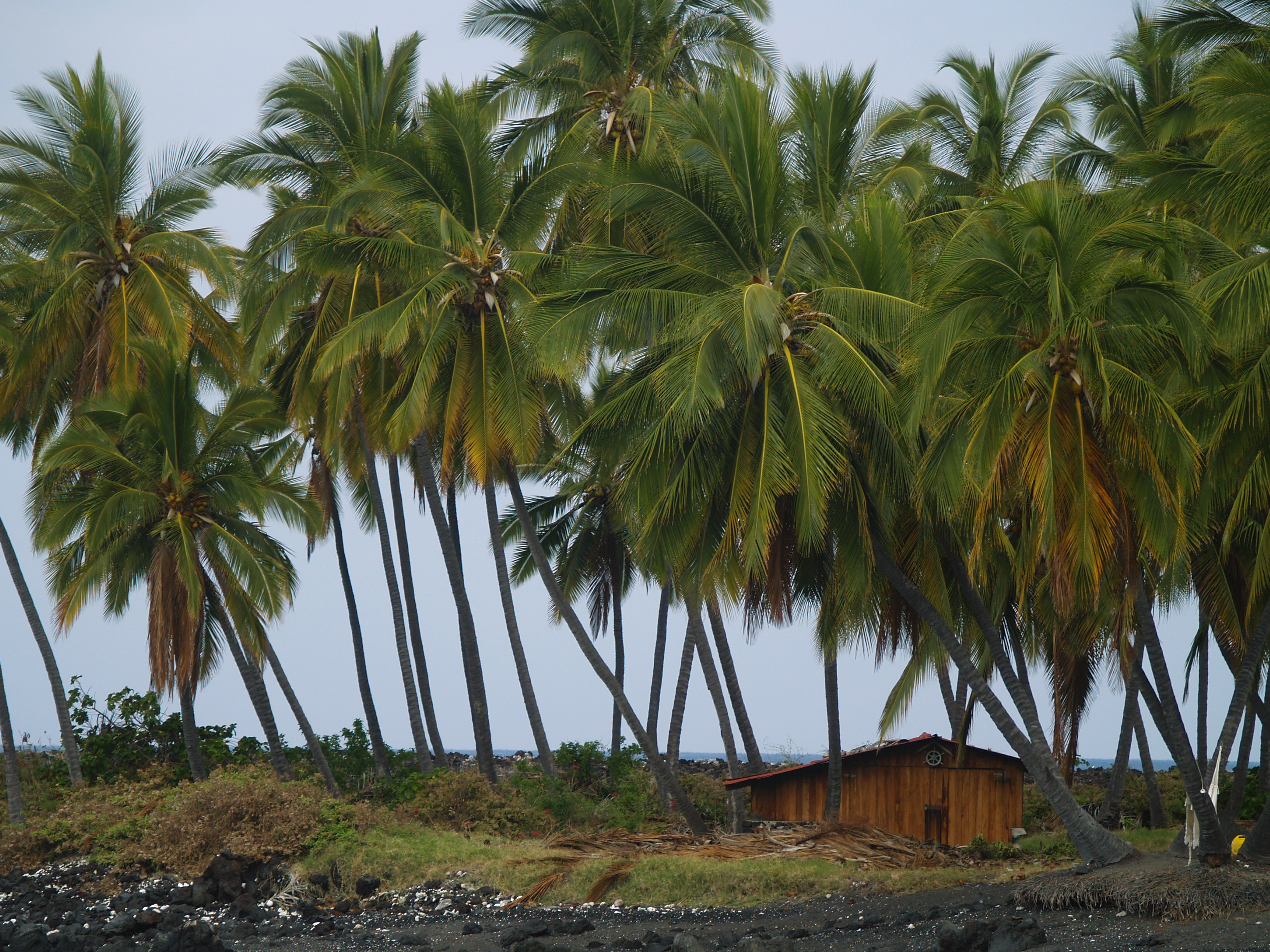
Honomalino Beach: Starting in the Old Hawaiian Fishing Village of Miloli'i, the hike wanders along the coast in and out of the surf line to the wild and untamed Honomalino Bay—a wonderful place to picnic, snorkel or kayak. Exploring on foot in the area of the bay provides many wonders and archeological treasures, from abandoned temples and villages to the largest holua, or sledding track, in Hawaii. Remember to respect the Hawaiian natives, their culture and their sacred sites.

A Small House on Honomalino Beach: Photo by Donnie MacGowan

For more information on traveling to Hawaii in general or exploring the Big Island in particular, please also visit www.tourguidehawaii.com and www.lovingthebigisland.wordpress.com. Information about the author can be found here.

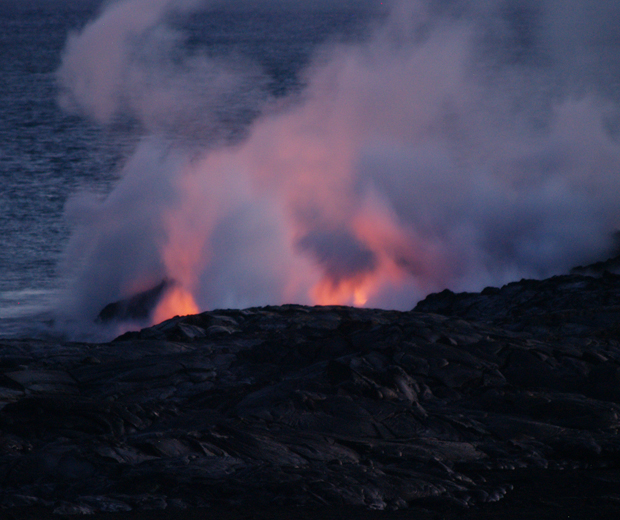
Lava from Kilauea Enters the Sea at Waikupanahu: Photo by Donnie MacGowan

All medial copyright 2009 by Donald B. MacGowan, except where otherwise noted.

Saturday, June 27, 2009

The Best Snorkeling Spots on Hawaii Island

by Donnie MacGowan

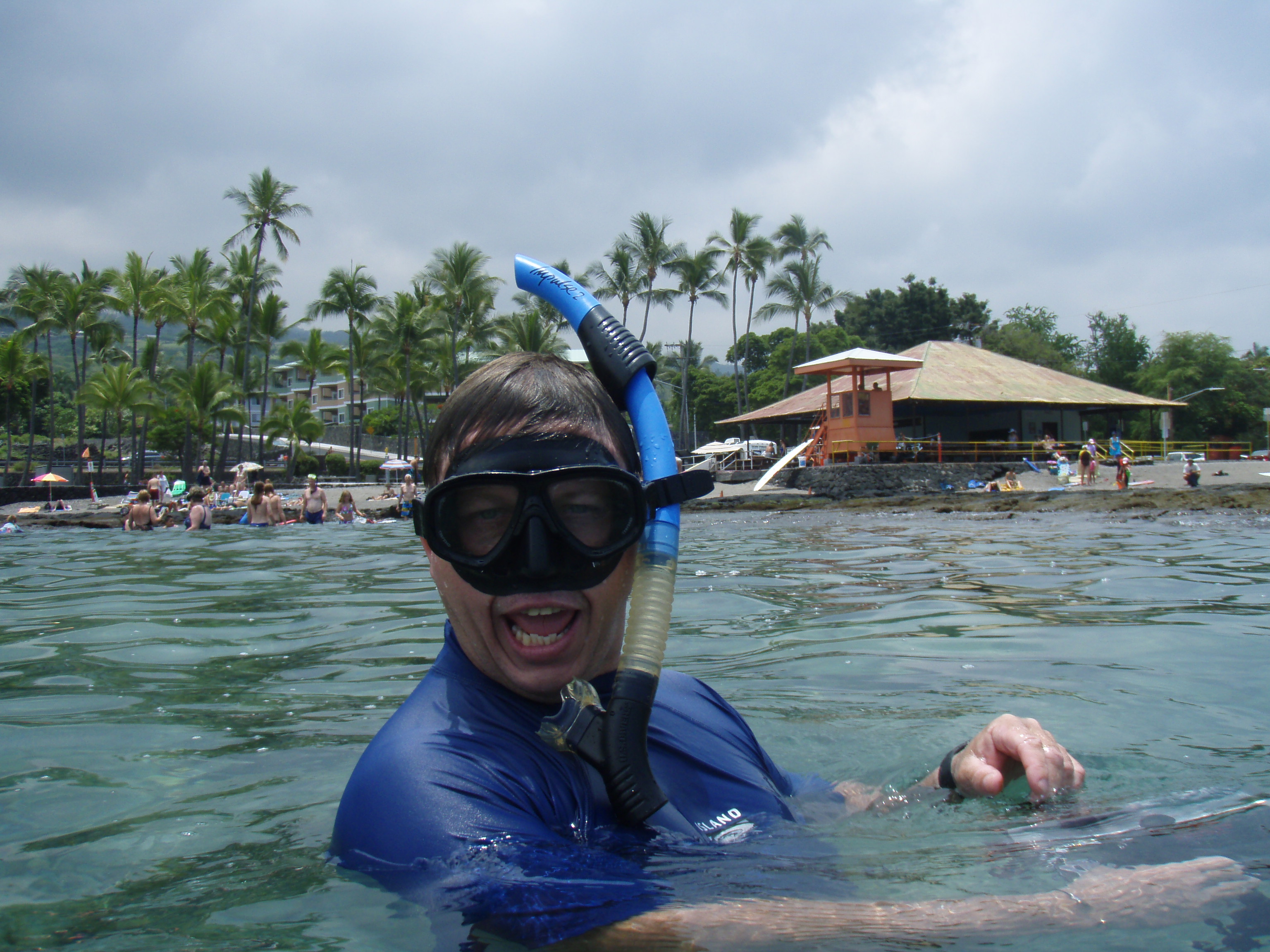
Donnie MacGowan Snorkeling at Kahalu'u Beach on the Big Island of Hawaii: Photo by Donnie MacGowan

Whether you visit the Big Island for a few days, a couple weeks or a few months, you want to make the most of your time in Paradise. With such a wide variety of natural and commercial attractions, it is natural for the visitor to get a little overwhelmed in the “Option Overload” and not be able to make a balanced and informed decision on what they want to do and how best to spend their time.

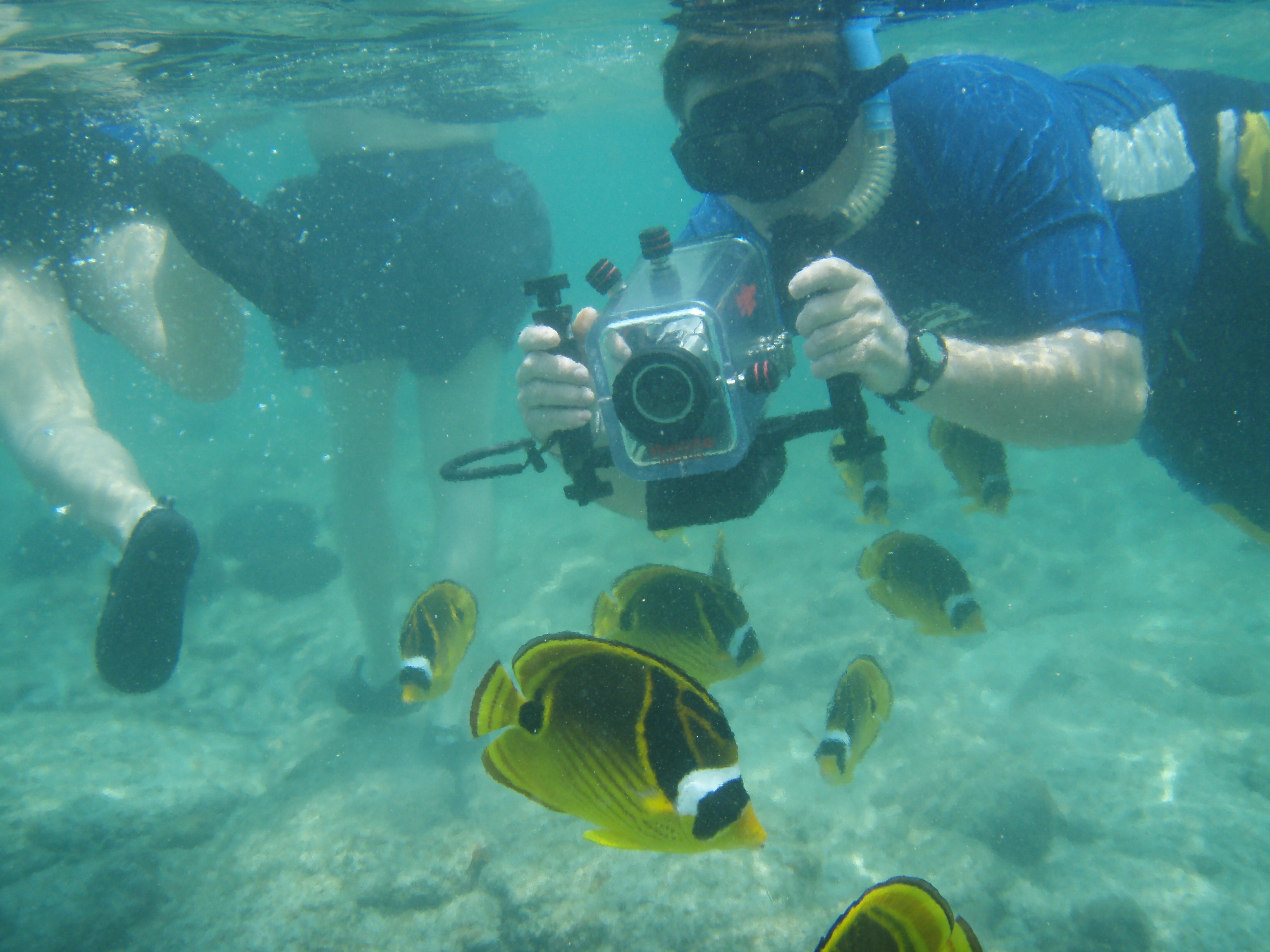
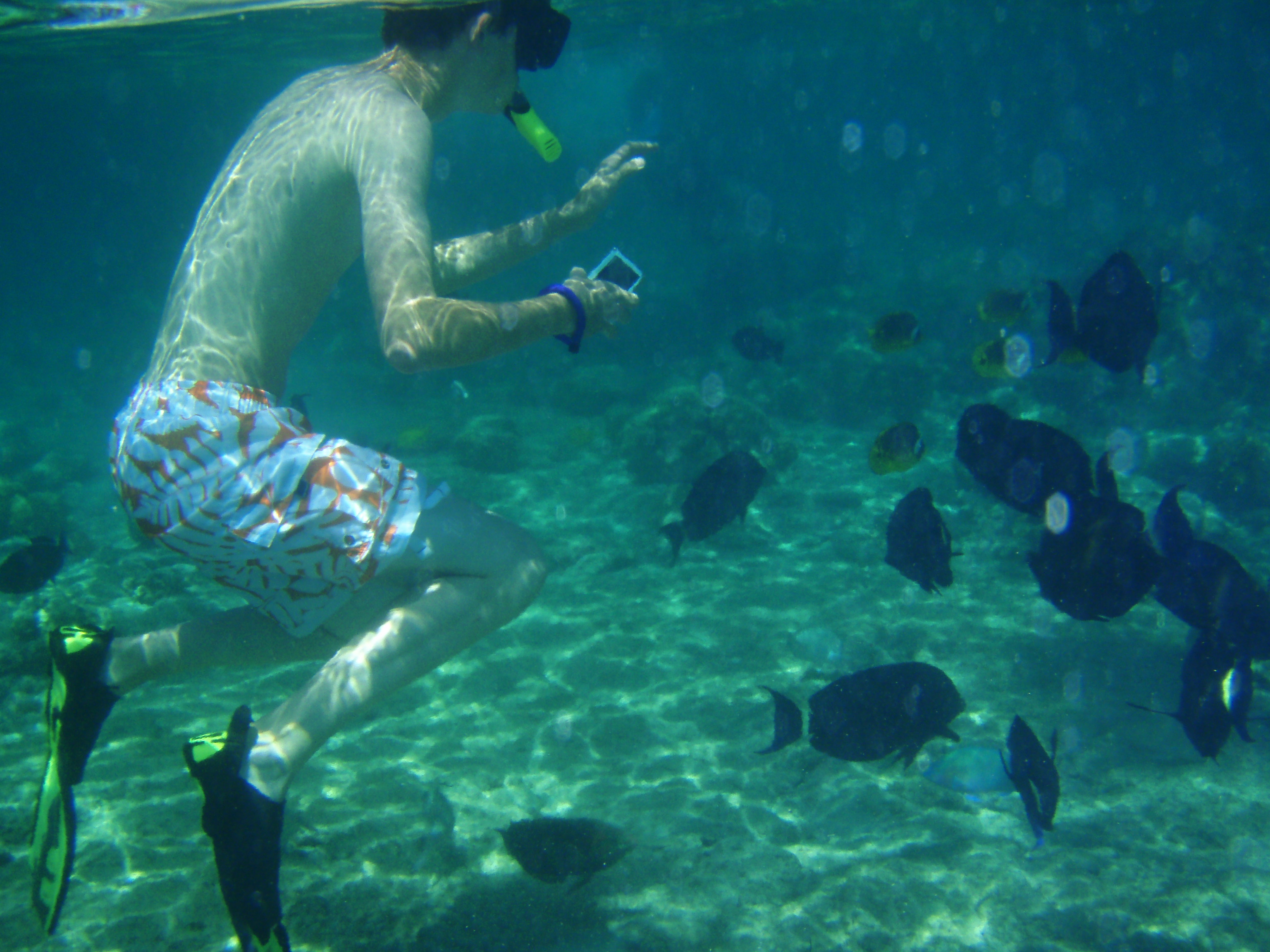
Bart Hunt Filming Fish at Kahalu'u Beach: Photo By Donnie MacGowan

Even choosing activities you want to participate in...do you want to snorkel, hike, go on a whale watching tour? We always recommend people do three basic things when they come to Hawaii: get in the air, go to a luau and get in the water. By getting in the air you get a glimpse of how magnificent our island home is, it is the best way to watch the volcano erupt and it allows you to sort of "scout" the island to see where you might want to spend more time. By going to a luau you get an introduction to Hawaiian culture and cuisine--you get a taste of what it means to live in Hawaii. And by getting in the water you experience the magic wonder of our reefs and colorful fish, the calm and renewal from floating in our warm, turquoise waters and the thrill of exploring something new, different and a little wild. We highly recommend you go snorkeling on your visit...but where do you go? Do you want a snorkel beach for beginners, or a place that;s challenging to experience? Are you going simply to get in the water and see the fish or do you want a beach that's also alive with fun people? Are you looking for an experience that away from crowds, secluded and empty or one that's exciting, but perhaps a little more tame? Do you want to snorkel near your resort or one that's at the end of a day of delicious wandering?

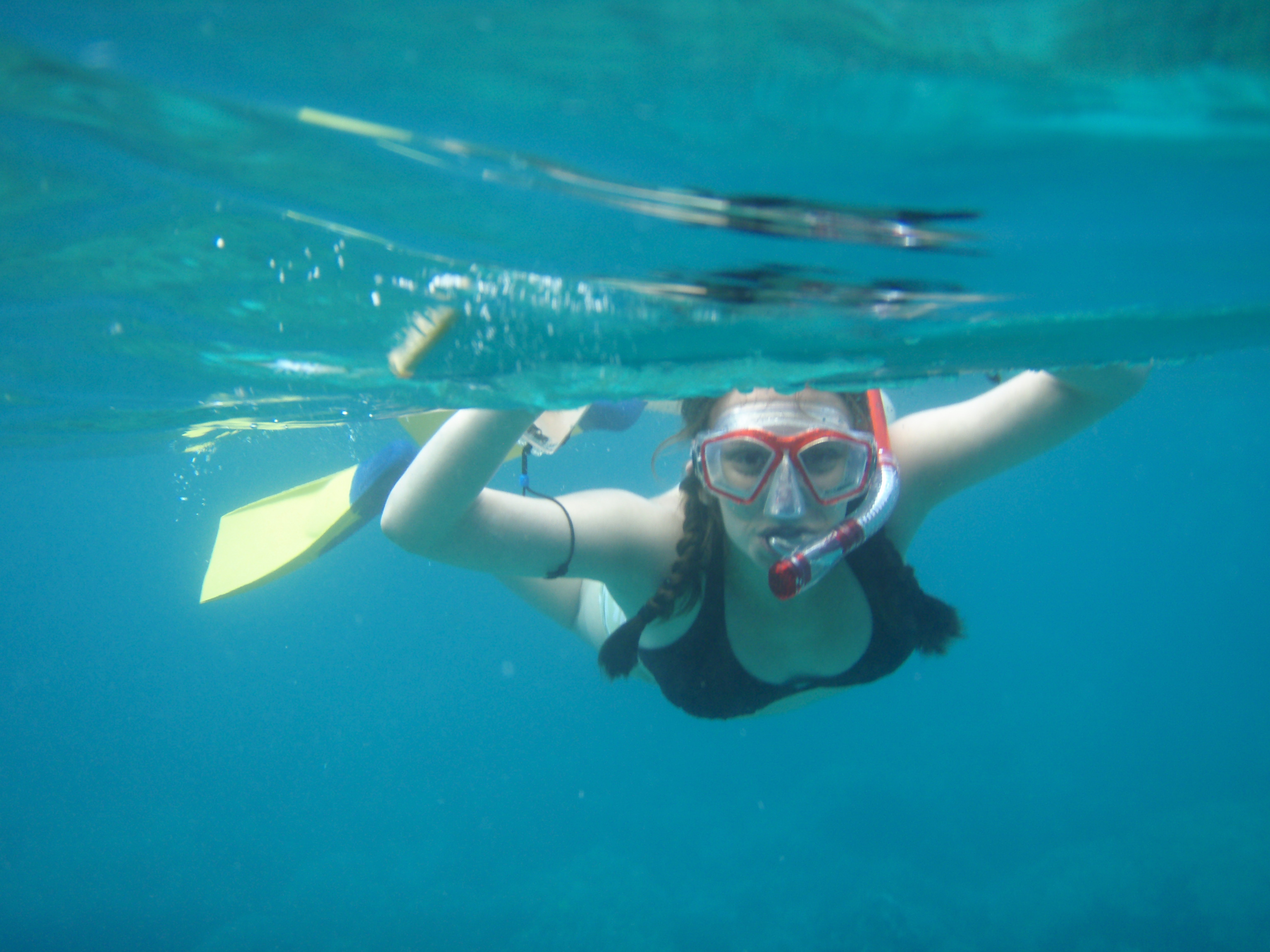
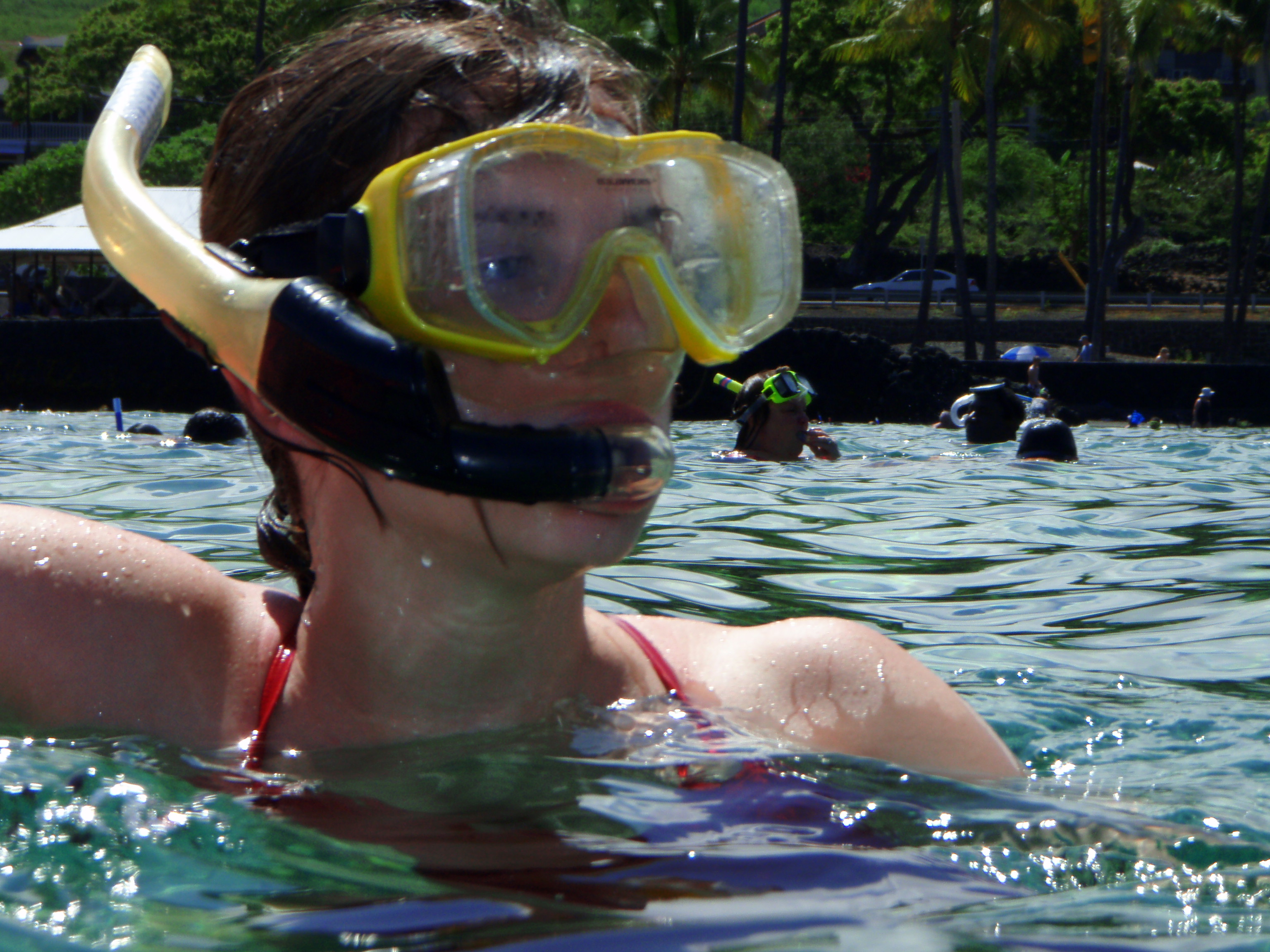
Liz Maus Snorkeling at Hounaunau Bay, Hawaii: Photo by Donnie MacGowan

Ranked in order, with the best on top, are our picks of the best snorkeling spots on the Island of Hawaii. We've tried to strike a balance in ranking these places since each is a gem in its own right, we've had to leave off many that are equally fine for their own reasons and of course, recommending some means that their popularity will increase and hence, they will become more crowded. This list at least provides an excellent starting point for deciding where you want to spend you beach time. When you arrive we ask that you treat these special places, and the people who live near them, with care, respect and aloha.

Two-Step Beach at Hounaunau Bay Has Some of the Finest Snorkeling in the World: Photo by Donald B. MacGowan
Two-Step Beach at Hounaunau Bay: Class Triple-A waters, stuffed with a wide variety of brilliant tropical fish, set in a calm and protected bay, and frequently visited by dolphins, this snorkeling area near the grounds of one of the most important Hawai'ian archeological sites is perhaps the most popular and one of the three top places to snorkel on the island. It earns the top spot because of it's easy accessibility.

Kealakekua Bay and Captain Cook Monument from Napo'opo'o: Photo by Donnie MacGowan

Kealakekua Bay: Whether you hike or boat to Captain Cook Monument, or enter the bay to snorkel at the end of the road in Napo'opo'o, there is no place on earth that has better snorkeling or more fish than Kealakekua Bay. Frequented by both dolphin and whale, protected, Class Triple A waters and a setting unmatched in beauty anywhere, this the premiere place for kayak-to-snorkel adventures on the island. Arguably, this bay and the Hawaiian settlements that surround it, experienced the most momentous and important historical events yet to unfold in the human history of the state of Hawaii.

Kahalu'u Beach, Kona Hawaii: Photo by Donnie MacGowan

Kahalu'u Beach: Referred to by many visitors as “Snorkel Beach” Kahalu'u is centrally located along Ali'i Drive in Kailua Kona. The welcoming waters are protected by a seawall and are amazingly warm, shallow and crystalline turquoise. The safety and ease of conditions here, many resident turtles and abundant colorful fish and the great facilities make this a perfect place to learn to snorkel, or for the tried and true veteran to “get wet and meet the fish”.

Hookena Beach in South Kona Is a Fabulous Beach Plunked Down in the Middle of Real Old Hawaii: Photo by Donald B. MacGowan
Ho'okena Beach in South Kona Is a Fabulous Beach Plunked Down in the Middle of Real Old Hawaii: Photo by Donald B. MacGowan

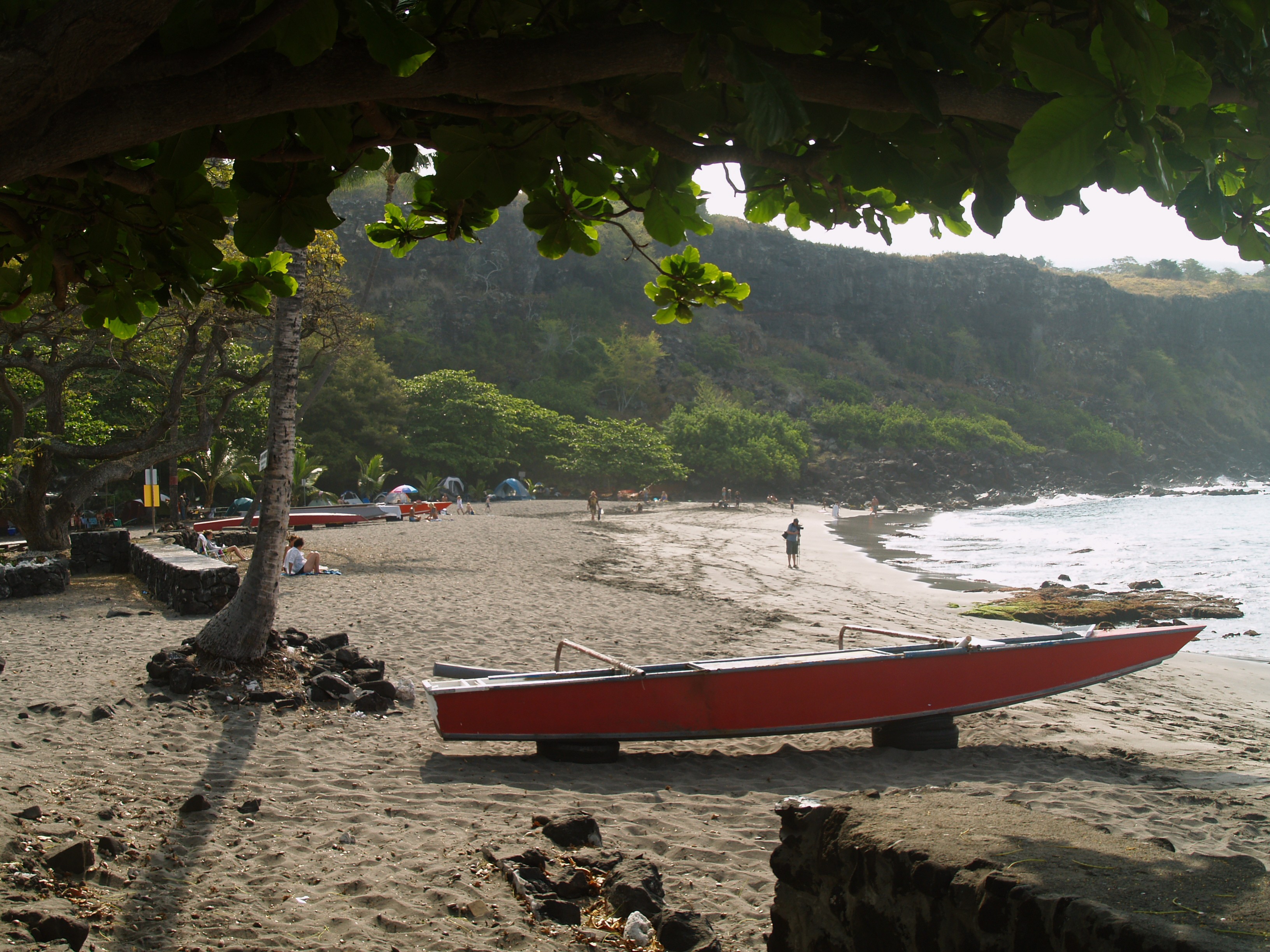
Ho'okena Beach: Ho'okena Beach is a fabulously beautiful beach park well off the beaten path, plunked down in the honest-to-gosh old Hawaiian village of Ho'okena. This beach has an amazing array of underwater topography populated by perhaps the greatest variety of reef fish n the island; recently rebuilt, this park has fine facilities including a refreshment stand as well as snorkel and kayak rentals. Ho'okena is a true snorkeler's mecca.

Long, Lonely and Wholly Wonderful Makalawena Beach in Kekahai State Park: Photo by Donald MacGowan
Long, Lonely and Wholly Wonderful Makalawena Beach in Kekah Kai State Park: Photo by Donald MacGowan

Makalawena Beach: Perhaps the loveliest wilderness beach in Polynesia, Makalawena is the perfect sand crescent, beach backed by palms and iron wood trees with morning-glory-draped sand dunes. A easy mile hike in from Kekaha Kai State Park keeps this beach uncrowded. Snorkeling here is better than perfect. Simply drive to Kekaha Kai State Park and walk the well-marked trail north to the beach.

Bradford MacGowan Photographs a school of Humuhumuele'ele at Kahalu'u Beach: Photo by Donald MacGowan

Before we leave the topic of Best Snorkeling Beaches on the Island of Hawaii, we'd like to impress upon you the need to be proactive in keeping these places special and how to make your experience the best it can be. The open ocean is not your resort pool and deserves immense respect from you--the ocean is the strongest natural force on earth. Never snorkel alone, never turn you back on the ocean. Drink lots and lots of water; no, drink even more. Never snorkel after having consumed alcohol. Ask the lifeguard about conditions, chat with people coming out of the water about what they liked best and what conditions are like.

Bradford MacGowan Snorkeling at Pu'u Honua O Hounaunau: Photo by Donald MacGowan
.Gary Burton and his daughter snorkel at Hounaunau Bay: Photo by Donald MacGowan
Gary Burton and his daughter snorkel at Hounaunau Bay: Photo by Donald MacGowan

Please wear a hat and t-shirt to protect yourself from sunburn while in the water--never apply sunscreen just before entering the water,wait until you are done snorkeling and have rinsed off--sun-cream kills the coral and poisons the water. When in the water, do not stand directly upon the coral to rest, do not touch the coral or the fish; never feed the fish or other marine animals. Do not touch, approach, chase or harass the sea turtles, dolphins or whales--it's not only dangerous, it's illegal and will earn you a hefty fine. Always obey posted warnings and the lifeguard; do not swim in windy conditions (dangerous) or murky water (sharks); be aware of currents and rip tides.

Amanda Maus Snorkeling at Kahalu'u Beach: Photo by Donald MacGowan

Get out before you feel tired, get out before you feel sunburned, get out before you get thirsty; get out before the wind comes up or the sun goes down; get out before you feel ready--you are more tired than you think. Rinse yourself and your gear off after snorkeling and remember to apply sun-cream liberally and often--you are getting more sun than you think. Always pack out everything you brought with you and dispose of your litter (and that stuff the ignorant slob over there left, as well) appropriately. These beaches get an enormous amount of pressure, try to leave Paradise a little nicer than you found it.

Laurie Maus Using a Boogie Board as a Floatie: Photo by Donnie MacGowan

And for heaven's sake, plunk-down ten bucks for a disposable underwater camera; in fact, buy two. I promise you will kick yourself from now until you return to Hawaii if you don't! You will want to show the folks back home your snorkel adventures, which seem to always be the most memorable of any trip to Paradise. Trust me, any money you spend on disposable underwater cameras will be the best return on investment of any part of your Hawaii vacation.

Bart Hunt Snorkeling at Kahalu'u Bay: Photo by Donnie MacGowan

For more information of traveling to Hawaii in general or exploring the Big Island in particular, please also visit and www.tourguidehawaii.com and www.lovingthebigisland.wordpress.com. Information about the author can be found here.

Monk seal at Honl's Beach near Kailua Kona: PHoto by Donald B. MacGowan
Monk seal at Honl's Beach near Kailua Kona: Photo by Donald B. MacGowan

All media copyright 2009 by Donald B. MacGowan.

Thursday, June 25, 2009

The Top Beaches of Hawaii Island

by Donnie MacGowan
69 West Side Beaches 1_edited-1
Waialea Beach (Beach 69) Is a Hidden Gem That Is Just Waiting For You To Explore: Photo by Donnie MacGowan

Whether you visit the Big Island for a few days, a couple weeks or a few months, you want to make the most of your time in Paradise. With such a wide variety of natural and commercial attractions, it is natural for the visitor to get a little overwhelmed in the “Option Overload” and not be able to make balanced and informed decision on what they want to do and how best to spend their time.

Even choosing the beach you want to spend time on...which beach? How do you find the right beach for your particular needs? Are you going just to relax and sunbathe? Or is the trip to snorkel, boogie board or to explore? Do you want a beach that's alive with fun people or one hidden, secluded and empty? Do you want a beach near your resort or one that's at the end of a day of delicious wandering?

Kua Bay Sunbathers: Photo by Donald MacGowan
Ranked in order, with the best on top, are our picks of the best beaches on the Island of Hawaii—we tried to choose beaches with a range of attributes and interesting features, rather than beaches that are all very similar. Ranking these beaches is an onerous task since each is a gem and we've had to leave off many that are equally fine for their own reasons. This list at least provides an excellent starting point for deciding where you want to spend you beach time.

Hapuna Beach: A mile long, 200 meters wide and with warm, calm, crystal clear-turquoise waters, always one of the top-ranked beaches internationally, Hapuna is clearly the “Alpha Beach” on the island. Sometimes crowded, this beach is usually fairly empty until about 11 a.m. A great beach for sunbathing, it has only fair boogie boarding and rather passe snorkeling.

Hapuna Beach from the south: Photo by Donnie MacGowan

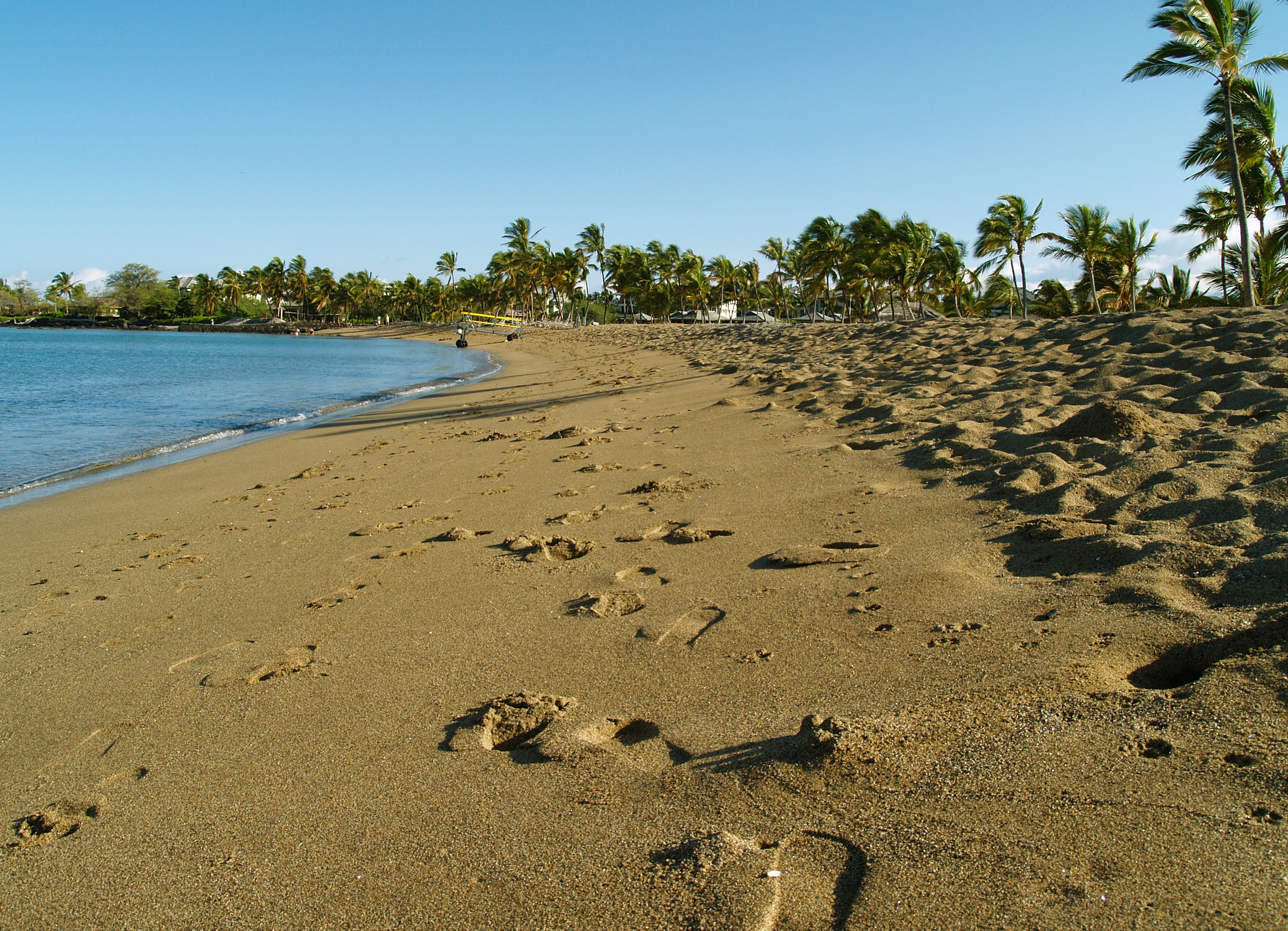
Anaeho'omalu Bay: A long crescent of sugary sand backed by swaying palm trees, snorkel, sail, paddle boat and kayak rentals on the beach and interesting hikes both north and south from the beach, make Anaeho'omalu is a great place to spend the day for any family. Anaeho'omalu is the most sought-after sunset image to photograph in the state of Hawaii. Although spectacular for its scenery and beach social scene, the water at Anaeho'omalu is a bit cloudy for ideal snorkeling.

The Justly Famous Anaeho'omalu Beach is a Long Crescent of Gorgeous Sand: Photo by Donnie MacGowan

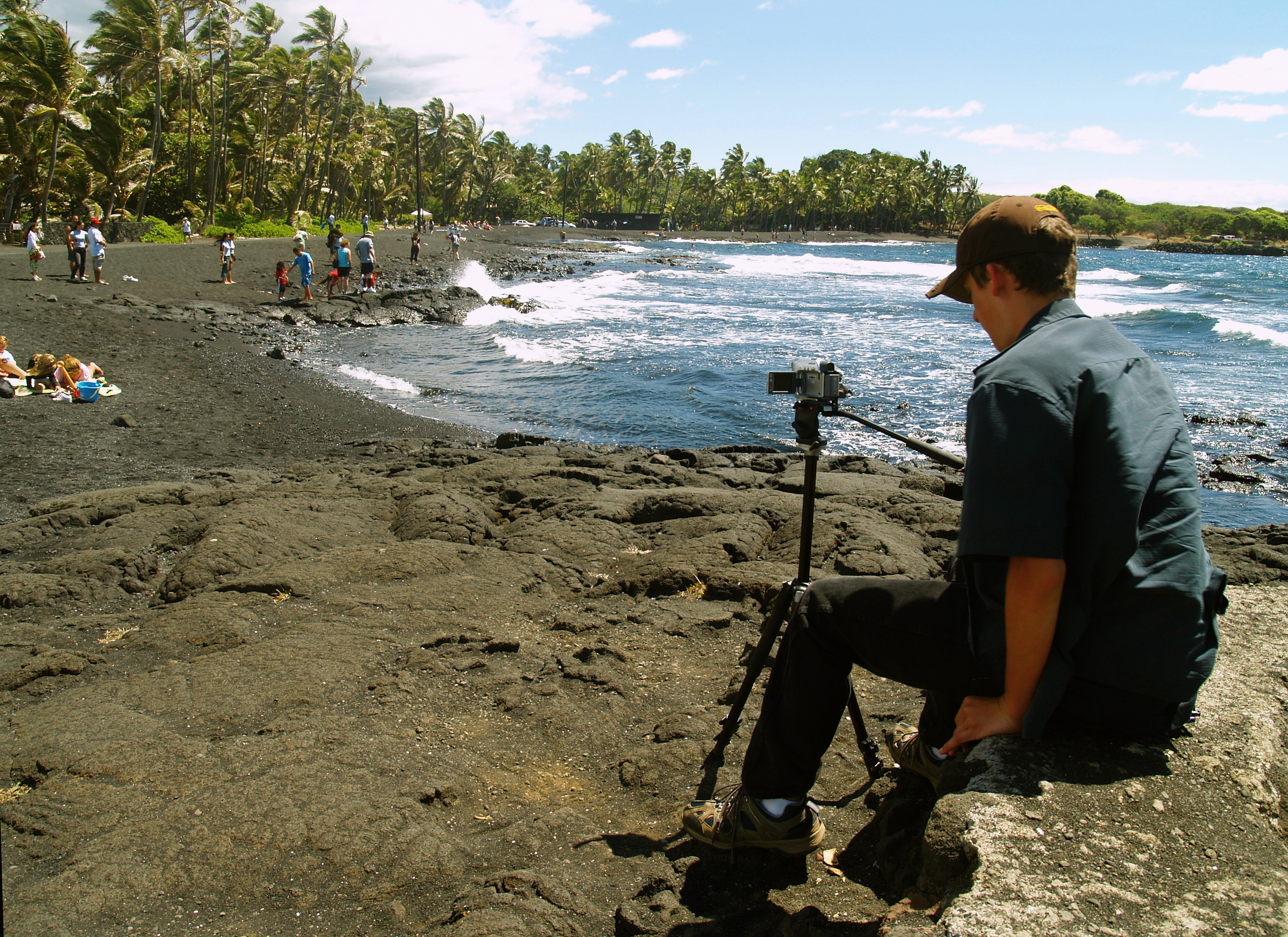
Punalu'u Black Sand Beach: The large, beautiful beach with acres of jet black sand and clear waters stuffed with endangered green sea turtles make Punalu'u not just one of the loveliest beaches in the world, but also one of the most interesting. Although a little cold due to near-shore springs, the clear waters and black sand bottom at Punalu'u offer fabulous and unique snorkeling. Madly crazy rip tides and strong currents out near the surf zone make Punalu'u a dangerous place for beginning boogie boarders. There are numerous historic and pre-contact ruins in the area that make this a great place for exploration.

Bradford MacGowan Filming at Punalu'u Beach: Photo By Donnie MacGowan

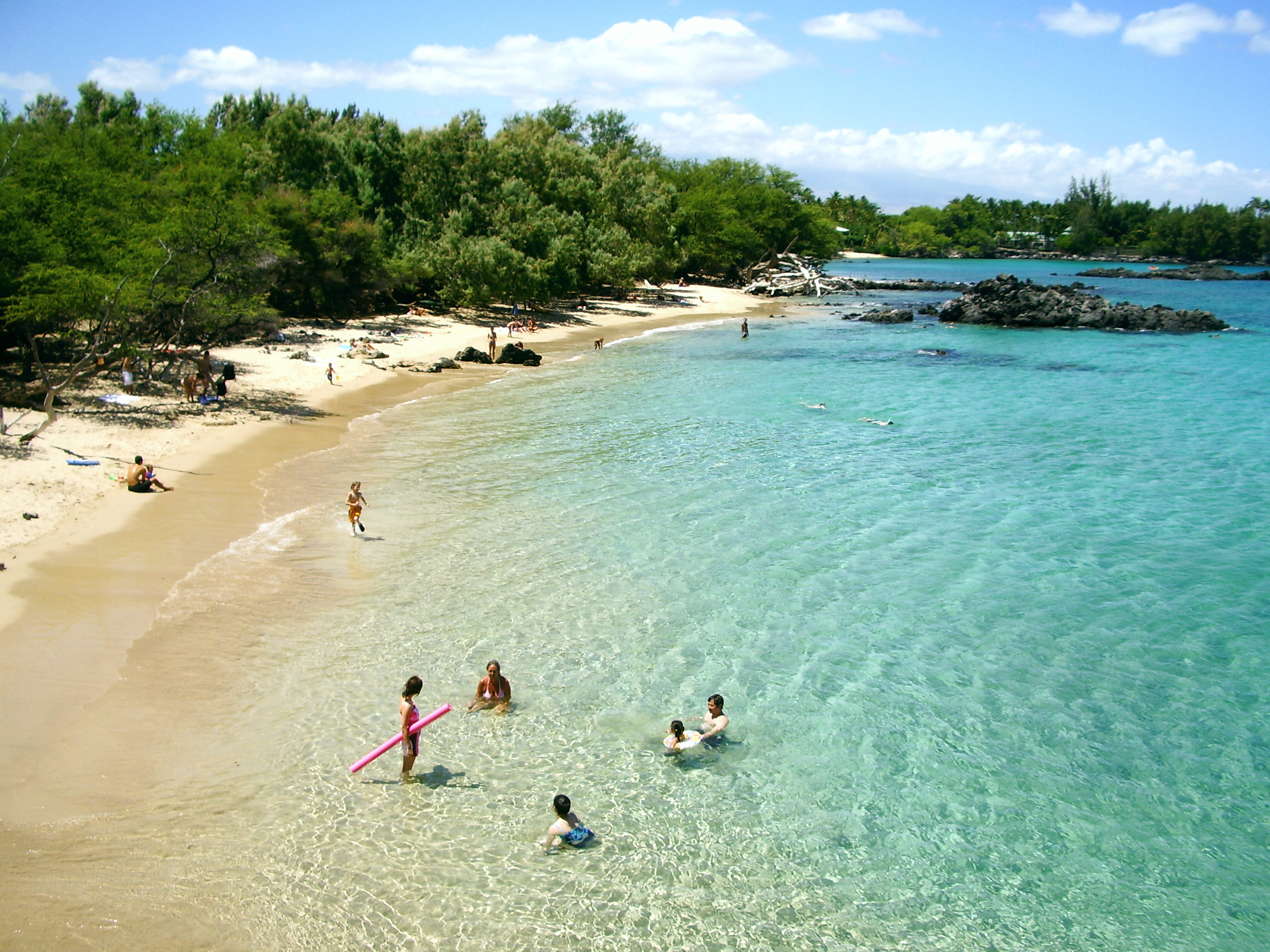
Waialea Beach: Another only crescent of sugar sand which is relatively unknown, even by many locals, Waialea is generally uncrowded, lovely beyond description, and has a wild underwater topography to tempt even the most jaded snorkeler. Fine snorkel exploring, hiking and scrambling both north and south of the beach yield secret treasures of small coves, private inlets, sea arches and wild underwater topography.

Happy Bathers Relax in the Warm, Crystaline Waters of Waialea Bay: Photo by Donnie MacGowan

Makalawena Beach: Perhaps the loveliest beach in Polynesia, Makalawena is the perfect sand crescent, beach backed by palms and iron wood trees and morning-glory-draped sand dunes. A easy mile hike in from Kekaha Kai State Park keeps this beach uncrowded. Snorkeling here is better than perfect, camping here is so wonderful we don't know why it's not actually mandatory. The coastline hike a few miles north from Makalawena to Kua Bay along the ancient, paved Ala Ali'i (Trail of Kings) is one of the finest, most rewarding shoreline hikes on the island.

Long, Lonely and Wholly Wonderful Makalawena Beach in Kekahai State Park: Photo by Donald MacGowan

Mahana Green Sand Beach (South Point): One of a handful of true green sand beaches in the world, the Mahana Green Sand Beach near South Point is not to be missed. Beautiful, haunting, intriguing. Although the hike is 2 ¼ miles each way, the trail is relatively flat and easily followed. Snorkeling here, due to the green sand and water color is delightfully weird—be sure to purchase an inexpensive, disposable underwater camera. Scenery is best viewed early morning and afternoon, although afternoons tend to be windy. Swimming in safe in the protected bowl of the bay, but strong, relentless currents in the open ocean call for extreme caution beyond the bay.

Mahana Green Sand Beach in the Afternoon: Photo by Donnie MacGowan

Kua Bay: One of Hawaii County's newest beach parks, Kua Bay is a true gem of a beach—although somewhat small, it is a lovely setting with warm waters perfect for snorkeling, boogie boarding or just relaxing in. In recent years, Kua Bay has become Kona's leading “social beach” with scores of young visitors and locals coming to chill in the sand and sun every day. Snorkeling is superb on both the north and south ends near the rocks, boogie boarding is great when the surf is up...like all Hawaii's beaches, Kua can become hazardous in times of high surf.

Kua Bay from the north: Photo by Donald MacGowan

For more information about traveling to Hawaii in general and exploring the Big Island in particular, please also visit www.tourguidehawaii.com and www.lovingthebigisland.wordpress.com. Information about the author can be found here.

All media copyright 2009 by Donald B. MacGowan.


Casino Bonus no Deposit